

Every decision a person makes is emotional before it is logical.
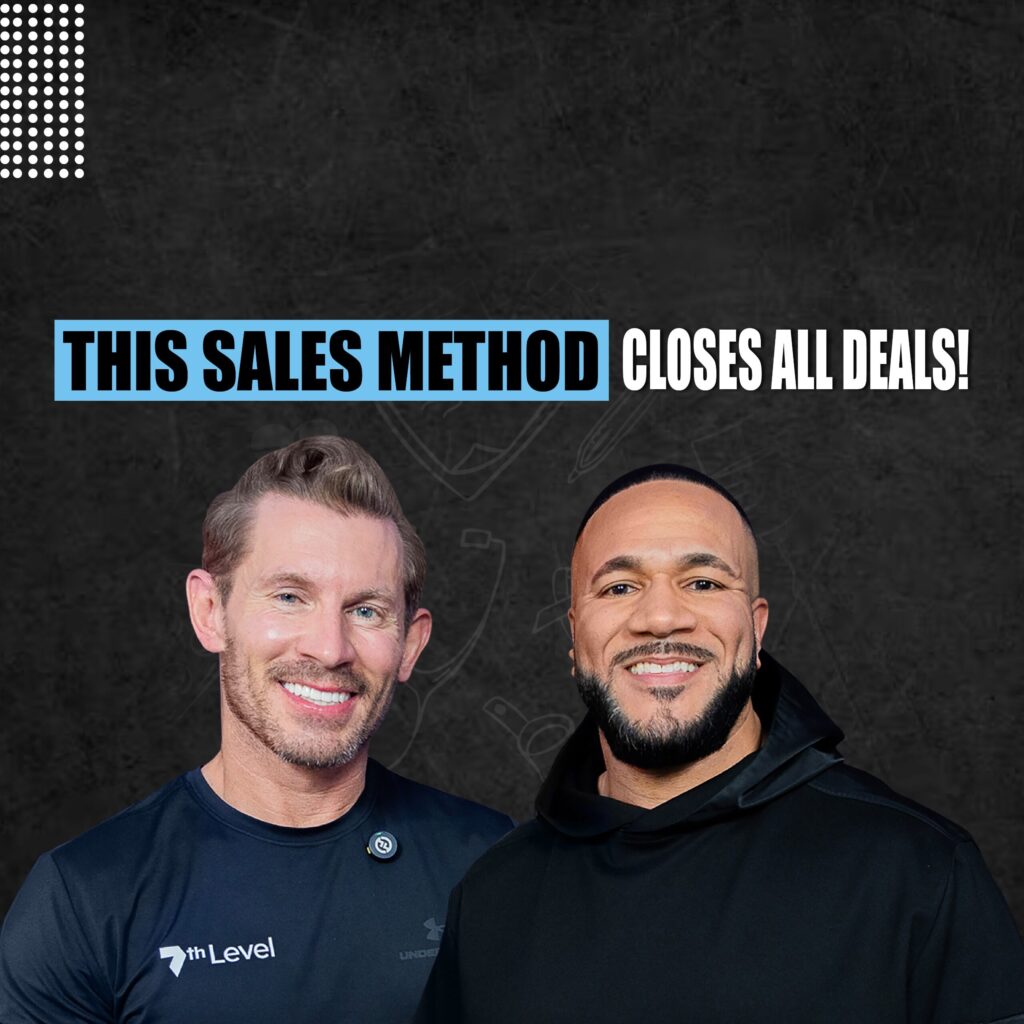
That principle sits at the core of a conversation between Jeremy Miner, creator of the NEPQ methodology and founder of 7th Level Communications, and Sam Tejada, CEO and Founder of Liquivida®, on Tejada’s “A Healthy Point of View” podcast.
Rather than teaching persuasion tactics, Miner breaks down the psychology behind hesitation, urgency, and certainty, and explains why most professionals approach influence backward.
The Psychology Trick That Makes People Say YES Instantly | Jeremy Miner | Ep. 123
From a Cattle Ranch to Modern Sales Psychology
Jeremy Miner’s journey into sales didn’t begin in a boardroom. It started on a 900-acre cattle ranch in rural Missouri, in a town with fewer than 800 people. His graduating class had just over 40 students. Hard work wasn’t optional; it was survival.
Up before sunrise, working cattle, digging fence posts, balancing sports and school, that upbringing shaped his discipline. But it didn’t shape his career.
Miner initially studied behavioral science with an emphasis in neuropsychology at Utah Valley University. He planned to become a psychologist. Life had other plans.
Married young, with a child on the way, he needed income fast. Without a completed degree, his options were limited. The opportunity he found? Straight commission, door-to-door sales, selling home security systems.
No salary. No guarantees. Just doors.
And rejection.
The Question That Changed Everything
Most salespeople who knock on 100 doors and close one or two deals blame the neighborhood.
Miner blamed himself.
Instead of thinking, “These people don’t have money,” he asked a different question:
What did I say or how did I say it that triggered that reaction?
With his psychology background, he recognized something critical: rejection isn’t random. It’s neurological. When a prospect slams a door, they’re often reacting to perceived pressure. Their nervous system shifts into fight-or-flight.
Rather than push harder, Miner reverse-engineered conversations. He studied how language triggers resistance, and how the right questions dissolve it.
That curiosity became the foundation of NEPQ: Neuro-Emotional Persuasion Questioning.
The Core Truth: People Fear Change
Whether someone is buying a security system or enrolling in a wellness program at Liquivida, the surface objections sound familiar:
- “It’s too expensive.”
- “I need to think about it.”
- “I want to talk to my spouse.”
- “I need to do more research.”
But Miner argues these aren’t the real reasons.
At the root of nearly every objection is one thing: fear of change.
When someone invests in a solution, they must give up certainty, and often money, before seeing results. That gap between decision and outcome creates anxiety.
The job of a skilled communicator isn’t to overpower that fear.
It’s to help the prospect realize that staying the same is riskier than changing.
Selling Is Not Something You Do To People
One of the most powerful moments in the conversation came when Sam addressed a common issue in the medical field: doctors don’t like to sell.
They feel it’s unethical. Manipulative. Uncomfortable.
Miner reframed it instantly:
Is selling something you do to people, or something you do for people?
If a patient needs to lose 100 pounds to avoid a heart attack, and you fail to persuade them to commit to a program that could save their life, who loses?
If they don’t buy, they don’t change.
If they don’t change, their condition likely worsens.
When framed that way, selling becomes service. Not pressure. Not manipulation.
The problem isn’t selling; it’s outdated, aggressive techniques that create resistance.
Pressure Triggers Resistance
Human behavior is predictable in one major way: we resist pressure.
Miner kept it simple. When your spouse pressures you to do something, what happens?
You resist.
The same dynamic applies in sales. The harder you push, the more the prospect pulls away.
That’s why traditional tactics like “assume the sale,” “overcome objections,” “close harder” often backfire.
Instead of confronting objections head-on, Miner teaches reframing identity.
Identity Drives Decisions
Drawing from psychological theory, Miner explained a principle that changes everything:
People make decisions based on who they believe they are.
If someone sees themselves as “someone who always fails at diets,” they will subconsciously make decisions that reinforce that identity.
So instead of arguing with objections, Miner shifts identity.
If a prospect says past programs didn’t work, he doesn’t frame it as failure.
He might say: “It sounds like you’re the type of person who never gives up.”
Now the identity has changed.
Instead of being someone who failed, they are someone persistent. Responsible. Forward-thinking.
When identity shifts, decisions follow.
Pain Is the Real Motivator
Another myth Miner dismantled: people buy for pleasure.
According to him, pleasure is a distant third.
The two primary drivers are:
- Pain of the current situation (and past disappointments).
- Fear of future pain.
Take a patient who says, “I just want more energy.”
That’s surface-level.
The real conversation is deeper:
Energy to do what?
Energy to be present with whom?
Energy to avoid what consequence?
When someone wants to look good in a bikini, it isn’t just a pleasure. It’s fear. Fear of judgment, embarrassment, rejection.
When a father wants to lose weight, it isn’t just aesthetics. It’s the fear of not walking his daughter down the aisle.
Those deeper emotional drivers create urgency.
And urgency creates movement.
Reframing Data in Healthcare
Sam pressed further, asking how this psychology applies in medical settings where data, bloodwork, body composition scans, and vitamin deficiencies drive recommendations.
Miner’s answer wasn’t to avoid data.
It was to change how it’s delivered.
Instead of stating: “You’re deficient in vitamin D. You need this.”
Frame it as: “Would it help if I showed you how optimizing your vitamin D levels could significantly reduce your risk of certain conditions?”
Now the patient is opting in. When people feel they’re choosing information rather than being told what to do, resistance drops.
The difference is subtle, but powerful.
Sellers Think Like Sellers. Closers Think Like Buyers.
Most salespeople think like sellers.
They focus on their product. Their pitch. Their commission.
Elite communicators think like buyers. They understand internal dialogue. Fear. Identity. Unspoken hesitation.
They don’t “overcome objections.” They prevent them by reshaping perception long before the close.
The most powerful sales tool isn’t a pitch.
It’s understanding how people think, and helping them see themselves differently.
Because when identity shifts, decisions follow.
And when decisions change, lives change.