

Most people think they’re doing the right things for their health.
They clean up their diet. They work out. They try to sleep better. Maybe they take supplements, drink more water, and cut back on sugar.
But there’s one thing almost no one questions, and it might matter just as much as everything else combined: The place you live in.
That’s exactly what came up in a recent conversation between Sam Tejada, CEO and Founder of Liquivida®, and Kelly Grace, architect and healthy living advocate. And honestly, it’s one of those topics that makes you rethink things you’ve probably never paid attention to before.
The Hidden Health Risks Inside Modern Homes | Kelly Grace | Ep. 135
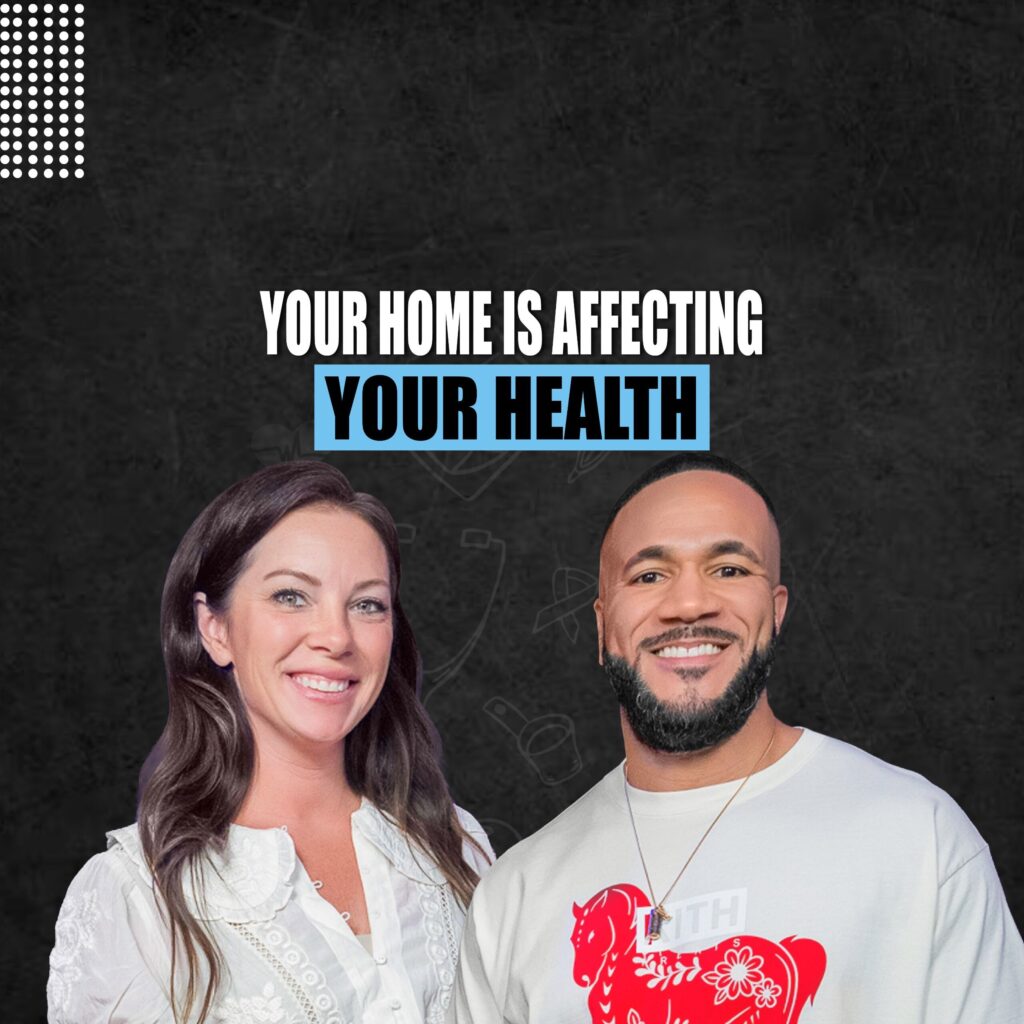
It Started With Something That Didn’t Make Sense
Kelly didn’t begin her career thinking about “healthy homes.”
She followed a pretty traditional path: studied architecture, got into design, worked her way up, learned from mentors, traveled, and taught. Nothing unusual there.
What changed things wasn’t work. It was personal.
After having kids, she started noticing health issues that didn’t fully add up. At the time, they were living on a boat in Washington, D.C., a beautiful setup, great views, the kind of place you’d never expect to be a problem.
But it was.
The boat had mold. Not the kind you easily see and wipe away, but the kind that sits hidden and keeps affecting you without you realizing it.
That’s when things started to click.
The Problem Most People Don’t See
Here’s the uncomfortable part: a lot of homes aren’t as “safe” as we assume they are.
And not in an obvious way.
You can walk into a clean, modern house and still be dealing with:
- Poor air circulation
- Mold inside walls or duct systems
- Materials that release chemicals over time
- Lighting that disrupts your sleep without you noticing
None of this is dramatic in the moment. It’s not like something breaks overnight.
It’s slow. Subtle. Easy to ignore.
Which is why most people never connect their environment to how they feel.
Why Modern Homes Aren’t Always Better
You’d think newer homes would solve these issues. In some ways, they do, but they also introduce new ones.
For example, homes today are often built to be airtight. That’s great for energy efficiency. Not so great when the air inside isn’t clean.
Once everything is sealed in, whatever’s in your home, dust, chemicals, moisture, just keeps circulating.
Then there’s the materials.
A lot of modern flooring, furniture, and finishes are made using adhesives, plastics, and synthetic compounds. They’re cheaper, easier to produce, but they don’t exactly disappear once installed. They release small amounts of chemicals over time.
You don’t notice it day-to-day. But your body does.
The Three Things That Actually Matter
If you focus on air, light, and water, you’re already ahead of most people.
Not in a complicated, technical way, just in a practical, everyday sense.
Air
Most people don’t think about their HVAC system unless something breaks.
But if it’s dirty, or worse, holding moisture, it can quietly circulate mold and dust through your entire home.
Even something as basic as cleaning your ducts regularly or bringing in fresh air instead of just recirculating the same air can make a difference.
Light
This one’s easy to overlook.
We’ve gotten used to bright, white LED lighting everywhere, in homes, offices, and even streetlights.
The problem is that kind of light doesn’t match how our bodies are wired. It keeps your brain “on” longer than it should, especially at night.
Kelly mentioned something interesting: just switching to warmer lighting or turning lights down in the evening can actually help your body wind down naturally.
It sounds simple, but it’s one of those things you only notice after you try it.
Water
Water’s a whole separate conversation.
Filtration matters, obviously. But she also touched on something deeper, how water is processed and even how it moves can affect how your body interacts with it.
Not something most people think about, but it shows how many layers there are once you start paying attention.
The Tech Side No One Talks About
Then there’s the whole “smart home” situation.
Everything now runs on Wi-Fi, lights, cameras, appliances, and even ovens.
Convenient? Sure.
But it also means constant exposure to signals and devices that are always active.
Kelly’s approach isn’t extreme, but it’s intentional.
Things like turning off Wi-Fi at night, keeping bedrooms free of unnecessary electronics, or hardwiring systems instead of relying on wireless are small adjustments that reduce constant exposure.
It’s less about fear, more about balance.
You Don’t Have to Rebuild Your House
This isn’t one of those conversations where the takeaway is “you need to start over.”
Most people aren’t building new homes anytime soon.
What stood out instead was how much can be done in small steps:
- Changing lighting
- Being more selective about materials
- Paying attention to air quality
- Reducing unnecessary tech where it matters most
Nothing extreme. Just more awareness.
The Bigger Realization
The part that sticks with you isn’t any one tip; it’s the shift in perspective.
We spend so much time trying to fix things externally, diet plans, routines, supplements.
But if the place you spend most of your time is working against you, it becomes an uphill battle.
That doesn’t mean your home is “toxic” or dangerous.
It just means it’s worth paying attention to.
Because once you do, you start noticing things differently, and that’s usually where real change begins.