

What does it mean to live a good life?
It is an easy question to ask and a much harder one to answer. For Bob Duggan, the answer has little to do with a number in a bank account or a title attached to his name. His ideas come back to something much simpler: taking responsibility, staying curious, helping people, and continuing to move forward.
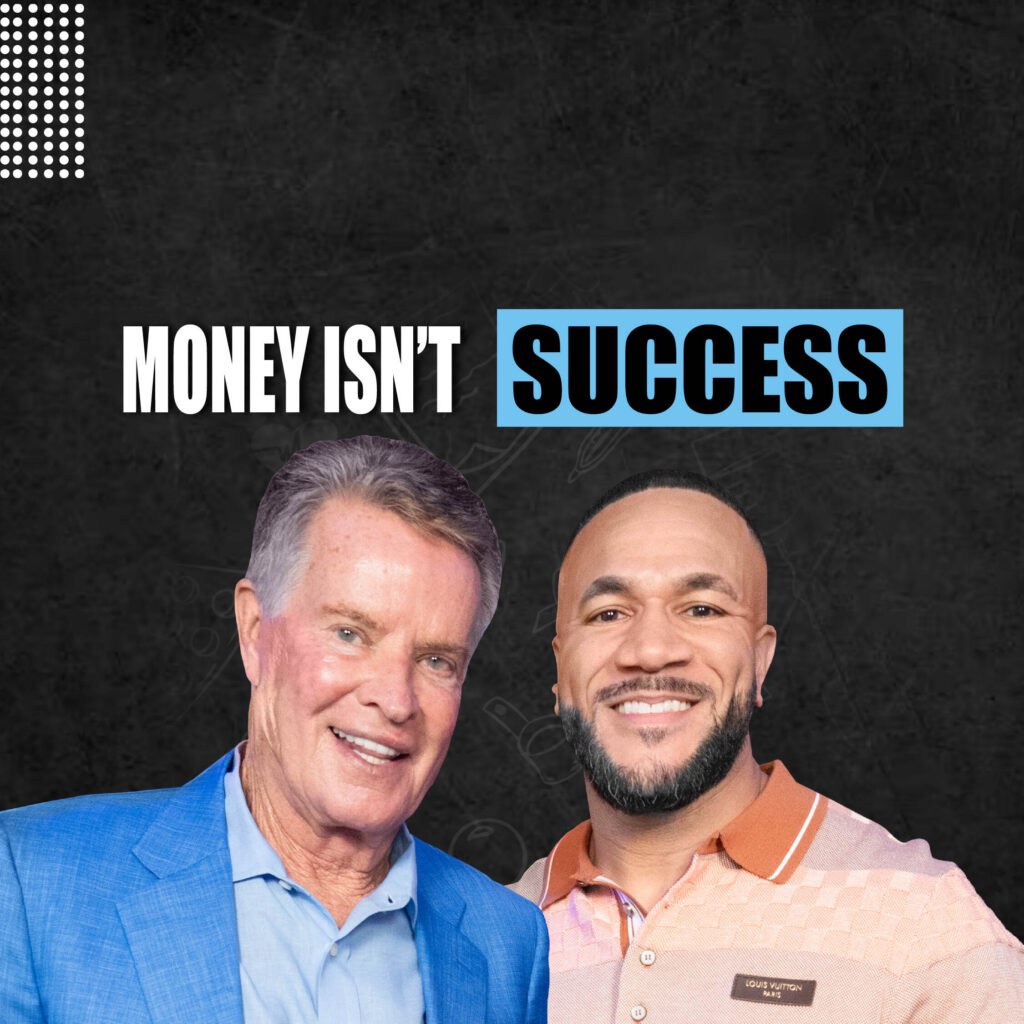
That was the focus of a wide-ranging conversation between Sam Tejada, CEO and Founder of Liquivida®, and Bob Duggan on “A Healthy Point of View” podcast. Their discussion moved from health and fitness to business, happiness, spirituality, money, learning, community, and what it means to leave something meaningful behind.
Billionaire Bob Duggan: Why Money Won’t Make You Happy | Ep. 177
Health Starts With Taking Responsibility
Early in the conversation, Sam asked Bob why he thought America was so sick.
Bob took the question in a different direction. He described “disease” as “dis-ease”, being out of ease physically or mentally. But instead of focusing only on the problem, he emphasized what people can do once they recognize it.
His message was straightforward: define the problem, take responsibility for it, and start doing something about it.
He connected that idea to fitness. Bob recalled traveling to Beijing in 1986 and seeing people walking or riding bicycles to work. What stood out to him was how active they were as part of their everyday lives. To Bob, fitness was not something separate from life. It was part of the lifestyle.
That same principle came up when he talked about younger people. His advice was not complicated: look at the problem, get on a program, stay with it, and take action.
Happiness Can Come From Doing Hard Things
Bob’s view of happiness is also tied to action.
He shared a story about setting a weight-loss goal for himself. Instead of simply wishing to lose weight, he put his starting weight and goal weight on the mirror. When he eventually reached the goal, the satisfaction came from having taken on something difficult and seeing it through.
For Bob, that feeling is important. Happiness can come from overcoming a challenge.
He remembers experiencing the same thing much earlier in life. His first job paid very little, and he was washing dishes when he had expected to be working out front. Rather than staying in a situation he didn’t want, he left and found another job a few weeks later.
There was a lesson in that experience for him: if something isn’t working, take responsibility for changing it.
He applies the same thinking to helping other people. One story he shared involved a seven-year-old boy in Costa Rica who believed he couldn’t read because nobody in his family read. Bob worked with him using pictures and words. Eventually, the boy began reading and ran around excitedly saying, “I can read.”
Bob remembers the child’s reaction as a powerful example of what can happen when someone takes that first step.
Success Changes as Life Changes
Bob’s definition of success has changed over the years.
In his early twenties, success could mean winning a basketball championship. Later, it became more about taking on projects, solving problems, and finding ways to help people.
One of the best examples came from his work in robotics.
Bob described a project involving a seven-degree-of-freedom robot developed for NASA. The project worked, but there was no immediate business waiting for the technology afterward. Then, at a trade show, Bob saw a surgeon using a tiny camera during minimally invasive surgery.
The surgeon explained that a nurse had to hold the camera, and even small movements became a problem because the image was highly magnified.
Bob saw a possible solution: use the robot to hold the camera steady.
That simple observation led to another question: could robotic arms also hold a needle and tissue? One idea led to another, and the technology developed into a robotic surgical system.
For Bob, the story is less about having a perfect plan from the beginning and more about recognizing an opportunity when it appears.
“You start connecting the dots,” he told Sam.
Money Is Not the Same as Wealth
Bob is open about the fact that he once wanted to become a millionaire and later set bigger financial goals. But he doesn’t see money as the ultimate measure of a successful life.
He made the distinction clearly: money itself cannot create happiness. What matters is what a person does with it.
He also talked about wealth in a broader sense: productivity, happiness, health, and the ability to make a difference.
That perspective has influenced how he thinks about business. Rather than making “being a billionaire” the goal of life, he encouraged people to focus on making a difference. Financial success, in his view, can sometimes become a result of doing something useful well.
He illustrated that point with a story about a cookie business. What started as an idea connected to a hot dog business eventually turned into a cookie company after the cookies began outselling the hot dogs.
The lesson wasn’t that every idea becomes a huge business. It was that opportunities can appear in unexpected places when people are willing to notice them.
Community Begins With Communication
One of the most memorable moments in the conversation came when Sam asked Bob about the importance of community.
Bob initially answered with one word: “Communication.”
For him, the two are closely connected. People need interaction, signals, conversation, and the exchange of ideas.
He even described a habit of going to Starbucks several times a week and deliberately starting conversations with people he would not normally meet. He said that many of those conversations turned out to be worthwhile.
That idea became one of Sam’s main takeaways from the interview: community isn’t simply about being around people. It is about actually communicating with them.
There Is No Point Where Learning Ends
When Sam asked Bob when learning stops, his answer was essentially never.
Bob talked about reading, studying words, learning from different people, and continuing to look for new information. He also shared an idea he had taken from the Dalai Lama: even near the end of life, keep learning.
For Bob, knowledge and learning are connected to what he calls potential. He believes genius is not reserved for a small group of people. In his view, everyone has the potential to develop their abilities.
That belief also explains why he remains interested in sharing what he has learned. He mentioned people who influenced him throughout his life and said he feels a responsibility to pass some of that knowledge forward.
What Does a Life Worth Living Look Like?
Near the end of the conversation, Bob was asked what he would want his tombstone to say.
His answer was simple: “He led a life worth living.”
That sentence brings together much of what he discussed during the conversation.
For Bob, living well means taking care of the body, paying attention to the mind, continuing to learn, communicating with other people, taking on challenges, accepting responsibility, and helping others along the way.
His final advice to anyone listening was just as simple.
Keep going.
Don’t stay focused on everything that went wrong. Look toward what comes next. Take the next step, then the one after that.
A life worth living, as Bob described it, isn’t something that appears all at once. It is built through the decisions, challenges, relationships, mistakes, discoveries, and contributions that happen along the way.