

What if a few strands of your hair could become a biological resource for your future health?
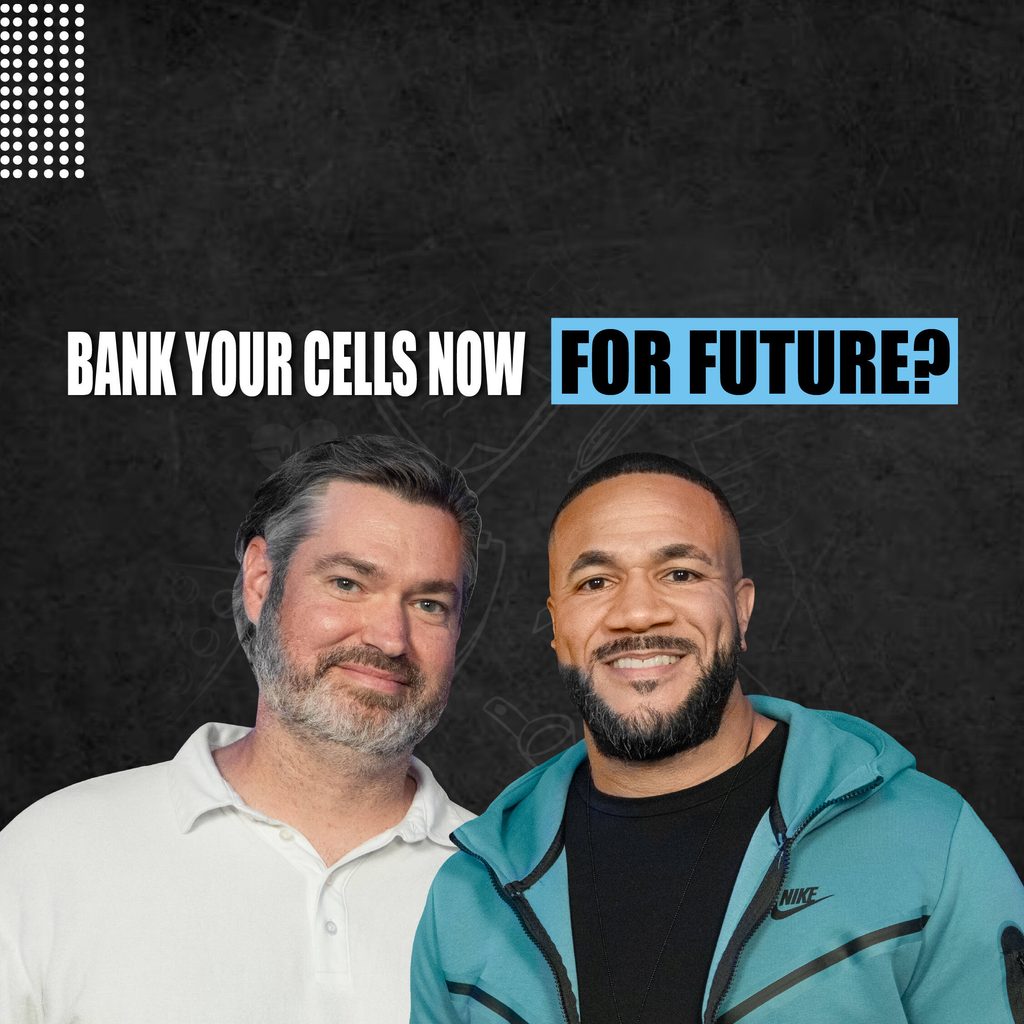
That question sounds almost futuristic, but it is already being explored in regenerative medicine. On a recent episode of “A Healthy Point of View” podcast, Sam Tejada, CEO and Founder of Liquivida®, sat down with Dr. Drew Taylor, a biomedical engineer and regenerative medicine researcher, to discuss an unusual source of stem cells: the hair follicle.
Rather than focusing only on the familiar sources of stem cells, such as bone marrow or fat, Dr. Taylor explained why hair follicles have attracted growing attention and where this technology could eventually lead.
The Hair Follicle Is More Than Just Hair
According to Dr. Taylor, the hair follicle is essentially a miniature organ containing several different types of cells and high concentrations of mesenchymal stem cells (MSCs). These are part of the same stem cell lineage found in places such as bone marrow and adipose tissue.
What makes the hair follicle particularly interesting is accessibility. Instead of requiring an invasive procedure to collect these cells, follicles can be obtained simply by plucking hair.
Researchers have been studying hair follicle stem cells for decades, but Dr. Taylor explained that much of the work historically remained within academic and institutional research. The next step has been finding ways to translate that research into clinical applications.
That is where his work comes in.
His team developed methods to capture cells from an individual’s own hair follicles and use them in the laboratory to produce regenerative products that can ultimately be used by physicians.
Why Use Your Own Cells?
A major part of the discussion centered on the difference between using cells from another donor and using a person’s own biology.
Many stem cell and exosome products available today rely on cells collected from sources such as placental tissue or umbilical cord tissue. The appeal is obvious: these sources contain relatively young cells. But once those cells are collected, they often have to be expanded in the laboratory, meaning they are repeatedly divided and multiplied to produce enough material for widespread use.
Dr. Taylor described this process as “passaging.” According to him, the expansion process can cause cells to age significantly before their regenerative products are ultimately collected.
His team’s approach is different. Instead of expanding the cells, the goal is to go one-to-one with the patient by collecting their own hair follicle cells and allowing them to produce their natural collection of signaling molecules.
That collection is known as the secretome.
The secretome contains the molecules released by cells, including growth factors, peptides, extracellular matrix molecules, and exosomes. Dr. Taylor described it as essentially the collection of healing and stimulatory signals produced by the stem cells.
Because the source is the patient’s own biology, the approach is designed around an autologous model rather than relying on cells from another person.
What Can the Hair Follicle Secretome Do?
The first applications discussed on the podcast are relatively close to the source itself: skin and hair.
Dr. Taylor explained that the secretome is currently being used in topical applications involving skin rejuvenation, wound healing, and hair regeneration.
The potential for hair restoration is particularly interesting because the cells being collected from the follicle are connected to the biological environment responsible for hair growth.
Inside a hair follicle is a structure called the dermal papilla, which plays an important role in producing the keratin fiber that becomes hair. The MSCs targeted by Dr. Taylor’s approach are located in other regions of the follicle and release signaling molecules that can influence surrounding cells.
The idea is not that these signals somehow create hair in places where hair follicles do not exist.
Instead, the goal is to stimulate the cells already present in the tissue.
For hair, that can mean supporting follicles that are thinning or have recently entered a dormant state. Dr. Taylor explained that the longer a follicle has remained dormant, the more difficult it can become to revive it. Still, his team has observed follicles that previously were not producing keratin beginning to produce the hair fiber again.
And that distinction becomes especially important when considering applications beyond hair.
No, Your Knee Isn’t Going to Grow Hair
Sam raised an entertaining but legitimate question: if these signals can stimulate hair growth, what happens when the same type of secretome is introduced into a knee?
Dr. Taylor’s answer highlighted one of the most important concepts behind the technology.
The secretome does not tell every cell in the body to become a hair follicle. Instead, its signaling molecules interact with the cells that are already present in the tissue.
In a knee, for example, the relevant cells are different. Rather than stimulating hair-producing cells, the goal would be to influence cells involved in connective tissue, including chondrocytes, fibroblasts, and other cell types involved in producing extracellular matrix and collagen.
So the underlying concept remains the same: stimulate the body’s existing cells to perform their biological functions rather than replacing those functions outright.
That opens the door to applications far beyond hair and skincare.
From Hair Restoration to Orthopedics
Dr. Taylor’s own background is in regenerative orthopedics, which makes the potential application in sports medicine particularly significant to him.
During the conversation, he discussed testing comparing growth factor levels from their secretome with those found in PRP. He said their testing showed up to 34 times higher levels of certain growth factors associated with connective tissue healing.
The team also collaborated with the University of Calgary on an animal study involving mice with focal defects in their knee cartilage. According to Dr. Taylor, applying the secretome into the joint resulted in observed cartilage regeneration in that model.
The next step is human research.
The company is moving toward injectable applications through research studies, with ongoing work involving hair regeneration and skin rejuvenation and additional research planned around areas such as orthopedics and fertility.
Banking Cells for the Future
One of the most intriguing ideas discussed was the possibility of banking your own cells while you are younger so that they remain available for future applications.
Dr. Taylor explained that aging changes our biology over time. While older hair follicles can still produce useful regenerative factors, collecting and preserving a person’s cells earlier creates an opportunity to retain access to their own younger biology.
His own family has taken this approach. He shared that he and his wife had collected follicles from their three sons, with the youngest being nine at the time.
He said the company generally recommends collecting once full follicle development has occurred, around ages 8 to 12 and older. Younger children can have smaller follicles and therefore lower cell yields, which may mean another collection could eventually be needed.
The broader concept is simple: instead of waiting until a health problem appears, biological material could potentially be collected and preserved ahead of time.
A Different Approach to Prevention
The conversation eventually moved beyond stem cells and into a much larger question: why does modern healthcare tend to focus so heavily on treating disease after it appears?
Dr. Taylor described the current healthcare system as largely reactive. When something goes wrong, the system responds. The challenge, he argued, is moving toward a model that identifies potential problems earlier and considers what can be done before they develop.
That is where he sees cell banking fitting into a broader preventive mindset.
Rather than waiting until the body needs regenerative support, people could potentially preserve their own biological resources earlier and have them available as regenerative medicine continues to develop.
For Dr. Taylor, regenerative medicine is ultimately about giving existing cells the molecular signals and resources they need to function more effectively.
The Risks Behind the Stem Cell Hype
For all the excitement surrounding stem cells, Dr. Taylor was also clear about the risks.
He has encountered patients who received stem cell treatments through less credible clinics or traveled internationally for procedures and later experienced serious complications. He described cases involving worsening hair loss following hair-related injections and significant swelling after knee injections.
One reason for concern is the difference between receiving your own cells and receiving cells from another person. The immune system can recognize foreign cells as different and clear them from the body. How an individual responds can also be difficult to predict.
His message was not that regenerative medicine itself should be dismissed. Instead, he emphasized the importance of choosing credible providers and understanding what treatment is actually being offered.
The field is still relatively young, and the distinction between legitimate research and poorly regulated or inadequately supported treatments matters.
From a Seventh-Grade Science Fair to the Future of Medicine
Dr. Taylor’s interest in regenerative medicine started long before his work with hair follicle stem cells.
Growing up in a family connected to both medicine and professional baseball, he developed an early interest in the intersection of sports and healthcare. In seventh grade, he had the opportunity to observe a knee replacement surgery.
What stayed with him was not simply the surgery itself. The following day, he watched the patient stand up and express how much better she felt. But the surgeon also explained that the artificial components would eventually wear out and that she could require additional replacements later in life.
The surgeon told him that someday doctors might be able to use a patient’s own cells to recreate damaged joints instead of relying on metals and plastics.
That idea stuck.
Dr. Taylor went on to play baseball at the University of Michigan, study biology, and pursue a PhD in biomedical engineering at the University of Toronto, specializing in stem cell biology and regenerative medicine. He eventually played professionally in the minor leagues with the Blue Jays and Phillies before continuing his career in regenerative medicine.
Today, that childhood vision is still at the center of his work.
The Long-Term Vision: Building With Your Own Biology
Perhaps the most ambitious part of the conversation was Dr. Taylor’s vision for where regenerative medicine could eventually go.
He described a future in which cells preserved today could potentially be used decades later to create biological tissues.
His laboratory has already used hair follicle stem cells to create different cell types, including fat, bone, cartilage, and skin cells. He also discussed work involving neurons, pancreatic cells, and natural killer (NK) cells.
One of the longer-term projects involves developing a way to create NK cells from banked hair follicles, with the goal of potentially producing these cells on demand for future applications.
Beyond that lies the possibility of 3D bioprinting.
Dr. Taylor envisions a future in which medical centers could use 3D bioprinting technology alongside a patient’s own stored cells to create biological structures tailored to that individual.
It is an ambitious vision, but he believes technological progress can happen faster than people expect.
He compared regenerative medicine’s current stage to the early development of aviation. The Wright brothers’ first flight was primitive, but within decades aviation had progressed to transatlantic passenger flights, supersonic aircraft, and eventually the moon landing.
His argument is that regenerative medicine may be going through a similar period of acceleration.
The Future May Be Closer Than We Think
The idea of collecting a few hair follicles today and using them decades later to help repair damaged tissue may sound like science fiction.
But that is precisely what makes regenerative medicine such a fascinating field.
The conversation between Sam Tejada and Dr. Drew Taylor wasn’t simply about hair restoration. It was about a broader shift in how researchers think about the body’s own biology: preserving it, understanding its signals, and finding ways to use those signals to support tissue repair.
Much of that future remains under research, and many of the applications discussed are still being investigated. But the direction is clear. Regenerative medicine is moving toward increasingly personalized approaches, with a person’s own cells potentially becoming an important part of future healthcare.
And it all starts with something most of us barely think about: a hair follicle.