
For years, longevity has often been reduced to a single number: How long can we live?
But according to Dr. Sue Orlando, who holds a PhD in the biology of aging, that may be the wrong question to ask.
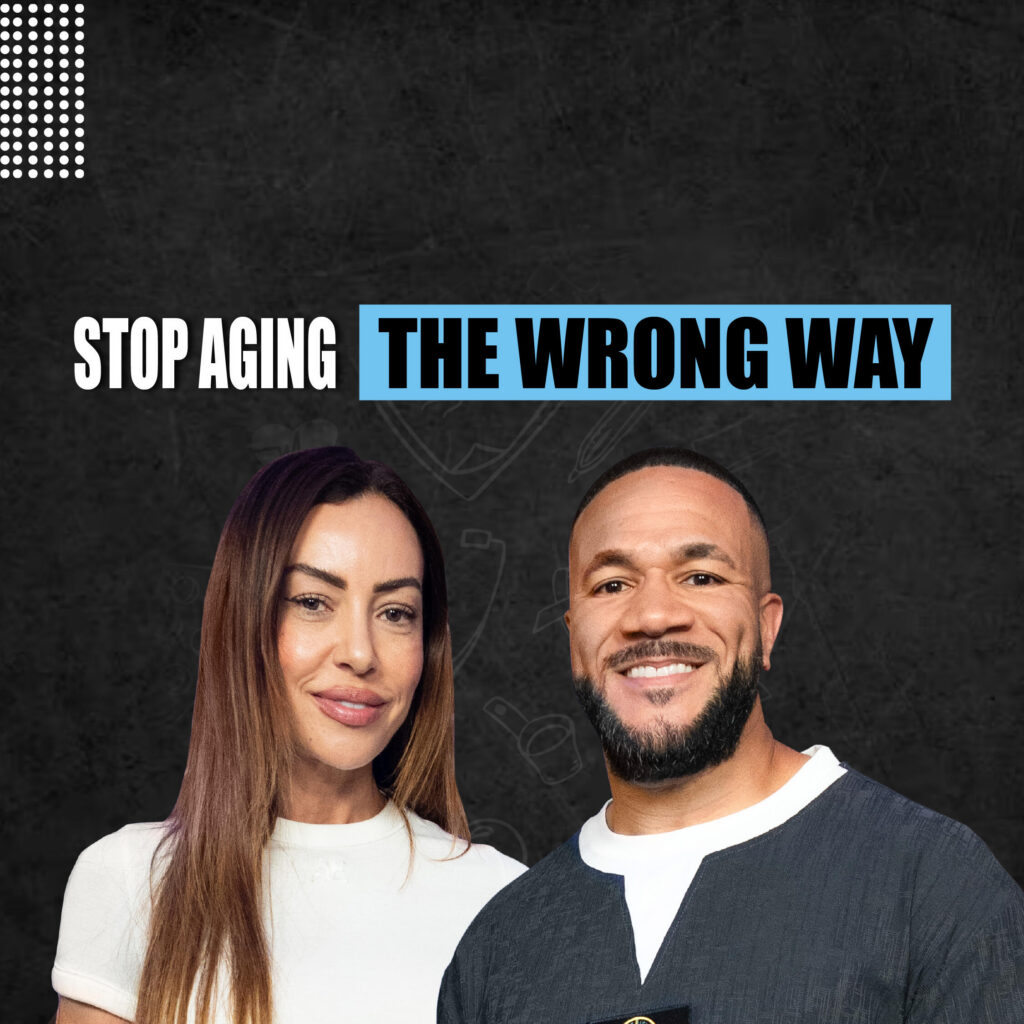
In a recent episode of “A Healthy Point of View” podcast, hosted by Sam Tejada, CEO and Founder of Liquivida®, Dr. Orlando took a deeper look at what happens inside the body as we age and why living longer only matters if we can remain healthy, independent, energetic, and mentally sharp along the way.
The conversation covered everything from inflammation and metabolism to nutrition, gut health, exercise, sleep, biomarkers, and the importance of taking action before health problems become obvious.
At the center of it all was one idea: healthspan matters more than lifespan.
The Truth About Aging: Why Healthspan Matters More Than Lifespan | Dr. Sou Orlando | Ep. 171
Aging Is More Than Getting Older
Wrinkles, gray hair, and a higher number on a birthday cake are the most obvious signs we associate with aging. But biologically, aging is much more complicated.
Dr. Orlando explained that aging is a process involving multiple biological systems that change over time. It doesn’t suddenly begin when someone reaches a certain age. It begins from the earliest stages of life, while the way we live can influence how that process unfolds.
Nutrition, physical activity, stress, environmental exposure, toxins, and other aspects of daily life all contribute to the environment in which our biology operates.
That makes the question of aging much bigger than simply asking how old someone is.
It becomes a question of how well their body is functioning.
The Difference Between Lifespan and Healthspan
Lifespan is simply the amount of time someone is alive. Healthspan is the amount of that life spent in good health.
For Dr. Orlando, the second is far more important.
She offered a simple way of looking at the difference. If someone were told they could live to 200 but would spend much of that time dependent on others and unable to enjoy their life, most people would probably say no.
But what if they could maintain their current energy, abilities, independence, and quality of life for those additional years?
The answer changes.
That is the real distinction between lifespan and healthspan.
The goal isn’t simply to add more years. It is to make more of those years worth living.
Why Prevention Has to Start Earlier
The growing burden of chronic disease is another reason Dr. Orlando believes the conversation around health needs to change.
She described today’s healthcare system as highly effective at identifying symptoms and treating disease, but argued that there is a major opportunity to focus more attention on prevention.
By the time a serious health problem becomes obvious, biological changes may have been developing for years.
Her answer is to start with the basics.
How are we eating? How much are we moving? How well are we sleeping? What is our stress level? What does our environment look like?
For Dr. Orlando, these aren’t secondary considerations. They are the foundation.
Inflammation and the Biology of Aging
One of the most important topics in the conversation was chronic inflammation.
Dr. Orlando described inflammation as something that can be difficult to recognize from the outside. Someone may appear fit and healthy while biological changes are happening underneath the surface.
This is where the term “inflammaging” comes in: the connection between chronic inflammation and the aging process. Dr. Orlando explained that inflammation can accelerate aging and may be connected with age-related disease.
Oxidative stress can also contribute to the problem, but she emphasized that there isn’t one universal cause or one universal solution.
Environmental factors, stress, hormones, food, and other exposures can all play a role, and people can respond differently to the same factors.
That idea of bio-individuality is important. What works for one person may not necessarily work the same way for another.
Rather than focusing on a single marker or intervention, she believes in looking at the bigger picture.
Your Food Is Part of the Foundation
When the conversation turned to nutrition, Dr. Orlando kept returning to a simple principle: eat real food. Vegetables, berries, fish, quality sources of meat, and foods that are closer to their natural form were among the examples she discussed.
She also questioned the assumption that something is automatically healthy because it is sold in a health-focused store.
Highly processed bars, snacks, and other packaged foods can still be highly processed, regardless of where they are purchased.
Protein powders were another example. Dr. Orlando said she has observed reactions and inflammation in some clients’ gut testing and cautioned against treating protein shakes as a permanent replacement for healthy meals.
That doesn’t mean they can never have a place. She described them as something that can be useful occasionally, such as while traveling or when finding a healthy meal isn’t practical.
The larger point is not to let convenience replace real nutrition.
Gut Health Goes Beyond Digestion
The gut was another major part of the discussion.
Dr. Orlando emphasized that the gut is connected to much more than digestion, including immune function, hormones, inflammation, and communication with the brain.
For that reason, she believes understanding what is happening inside the gut can provide valuable information that isn’t visible from the outside.
When there is an imbalance, the first step is understanding what that imbalance actually looks like.
From there, nutrition becomes an important starting point.
Dr. Orlando highlighted the Mediterranean-style approach, emphasizing vegetables, seasonal foods, olive oil, beans, fish, and moderate portions of meat. She also discussed the potential role of plants, spices, probiotics, prebiotics, and postbiotics.
The underlying message was straightforward: the foundation comes first.
Stop Guessing. Start Measuring.
For someone whose work centers on the biology of aging, Dr. Orlando places considerable importance on data.
She recommends establishing a baseline and then tracking changes rather than simply assuming that something is working.
A comprehensive blood panel can provide information about areas such as metabolism, thyroid function, and hormones. Gut testing can offer another perspective, while epigenetic information can help explore how genes are being expressed in response to environmental influences.
She also discussed DEXA scans as a way to examine body composition, including visceral fat, which can be relevant to metabolic health.
The philosophy is simple: if you don’t know where you started, it becomes much harder to know whether you’ve actually improved.
Muscle Is About More Than Appearance
Exercise received an unequivocal rating from Dr. Orlando: 10 out of 10.
Her reasoning goes far beyond aesthetics.
Muscle plays an important role in maintaining movement, strength, posture, independence, and physical capability as we age.
Resistance training can help build and preserve muscle, while walking provides another accessible form of movement. Exercise also has benefits that extend beyond the physical, including helping clear the mind and creating a sense of empowerment.
And her advice isn’t to wait until you can commit to an intense workout routine.
Start small. Move every day. Walk. Build from there. Dr. Orlando recommends resistance training as part of the routine as well, while finding forms of movement that are enjoyable enough to maintain.
Sleep Is Not Optional
Nutrition and exercise often dominate health conversations, but Dr. Orlando puts sleep on the same foundational level.
She looks not only at how long someone sleeps, but also at the quality of that sleep.
Her own approach includes avoiding late meals and finishing food at least two hours before bed. She also emphasizes creating a sleep environment that is quiet, dark, and comfortably cool.
Perhaps most importantly, she recommends consistency.
Going to bed and waking up around the same times helps maintain a regular rhythm. Constantly changing the schedule can leave the body feeling as though it is experiencing repeated small bouts of jet lag.
Longevity Is a Daily Practice
Perhaps the most practical lesson from the conversation is that longevity isn’t a one-time project. There is no single reset, detox, or intervention that replaces the basics.
Dr. Orlando compares it to building a house. You can’t build another floor if the foundation underneath it isn’t solid.
The same applies to health. Before chasing optimization, build the foundation. Then identify what your individual biology needs and focus your attention accordingly.
And don’t confuse doing more with doing better.
As Dr. Orlando explained, doing less consistently can be far more valuable than trying to do everything and eventually doing none of it consistently.
You Can Start Designing Your Health Now
The conversation ultimately came back to personal responsibility, not in the sense of blaming people for their health, but recognizing that there are things within our control.
Dr. Orlando describes longevity as an ongoing relationship with your future health. The earlier that relationship begins, the more opportunity there is to influence the trajectory.
That doesn’t require changing everything overnight.
It starts with understanding where you are.
Measure. Learn. Build the foundation. Make changes that fit your life. Then keep going.
Because health isn’t something that should only receive attention after it breaks.
As Dr. Orlando put it, “health is not something that you fix when it breaks. It’s something that you can design.”
And perhaps that is a more meaningful definition of longevity: not simply adding years to life, but giving yourself the best opportunity to remain capable, independent, energized, and present for as many of those years as possible.