
Before she became known as the Queen of Biohacking, Dr. Lauren Leiva was a patient, a young girl living with severe Crohn’s disease, shuffled from clinic to clinic, often dismissed, and left to fight for her health alone. She learned early that within the American healthcare system, outcomes often depend less on the urgency of a patient’s condition and more on whether insurance will pay for it.
That experience would shape the future of her life, career, and the way she helps thousands of people heal today.
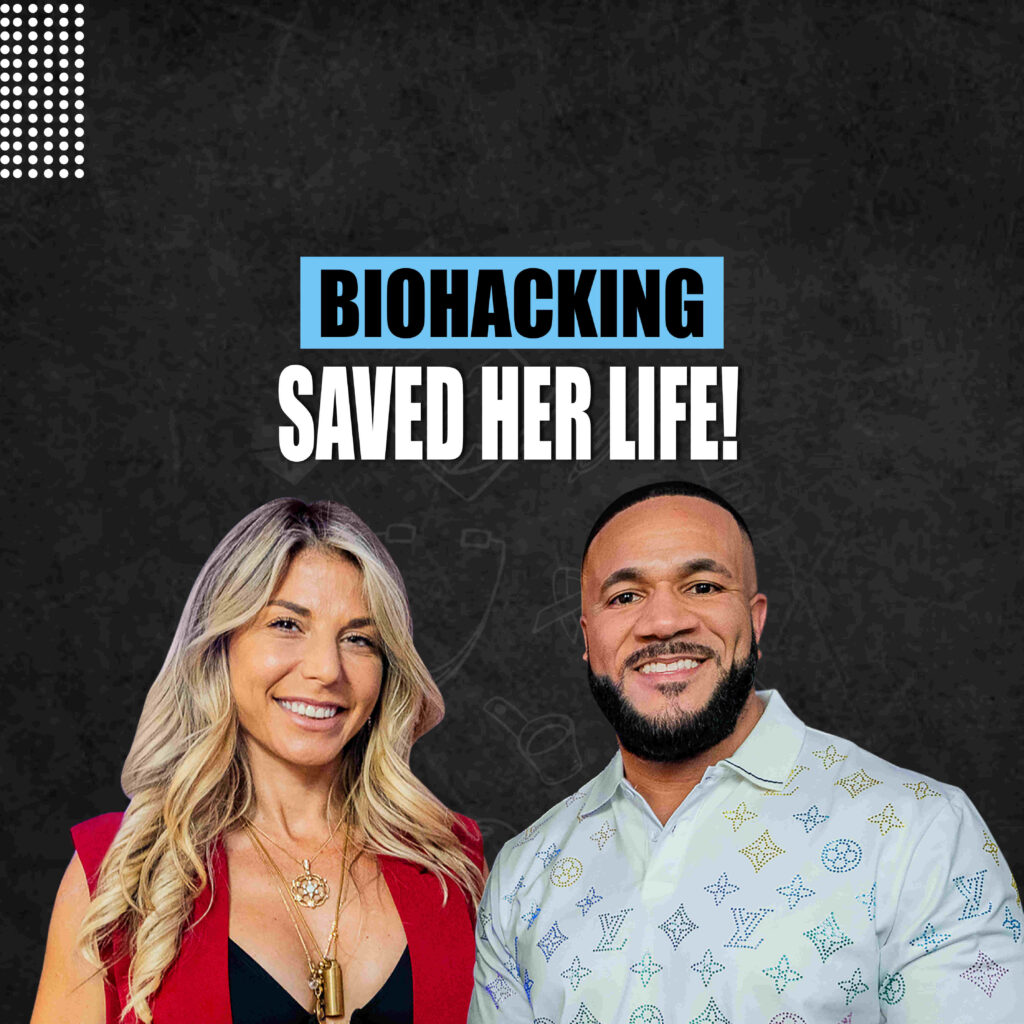
On a new episode of “A Healthy Point of View” podcast, host Sam Tejada, CEO and Founder of Liquivida®, dives into Dr. Leiva’s remarkable journey, one defined not just by medical expertise but by a personal history of trauma, resilience, and a vision to rebuild healthcare into something more human.
A Childhood of Contrasts
Lauren didn’t grow up in privilege, though she grew up everywhere. Her family, Holocaust survivors who fled to the United States, settled in Florida, where Lauren became the first in her family born in America. Her early life swung between extremes:
She attended one of the area’s most elite private schools, then later lived with her mother in a one-bedroom apartment and attended public school. That contrast exposed her early to inequality, especially in healthcare.
Diagnosed with severe Crohn’s disease at a young age, Lauren’s care depended on whatever clinic or ER her family could reach. Without insurance, she was treated like a problem to stabilize, not a patient to heal. That experience would later shape everything she built.
A Turning Point No One Talks About
Lauren revealed something few people ever learn about her:
At the age of 13, she experienced a traumatic forced abortion followed immediately by the onset of Crohn’s disease.
No one asked what had happened. No one connected the trauma to the illness.
Instead, she was passed around from clinic to clinic, treated with medication after medication, often by medical professionals who were “clocking in and clocking out,” as she describes it.
In those years, she learned a harsh truth: Healthcare outcomes often depended more on insurance coverage and socioeconomic status than on patient need.
It was the beginning of her lifelong mission to make healing more accessible, compassionate, and human.
Losing Her Mother and Finding Her Purpose
As a young adult, Lauren entered medical school with the same commitment that fueled her survival: she wanted to fix a system that had failed her.
Then life hit again. Her mother, her best friend, suffered a stroke shortly after spinal surgery. Lauren was with her, stabilizing her as she waited for emergency services to arrive. But when the paramedics finally came, they dismissed Lauren’s concerns: “She’s older. Older people get confused. This happens.”
But Lauren knew better. Her mother wasn’t confused. She’d had a stroke. And the medical oversight that followed cost her mother her health and eventually, her life.
With a newborn baby, a mother needing full care, and no family support system, Lauren made the impossible choice: she withdrew from medical school to be a full-time caregiver.
But instead of breaking her, that loss became the defining push that shaped her future approach to medicine.
Healing Herself First
Over time, Lauren rebuilt her life through approaches that the medical system had dismissed for years:
- Yoga
- Meditation
- Frequency-based therapies
- Natural modalities
- Neuromuscular techniques
- Plant medicine
- Brain-body retraining
At one point, her condition was so severe that doctors told her she might need a colostomy bag for life. She fought instead for her health and won. She often jokes on stage that one of her greatest achievements is being able to “go to the bathroom normally,” but behind that humor is something profound:
Healing turned into gratitude.
Pain turned into purpose.
And surviving turned into teaching.
Today, she helps others find the same transformation no matter their diagnosis, bank account, or background.
Rebuilding Healthcare Without the System’s Rules
One of Lauren’s strongest criticisms of traditional healthcare is this: Doctors often treat patients based on what insurance will reimburse, not what the patient actually needs.
She sees that as the system’s greatest flaw. So she built a different model in her clinic, the ExerScience Center, which combines physical therapy, brain-body therapies, IV nutrition, neuromuscular reprogramming, and biohacking technologies like the Neubie device and BrainTap.
And she made one radical business policy:
Every Friday, patients can pay whatever they can afford.
Whether someone has:
- Cancer
- Disability
- Chronic illness
- No insurance
- Limited income
They will not be turned away.
Some pay $200.
Some pay $2.
But they all get treated.
Lauren refuses to let money decide who gets to heal.
What Biohacking Really Means to Her
Biohacking has become a buzzword attached to anti-aging, supplements, stem cells, and elite longevity routines. But Lauren sees it differently.
Biohacking, she explains, is simply:
Strengthening the weakest link in the body physically, emotionally, energetically, or neurologically, using whatever methods work.
Some of her approaches cost nothing:
- Grounding barefoot
- Sunlight
- Breathwork
- Meditation
- Brain retraining
Others use advanced technology, but with one goal:
Healing faster, smarter, and with less dependency on pharmaceuticals that may treat symptoms but not the root cause.
Making Longevity Accessible to Everyone
Sam and Lauren shared a powerful realization:
Biohacking has historically been:
- expensive
- white-male dominated
- accessible mostly to the wealthy
Lauren and Sam both had immigrant, working-class upbringings. They understood firsthand what it meant to grow up without access to elite healthcare. The mission is now to change that.
Lauren:
- brings biohacking and movement to public school football teams
- teaches children about nervous system control
- builds affordable paths for patients
- pushes doctors to transform their clinics into places of healing, not billing
If you ask her what the biggest healthcare problem in the world is, she answers without hesitation: “Insurance-driven treatment.” Healing shouldn’t depend on a coverage code.
Empowering Women Without Apology
Lauren is a force. She speaks boldly, dances freely, and refuses to dull her light to make others comfortable.
And she wants women to know:
- You can be powerful and soft
- Sexy without shame
- Ambitious without becoming cold
- Mission-driven without losing joy
Life spent in sterile hospital rooms taught her something essential: When she dances, she feels alive, and nobody gets to take that from her.
The Mind Creates the Reality
Lauren’s most repeated message is simple but transformative: “Your thoughts build your world.”
Pain, she explains, is not an input; it’s an output, and the brain can be retrained.
Limitations are often learned. Ceilings exist only where the mind installs them.
Healing and thriving begin in the invisible world before they ever appear in the physical one.
Her Mission in One Sentence
When Sam asked her what she most wanted the world to know, she answered from the heart:
“I’m here to make a difference with doctors, with patients, with communities, and to remind people they are not alone. We can still have a beautiful life, even if we were dealt bad cards.”
A New Model of Medicine
Dr. Lauren Leiva isn’t just talking about changing healthcare; she is already doing it:
- Healing with love, not billing codes
- Using technology without losing human connection
- Leading with transparency, empathy, and raw truth
- Treating people the way she wished someone had treated her mother
And in doing so, she is proving something powerful: The future of medicine doesn’t belong to insurance companies. It belongs to healers.