

When Nicole Bell talks about Lyme disease, she isn’t speaking as someone who read a few research papers or joined the conversation because it was trending. She lived it.
Her husband, Russ, was the picture of good health. He stayed active, exercised regularly, followed a Mediterranean diet, and did everything most people associate with healthy aging. Yet something slowly began to change. His memory wasn’t as sharp. His personality shifted. Everyday tasks became harder, and the man Nicole knew seemed to fade a little more each day.
Doctors eventually diagnosed him with early-onset Alzheimer’s disease. It was devastating, but it also didn’t explain everything. The symptoms didn’t fit together as neatly as they should have, and Nicole couldn’t shake the feeling that an important piece of the puzzle was missing.
That instinct sent her down a path she never expected to take.
Years later, she discovered that Russ had been living with tick-borne infections alongside the neurological disease doctors had focused on for so long. By then, the realization came too late to change the outcome, but it completely changed Nicole’s purpose. Today, as CEO of Galaxy Diagnostics, she’s working to solve the problem she believes countless patients still face: getting the right diagnosis before it’s too late.
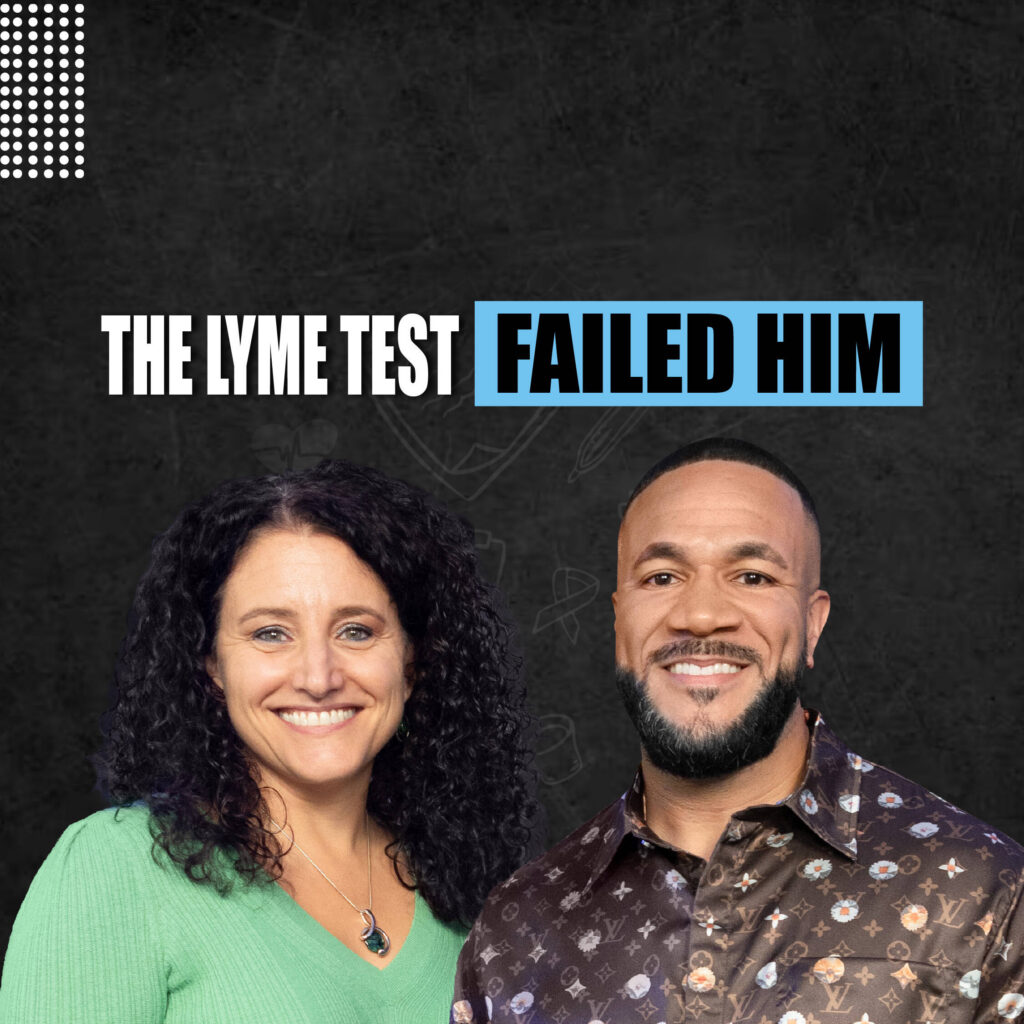
During her conversation with Sam Tejada, CEO and Founder of Liquivida®, on “A Healthy Point of View”, Nicole made one thing clear, Lyme disease isn’t always missed because doctors don’t care. Sometimes it’s missed because the tools they’re using simply aren’t good enough.
Why Lyme Disease Is Still Being Misdiagnosed | Nicole Bell | Ep. 163
The Problem Isn’t Always the Patient
One of the biggest surprises for people learning about Lyme disease is that a negative test doesn’t always rule it out.
Most routine Lyme tests don’t actually look for the bacteria itself. Instead, they look for antibodies, proteins your immune system produces after recognizing an infection. That’s an important distinction because antibodies don’t always tell the whole story. They take time to develop, and in some people, particularly those whose immune systems are under strain, they may never reach levels that make the test positive.
Nicole used her husband’s experience as an example. Looking back, she believes his immune system had been fighting infection for years. By the time he was tested, it may have been too exhausted to produce the antibody response traditional testing relies on. His results came back negative even though the infection was still there.
For patients, that can be incredibly frustrating.
You know something feels wrong. Your energy disappears. Your joints ache. You struggle to think clearly. Yet every appointment ends the same way: the tests look normal.
Over time, people begin doubting themselves. Family members question whether it’s stress. Friends suggest getting more sleep or taking a vacation. Meanwhile, the symptoms continue to grow.
Nicole says she hears stories like this all the time.
Lyme Rarely Travels Alone
Another misconception is that Lyme disease is the only infection people need to worry about after a tick bite.
According to Nicole, that’s often not the case.
Ticks can carry several pathogens at once, and each behaves differently inside the body. Alongside Lyme-causing Borrelia, infections such as Bartonella and Babesia are becoming increasingly common. They don’t necessarily respond to the same medications, which means treating one infection while missing another can leave patients wondering why they never fully recover.
Babesia presents an especially interesting challenge because it isn’t a bacterium at all, it’s a parasite. Antibiotics commonly prescribed for Lyme disease may do little to address it. If clinicians don’t know it’s there, patients can continue feeling sick even after completing treatment exactly as prescribed.
That reality has shaped the way Galaxy Diagnostics approaches testing.
Rather than relying on one method for every infection, the company uses different technologies depending on the biology of the pathogen. For Lyme disease, Nicole explained that researchers have found proteins released by the bacteria can be detected in urine, offering a way to look for evidence of active infection without waiting weeks for antibodies to appear. Other infections, including Bartonella and Babesia, require different testing strategies because they behave differently in the body.
For Nicole, this isn’t about replacing physicians or questioning medicine. It’s about giving clinicians better information.
“If you don’t know what you’re fighting,” she told Sam, “how are you ever going to get better?”
That simple question sits at the heart of her work today.
For thousands of people who spend years searching for an explanation that never seems to come, getting the right answer isn’t just reassuring, it can change the direction of their care and, in some cases, their lives.
Nicole Bell often says that science gave her answers, but it was her family’s experience that gave her purpose.
By the time she learned that tick-borne infections had likely played a role in her husband’s illness, she had already spent years watching someone she loved slowly disappear. What stayed with her wasn’t only the diagnosis, it was everything that happened before it. The uncertainty. The appointments. The feeling that something was wrong even when test results suggested otherwise.
It’s why she believes the conversation around Lyme disease has to change.
When Symptoms Don’t Fit the Box
Lyme disease isn’t always just aching joints or fatigue.
Nicole explained that some tick-borne infections can affect the brain as much as the body. Patients may develop anxiety, depression, memory problems, insomnia, personality changes, or severe brain fog. In more serious cases, infections such as Bartonella have been associated with psychiatric symptoms that leave families searching for explanations in entirely different places.
She wasn’t suggesting that every mental health condition is caused by infection. Her point was much simpler: when someone suddenly develops neurological or psychiatric symptoms alongside physical complaints that don’t seem connected, physicians shouldn’t ignore the possibility of an underlying infection.
To illustrate that, Nicole shared a case that has stayed with her.
A teenage boy experienced sudden psychosis and became both suicidal and homicidal. His family spent years searching for answers, trying medication after medication, while his condition continued to deteriorate. Eventually, a clinician noticed physical signs that led to testing for Bartonella. The results came back positive. After treatment, he returned to school, graduated at the top of his class, and went on to college.
Stories like that remind Nicole why better diagnostics matter. Sometimes finding the right answer changes far more than a laboratory report.
Looking Earlier Instead of Later
Throughout the conversation, Sam repeated a phrase that Nicole quickly agreed with: “Test, don’t guess.”
For Nicole, that’s more than a slogan.
She hopes Lyme screening eventually becomes part of routine preventive care, particularly for people who spend time outdoors or live in regions where ticks are common. Waiting until symptoms become severe often means the infection has had weeks, months, or even years to affect the body. Earlier testing, she believes, could give patients a chance to intervene long before chronic illness develops.
She also offered a surprisingly practical piece of advice.
If you remove a tick, don’t throw it away.
Saving the tick and having it tested won’t confirm that you’ve been infected, but it can identify which pathogens you were exposed to. If symptoms appear later, that information may help guide the next steps.
It’s a small action, but one that could provide valuable clues months down the road.
A Mission Fueled by Hope
Nicole’s work has grown beyond improving Lyme disease diagnostics. She believes the future of medicine lies in looking at the bigger picture, developing tests that can identify multiple pathogens and give physicians a clearer understanding of what’s driving chronic illness.
But for Nicole, this mission has never been just about science.
It’s about the families still searching for answers. The patients who are told everything looks normal even though they know something isn’t right. The caregivers trying to make sense of symptoms that don’t fit a textbook diagnosis.
She understands that uncertainty because her family lived through it.
Although she couldn’t change her husband’s story, she’s determined to help rewrite someone else’s. Through research, advocacy, and better diagnostics, she hopes fewer people will spend years wondering what went wrong before finally getting the answers they deserve.
As Sam Tejada wrapped up the conversation, one takeaway stood out: better healthcare begins with better questions, and the right tools to answer them.