
For most people, health becomes a priority only when something goes wrong.
A sudden back injury. Chronic fatigue that won’t go away. Anxiety that feels impossible to control. That’s when the search begins, doctor after doctor, test after test, prescription after prescription.
But what if the problem isn’t just the symptoms you feel?
What if the real issue is something deeper, something that’s been overlooked all along?
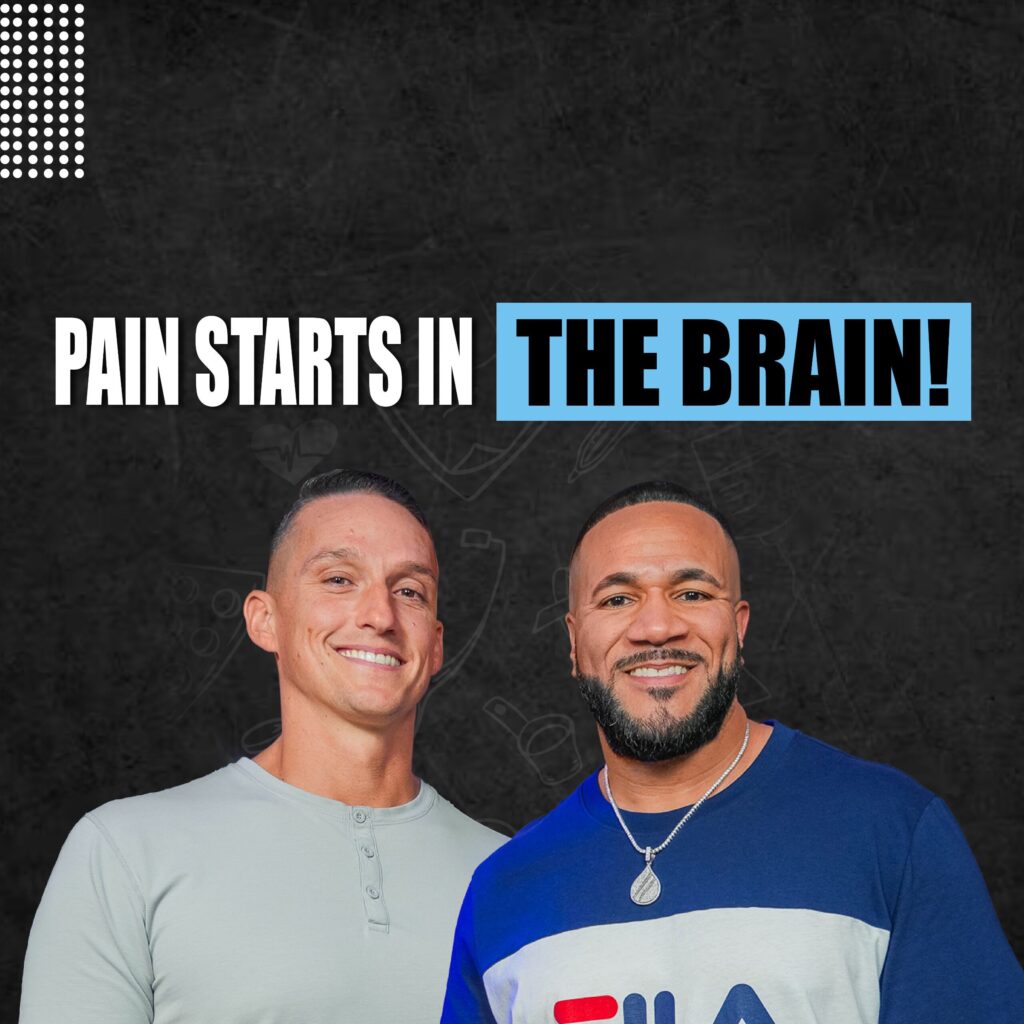
That’s the perspective Sam Tejada, CEO and Founder of Liquivida®, explored in a powerful conversation with Dr. Daniel Kimbley, founder of Nexus Family Chiropractic, on “A Healthy Point of View” podcast. And what unfolded challenges almost everything people think they know about health, healing, and the human body.
The Hidden Brain Problem Behind Stress, Pain and Burnout | Dr. Daniel Kimbley | Ep. 129
The Belief That Changed Everything
Long before he became a chiropractor, Dr. Daniel Kimbley carried a belief he couldn’t explain.
As a kid, even when given medication, he instinctively felt like his body could heal on its own. He didn’t have the science to back it up. He didn’t have the language for it. But the belief was there.
Life moved on. He became a high school English teacher, built a stable career, and checked all the boxes of what success was supposed to look like.
But something was missing.
“I was good at it,” he admitted. “But I had no purpose.”
That changed the moment he walked into a chiropractic workshop, reluctantly, after months of encouragement from his wife, and heard one sentence: Your body knows how to heal itself.
It wasn’t new to him. But for the first time, it was validated.
That moment didn’t just spark curiosity; it redirected his life.
From Burnout to Purpose
What started as simple curiosity turned into something deeper.
After beginning chiropractic care, Dr. Kimbley noticed something unexpected: his energy shifted. His motivation came back. His connection with his students improved.
Nothing in his external world had changed, but internally, something had.
That’s when he first heard the idea that would shape his entire career: “We’re waking up your brain.”
That statement reframed everything.
If the brain controls how the body functions… If it regulates how we think, feel, heal, and respond…
Then why isn’t it the center of how we approach health?
That question led him to leave his teaching career, sell everything, and move to pursue a doctorate in chiropractic care, focused not just on the body, but on the brain.
It’s Not About Pain, It’s About Performance
One of the biggest misconceptions about chiropractic care is that it’s only for people in pain.
Dr. Kimbley disagrees completely.
Pain is often the last signal, not the first.
By the time symptoms show up, the body has usually been compensating for a long time. The real issue isn’t always where it hurts; it’s how the system is functioning overall.
At the center of that system is the brain.
“The brain regulates everything,” he explained. “If you’re not focusing on that, you’re leaving something on the table.”
This is where his approach, brain-based chiropractic, differs from traditional methods.
Instead of adjusting the body based on where it hurts, he starts by asking a different question:
Where is the brain out of balance?
Measuring What Most People Miss
In most healthcare settings, treatment starts quickly.
But in Dr. Kimbley’s practice, it starts with measurement.
Through a series of physical neurological tests, including balance, coordination, eye movement, and more, he evaluates how different parts of the brain are functioning.
Not guessing. Measuring.
Because, as Sam Tejada emphasized during the conversation:
“You can’t improve what you don’t measure.”
These tests reveal imbalances between the left and right sides of the brain, areas that may not cause pain, but still affect how the body performs.
From there, adjustments are made with precision, not randomly, not symmetrically, but based on what the brain actually needs.
The Brain Is the Foundation
Modern wellness often focuses on inputs:
Better food. More supplements. Red light therapy. Cold plunges.
And while those tools can help, Dr. Kimbley believes they all rely on something more fundamental: The brain’s ability to regulate them.
You can eat perfectly. You can take every supplement. You can follow every biohacking trend.
But if the brain isn’t functioning properly, the body may not use any of it effectively.
It’s not just about what you put into the system. It’s about what the system can do with it.
When Stress Becomes Physical
One of the most eye-opening parts of the conversation was the connection between emotional stress and physical pain.
According to Dr. Kimbley, much of what people feel in their bodies isn’t purely physical.
It’s emotional.
Chronic stress can shift the nervous system into a constant fight-or-flight state. Over time, that imbalance affects how the brain regulates the body, leading to real, measurable symptoms.
Back pain. Shoulder tension. Fatigue. Even digestive issues.
For example:
- Lower back pain is often linked to stress around support or finances
- Shoulder tension can be tied to a loss of joy or emotional burden
These aren’t abstract ideas; they’re patterns he sees daily in his practice.
And when the brain is regulated, those symptoms often begin to resolve.
The Problem With Reactive Healthcare
One of the strongest themes throughout the conversation was the difference between reactive and proactive care.
Most people wait. They wait until something hurts. Until something breaks. Until something feels impossible to ignore. But by then, the issue has already been building for months or years.
Dr. Kimbley challenges that mindset entirely.
“If we only act when there’s a problem,” he explained, “we’re always behind.”
True health isn’t about chasing symptoms.
It’s about creating an environment where the body can function at its best before problems ever start.
Why So Many People Feel “Off”
There’s a growing number of people who don’t feel sick but don’t feel well either.
Low energy. Brain fog. Poor focus. Emotional burnout.
Nothing severe enough to diagnose. But enough to affect daily life.
Dr. Kimbley believes this is where brain-based care matters most.
Because these aren’t random issues. They’re signs of a system that’s not fully regulated.
And when the brain begins to function more efficiently, people often notice changes that go far beyond physical relief:
- Clearer thinking
- Better sleep
- Improved mood
- More presence in daily life
Not because something external fixed them, but because their system started working the way it was designed to.
You’re Not Broken
In a world that constantly points to what’s wrong, symptoms, diagnoses, and limitations, it’s easy to believe otherwise. But Dr. Kimbley’s work is built on a different idea:
The body isn’t failing. It’s responding.
And when you understand how it works, when you support it instead of fighting it, it has the ability to heal, adapt, and perform at a level most people never experience.
A Different Way to Think About Health
Health isn’t just about avoiding illness.
It’s about how well you function, physically, mentally, and emotionally.
And that starts with the one system that controls it all: The brain.
When that’s working right, everything else has a better chance to follow.