
There are a lot of conversations happening right now around longevity, biohacking, and “living better.” Most of them sound the same.
This one doesn’t.
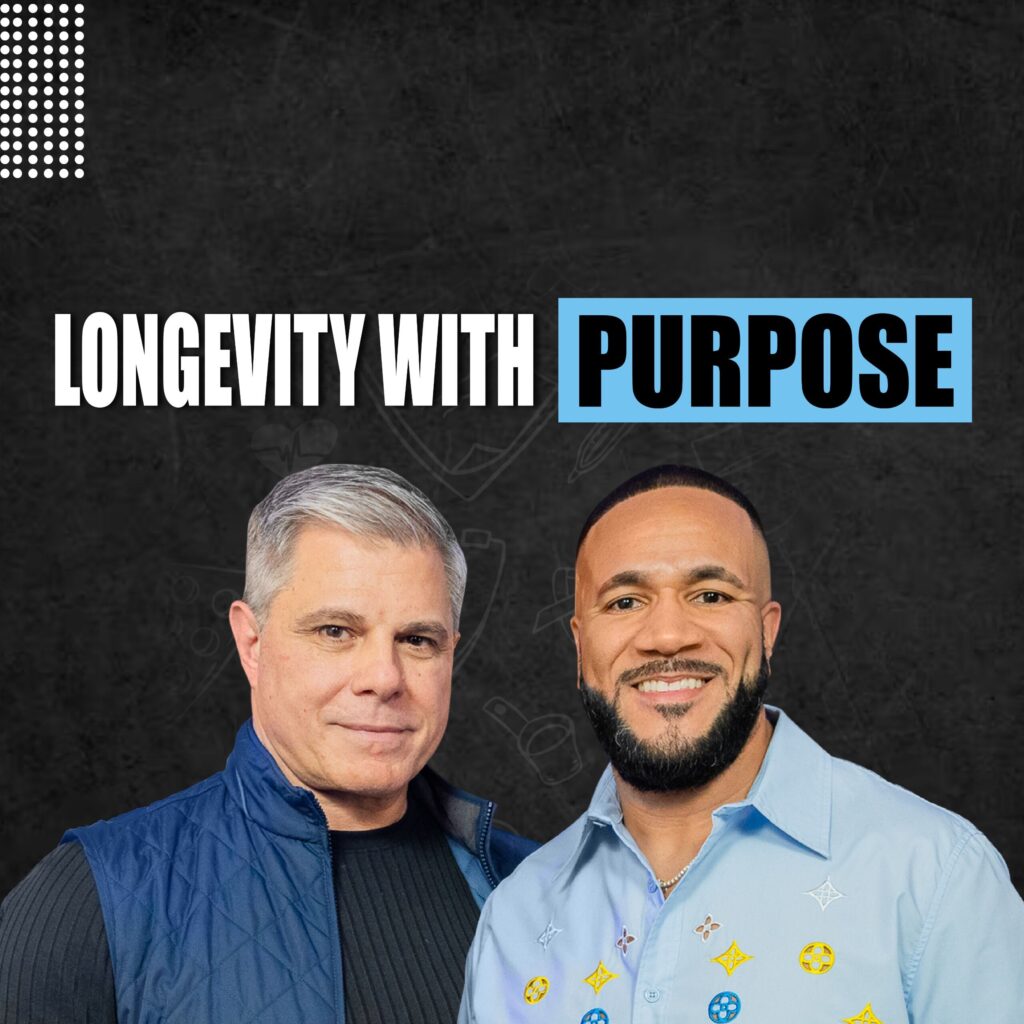
When Sam Tejada, CEO and Founder of Liquivida®, sat down with David Guttman, President of Titan Arc and Chairman of the Cryo Industry Association, the conversation quickly moved past trends and into something more real: how a single moment can completely change the way you see your life, your health, and what actually matters.
How To Live Longer, Stronger, And More Purposefully | David Guttman | Ep. 134
The Diagnosis That Shouldn’t Have Happened
At 24, David was told he had six months to live. Not as a possibility. Not as a “we need more tests.”
Three separate doctors told him the same thing. One of them was from one of the most respected cancer institutions in the world. So naturally, he believed it.
For about a month, he lived with that reality hanging over him.
Then, during a biopsy, everything changed. The mass they thought was cancer turned out to be a rare cyst. No cancer. No treatment needed. Just a complete misdiagnosis.
Relief hit instantly, but it wasn’t simple.
Because by that point, he had already started thinking differently.
Seeing Life Through a Different Lens
Most people don’t confront their mortality that early. And when they do later in life, there’s usually not much time to change direction.
David had time.
He talks about how, before all of this, he was driven, but in a very inward way. Focused on achievement, career, and success. Not unhappy, but not really asking deeper questions either.
That experience forced those questions.
And interestingly, what affected him most wasn’t just his own situation; it was watching how it impacted the people around him. His parents, especially.
That shifted his perspective in a way that stuck.
A Different Approach to Building and Leading
He didn’t suddenly stop being ambitious. That part didn’t change.
But the motivation behind it did.
Instead of just building for growth or success, he started thinking more about impact. About how what he was doing actually affected other people.
That mindset carried through his career as he built and exited multiple companies. And eventually, it led him into the longevity space, but not in the typical way.
Titan Arc Wasn’t the Plan, Until It Was
At one point, David was trying to slow things down.
He was doing podcasts, working on books, trying to keep things lighter. That didn’t last long.
After connecting with Dr. Rich Hanley, the idea for Titan Arc started to take shape. And it wasn’t just another wellness company.
The goal was to build something that actually fixes a problem, how fragmented and often biased health optimization has become.
Where Most Wellness Models Miss the Mark
One of the more honest points David makes is about incentives.
A lot of companies recommend specific tests, treatments, or protocols, and those same companies are making money from those recommendations.
That doesn’t automatically make them wrong. But it does create a built-in bias.
Titan Arc tries to remove that.
They don’t tie themselves to specific technologies or providers. If something better comes along, they switch. No loyalty to tools, only to outcomes.
It sounds simple, but it’s actually pretty rare.
Health Isn’t a Once-a-Year Check-In
Another idea he pushes back on is how people think about their health.
Most treat it like something you look at once a year. Get your labs done, maybe adjust a few things, then move on.
But that approach misses too much.
Your health isn’t static. It changes constantly, based on sleep, stress, what you’re eating, and your environment.
So instead of snapshots, the focus becomes tracking patterns over time. Looking at trends. Adjusting as things shift.
Cutting Through the Noise
If you’ve ever looked into advanced testing or functional medicine, you know how quickly it can get overwhelming.
Hundreds of biomarkers. Dozens of recommendations. Pages of data.
David’s approach is to simplify it.
Instead of trying to fix everything at once, they focus on two things first:
- what’s holding you back the most
- and where you can make the biggest improvement
Once those are handled, then you move on to the next layer.
It’s a lot more manageable, and honestly, more practical.
What Your Environment Is Doing to You
One of the more interesting parts of Titan Arc is how much attention they give to the environment someone lives in.
Not just lab results, but real, everyday factors.
They’ll look at:
- Water quality
- Air and mold exposure
- What’s in your kitchen
- How your sleep setup actually looks
And more often than not, the issues aren’t complicated. They’re just things people don’t think about.
Sleep, Still the Most Underrated Factor
At some point, the conversation naturally shifts to sleep.
And David is pretty direct about it.
Not sleeping enough isn’t something to be proud of. It’s something people get wrong, even though they know better.
He admits he used to run on very little sleep earlier in life. Now, it’s one of the first things he pays attention to.
What’s interesting is that even with all the technology available, there’s still no clear agreement on what “perfect” sleep actually looks like.
So instead of chasing a number, he focuses more on how he feels and how much true recovery he’s getting.
Finding a Balance That Actually Works
There’s also a practical side to his approach that stands out.
He’s not pushing extreme, all-or-nothing systems.
If someone wants to have a drink occasionally, fine. The plan adjusts around it.
If someone can only commit to a certain level of training, that’s where the optimization happens.
Because if it’s not sustainable, it doesn’t last.
And if it doesn’t last, it doesn’t matter.
What Longevity Really Looks Like
For David, this isn’t about trying to live forever.
It’s about making the years you do have count, and making sure they’re high-quality.
He talks about a simple vision: being 100 years old, hiking with his daughter, and watching the sunset.
Still active. Still present. Still capable. That’s the goal.
Not just more time, but a better time.