
There are some podcast conversations that stay safely on the surface. This was not one of them.
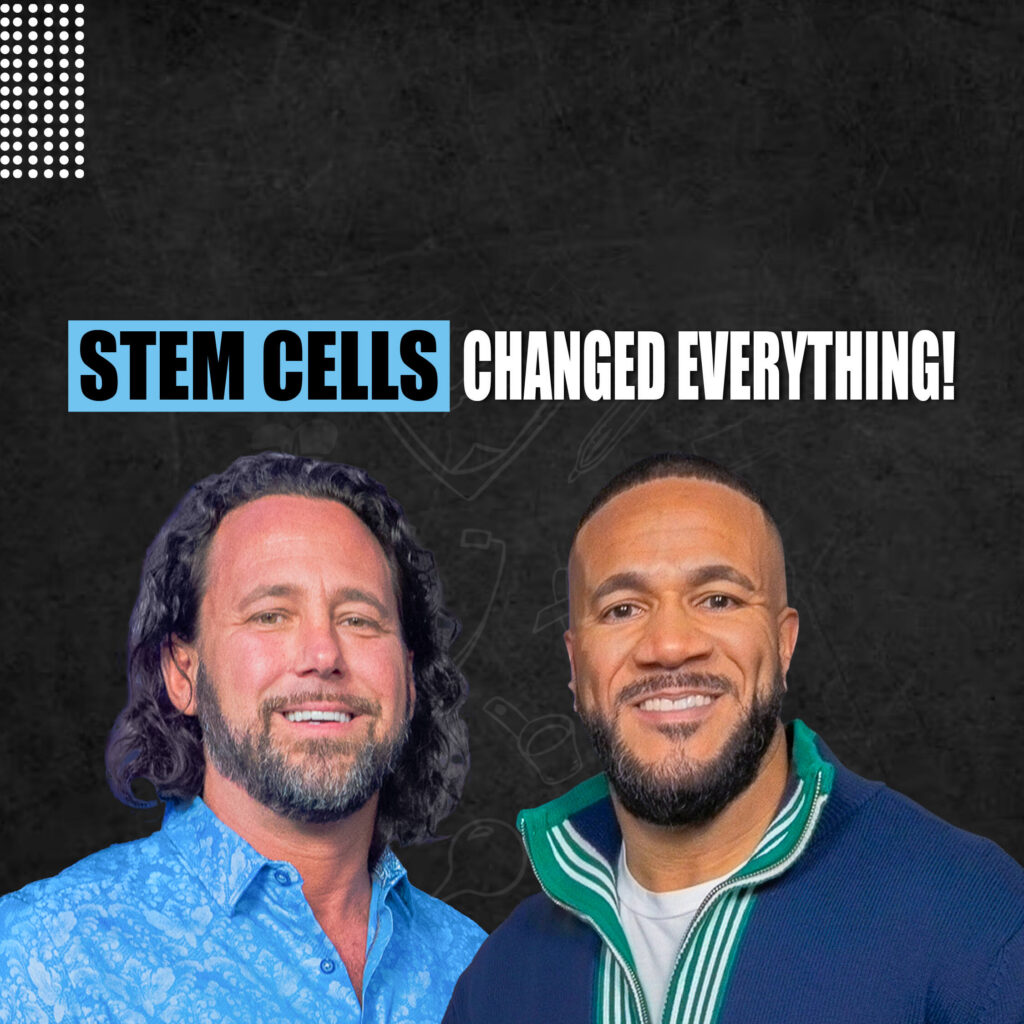
When Sam Tejada welcomed Ed Clay onto “A Healthy Point of View” podcast, the discussion moved through fighting, family, illness, cancer research, stem cells, emotional trauma, and the growing frustration many patients feel when traditional medicine leaves them with few answers.
What made the episode stand out was how personal it felt. Ed Clay did not enter healthcare through medical school or corporate healthcare systems. His path started with combat sports and eventually turned into a search to save his mother’s life.
That experience changed everything.
The Future of Stem Cells: Ed Clay Reveals What Medicine Is Missing | Ed Clay | Ep. 142
Before Medicine, There Was Fighting
Clay grew up in Nashville in a household where fighting was part of everyday life. His father and uncle had backgrounds in boxing, so combat sports were never something distant or unfamiliar. As a kid, he became obsessed with martial arts long before mixed martial arts exploded into mainstream culture.
He wrestled as a teenager, boxed, trained in Brazilian jiu-jitsu, and later studied Muay Thai during the early years of MMA.
Back then, there were no huge arenas packed with fans every weekend and no social media celebrity fighters. Clay described it as a much different era, one driven by curiosity rather than attention.
He wanted to understand what actually worked in a real fight.
During the episode, he laughed while remembering how he used to call martial arts schools out of the phone book, asking instructors whether their style could defeat another style. Kung fu schools, karate schools, jiu-jitsu schools, he questioned all of them.
That mindset never really left him.
Years later, he would approach medicine the exact same way: questioning assumptions, studying outcomes, and trying to separate marketing from reality.
Watching His Mother Run Out of Options
The conversation became much heavier once Clay spoke about his mother’s illness.
After years of dealing with rheumatoid arthritis, her condition had deteriorated badly. The medications she was prescribed caused severe complications, including infections and serious physical decline. Eventually, the situation reached a point where doctors no longer had meaningful options left to offer.
For Clay, accepting that answer was not enough.
He started researching alternative therapies and older medical approaches that had fallen outside the mainstream conversation. That search led him into the world of immunotherapy and eventually toward a clinic in Tijuana, Mexico, connected to Gerson Therapy.
At the time, the facility had already closed.
Instead of moving on, Clay and his business partners tracked down the owner, purchased the hospital, and rebuilt it. His mother became one of the first people treated there after the reopening.
He explained that she arrived in a wheelchair and eventually walked out of the facility on her own.
Whether someone agrees with every treatment discussed in the episode or not, it was obvious that the moment had a massive emotional impact on him. It changed the direction of his life completely.
Building Something Outside the Traditional System
One of the more interesting parts of the conversation was hearing how quickly Clay’s role evolved after that experience.
What began as a desperate attempt to help a family member slowly turned into a larger mission focused on regenerative medicine, cancer care, diagnostics, and research.
Today, his companies operate laboratories and treatment facilities that bring together physicians, scientists, researchers, and specialists from multiple disciplines. During the podcast, he described environments where medical doctors and PhD scientists work side by side instead of functioning in completely separate worlds.
That collaboration became one of the foundations of his approach.
Clay repeatedly spoke about the importance of asking deeper questions instead of rushing toward surface-level answers. He believes medicine often becomes too fragmented, with different specialties focusing only on isolated pieces of a patient’s condition rather than looking at the entire picture.
Throughout the discussion, he returned often to the phrase “root cause.”
Not as a trendy wellness slogan, but as a real challenge inside healthcare.
His Perspective on Cancer Treatment
The cancer discussion was one of the strongest parts of the interview because it avoided exaggerated claims.
Clay did not speak like someone trying to sell miracle cures. In fact, he openly admitted how difficult metastatic cancer still is to treat, even with modern advances in immunotherapy and precision medicine.
What he emphasized instead was information.
He believes patients need far more detailed diagnostic work than they often receive. Genetic sequencing, tumor analysis, immune profiling, and personalized treatment planning were all topics he discussed throughout the episode.
Rather than treating cancer as one single disease, Clay described it as something highly individualized. According to him, understanding what is specifically driving a person’s cancer becomes critical when deciding how to approach treatment.
At the same time, he acknowledged that medicine is still searching for better solutions.
One of the more honest moments came when he admitted that extending life and improving quality of life has often been more achievable than fully curing advanced cancers. That level of honesty gave the conversation weight because it avoided the unrealistic certainty that often surrounds conversations in alternative medicine spaces.
Why He Believes Mindset Matters
The discussion eventually moved into emotional health and mindset, an area both Clay and Sam seemed deeply passionate about. Clay connected it back to his years in fighting.
No serious coach prepares an athlete only physically. Fighters work on mindset, discipline, emotional control, confidence, and mental resilience before entering competition. Yet people facing major illnesses are often never taught how important those same psychological factors can become.
He described emotional healing sessions at their facilities where patients and families confront unresolved pain, fear, guilt, stress, and emotional burdens together.
According to Clay, some of the most powerful transformations happen when people finally release the emotional weight they have carried for years.
The conversation never suggested that mindset alone cures disease. Instead, both men spoke about emotional health as one important piece of a much larger healing process.
Those moments gave the episode a more grounded and human tone compared to standard medical interviews.
Regenerative Medicine and the Push for Better Standards
The latter part of the episode focused heavily on stem cells and regenerative medicine.
Clay explained that one of his biggest frustrations with the industry is the lack of consistency and transparency surrounding certain products. He discussed how many regenerative therapies are marketed aggressively despite limited standardization or clear validation.
Rather than attacking competitors directly, he focused on the importance of research, laboratory quality, and accurate labeling.
He described how his team grows stem cells in carefully controlled environments designed to better mimic conditions inside the human body. He also spoke about combining therapies instead of relying on a single intervention.
At CPI, patients may receive combinations involving hyperbaric oxygen therapy, NAD support, ozone therapy, nutritional strategies, rehabilitation, and regenerative procedures working together.
For Clay, regenerative medicine works best when the body is supported from multiple angles instead of chasing a single “magic” treatment.
Clay came across as someone still learning rather than someone pretending to have everything figured out. In fact, he admitted several times that the deeper he moves into research, the more complicated the human body appears.
That humility probably became one of the most memorable parts of the interview.
The same curiosity that once pushed him toward martial arts now drives his interest in regenerative medicine and advanced research. He still wants proof. He still wants results. He still wants to know what truly works.
Only now, the stakes involve far more than winning a fight.
They involve people trying to hold onto their health, their future, and in many cases, their lives.