

We have more information about our health than ever before. We can track sleep, count steps, monitor heart rate, study blood work, and collect data from devices throughout the day. But having more information does not always mean we understand ourselves better.
That tension came up throughout a recent episode of “A Healthy Point of View” podcast, where Sam Tejada, CEO and Founder of Liquivida®, sat down with Chervin Jafarieh, founder of Cymbiotika, for a conversation that went well beyond supplements and wellness trends.
They talked about technology, self-awareness, purpose, trauma, personal growth, and the importance of paying attention to what is happening inside the body rather than constantly looking outside of ourselves for answers.
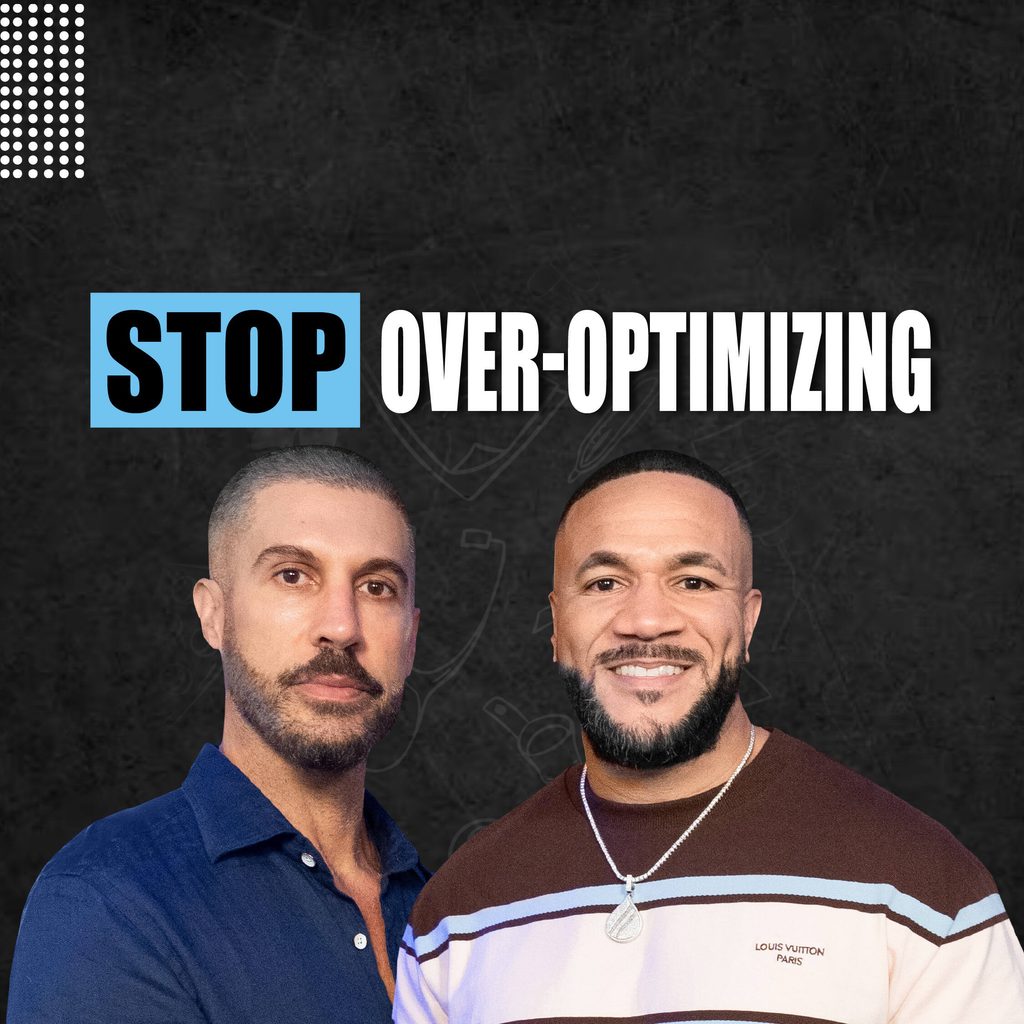
Are We Biohacking Ourselves Into Worse Health? Chervin Jafarieh | Ep. 175
Health Starts With the Basics
For Chervin, the conversation around health has to begin with the basics.
He has spent years studying health and wellness, but his perspective is not simply about adding more products, more data, or more protocols. He repeatedly came back to awareness, understanding your body, paying attention to how you feel, and being willing to look honestly at your habits.
That idea also came up when he reflected on his younger years. Chervin described how intensely he trained and built his body in his 20s. Looking back, he questioned whether some of that drive was connected to deeper experiences from childhood and the need to create a kind of protection around himself.
It was a more personal side of the conversation. The pursuit of physical strength, he suggested, is not always just about fitness. Sometimes there are other reasons underneath it that only become clear when a person is willing to examine them.
That kind of self-examination can be uncomfortable.
Chervin spoke about moments of breakdown and how they can force a person to confront things they have avoided. Rather than immediately trying to escape discomfort, he believes there can be something valuable in sitting with it and asking what it is trying to reveal.
Are We Measuring Too Much?
The conversation eventually moved toward one of the biggest questions in modern wellness: how much technology do we actually need?
Today, people can track almost everything. Sleep scores, recovery, HRV, calories, workouts, and countless other measurements are available at the tap of a screen.
Chervin does not reject technology altogether. His concern is what happens when measurement becomes an obsession.
He explained that he has used wearables himself, sometimes for a period of time to establish a baseline. But he does not want a device constantly telling him how his body is performing.
There is a difference between learning from data and becoming dependent on it.
Sam offered a similar perspective, comparing health data to tracking food and macronutrients while bodybuilding. Measuring can teach you a lot in the beginning. You can see what is actually happening rather than relying on assumptions. But eventually, you should be able to understand your body without having to measure every single thing.
That distinction is important.
A number is useful when it gives you context. It becomes less useful when it starts replacing your own awareness.
Chervin also pointed out that there is no universal number that everyone should be chasing. He used HRV as an example. One person’s baseline will not necessarily look like another person’s, so comparing yourself constantly to someone else’s data can miss the point.
The goal is to understand your own baseline and notice meaningful changes.
Technology Should Be a Tool, Not the Answer
The discussion of technology also touched on artificial intelligence, wearables, and the growing culture of optimization.
There is a temptation in the wellness world to believe that the next device, test, or piece of information will finally give us the answer.
But Chervin questioned that mindset.
The human body is complicated. It cannot always be reduced to a dashboard.
He believes technology can be helpful when it makes something easier to understand. The problem begins when people start treating every measurement as something that needs to be optimized.
The conversation around Bryan Johnson came up in this context. His highly measured approach to health represents just how far the pursuit of optimization can go.
Chervin’s takeaway was not that measurement has no value. It was that people need to know why they are measuring something in the first place.
Start with a baseline. Learn. Make changes when necessary. Then step back and live your life.
Purpose Changes the Way You See Health
For Chervin, health is also connected to something much bigger than physical performance.
He spoke openly about purpose and the feeling that his work is tied to something beyond simply building a company.
That sense of purpose has influenced the way he approaches Cymbiotika and the work he does in health and wellness. He described purpose as something that gets him out of bed and keeps him moving, even when the work comes with a cost.
Sam connected with that idea through his own experiences as a firefighter and paramedic and through his work in healthcare.
Both men have seen situations where people search for solutions only after something has already gone wrong. That experience has shaped their interest in a more proactive approach to health.
But the conversation did not turn into a simple message about optimizing yourself every day.
If anything, it moved in the opposite direction.
There was a recurring theme of slowing down enough to actually pay attention.
The Importance of Being Honest With Yourself
Near the end of the conversation, Sam asked Chervin a series of questions designed to get beyond the usual interview answers.
One question focused on inadequacy.
Chervin’s response was surprisingly simple: humility matters.
He acknowledged that he can sometimes become too focused on his own way of thinking and forget that other people may be experiencing the same situation very differently.
That recognition is important because self-awareness is not just knowing your strengths. It also means noticing where your own thinking becomes limited.
He talked about becoming more present, less reactive, and more deliberate with decisions.
It is an idea that fits naturally with the larger conversation. Health is not only about knowing what to eat, what supplement to take, or what number to improve. It also involves knowing when you are reacting, when you are avoiding something, and when you need to stop and look at a situation differently.
Learning to Discern
Chervin’s final message to listeners brought the conversation back to something very basic: discernment.
He encouraged people to slow down and really examine things before accepting them.
His point was not to blindly reject information, but to experience things for yourself, to observe, question, and pay attention.
That applies to health, technology, relationships, and even the way we think about ourselves.
There will always be another metric to track, another product to try, and another protocol promising better results.
But knowing yourself cannot be outsourced.
You can use technology. You can use data. You can work with doctors and other professionals. You can learn from people who have spent years studying health.
At some point, though, you still have to pay attention to your own experience.
For Chervin, that means being radically honest, staying open to changing your perspective, and remembering that self-love is not the same thing as ego. It is recognizing that you are here for a reason and asking yourself how you are showing up for your own life.
That may be a less measurable approach to health.
But it is one worth thinking about.