
Most conversations about longevity focus on what science might make possible. New treatments, better technology, longer lifespans. At what point, though, should we stop and ask how those advances are being achieved?
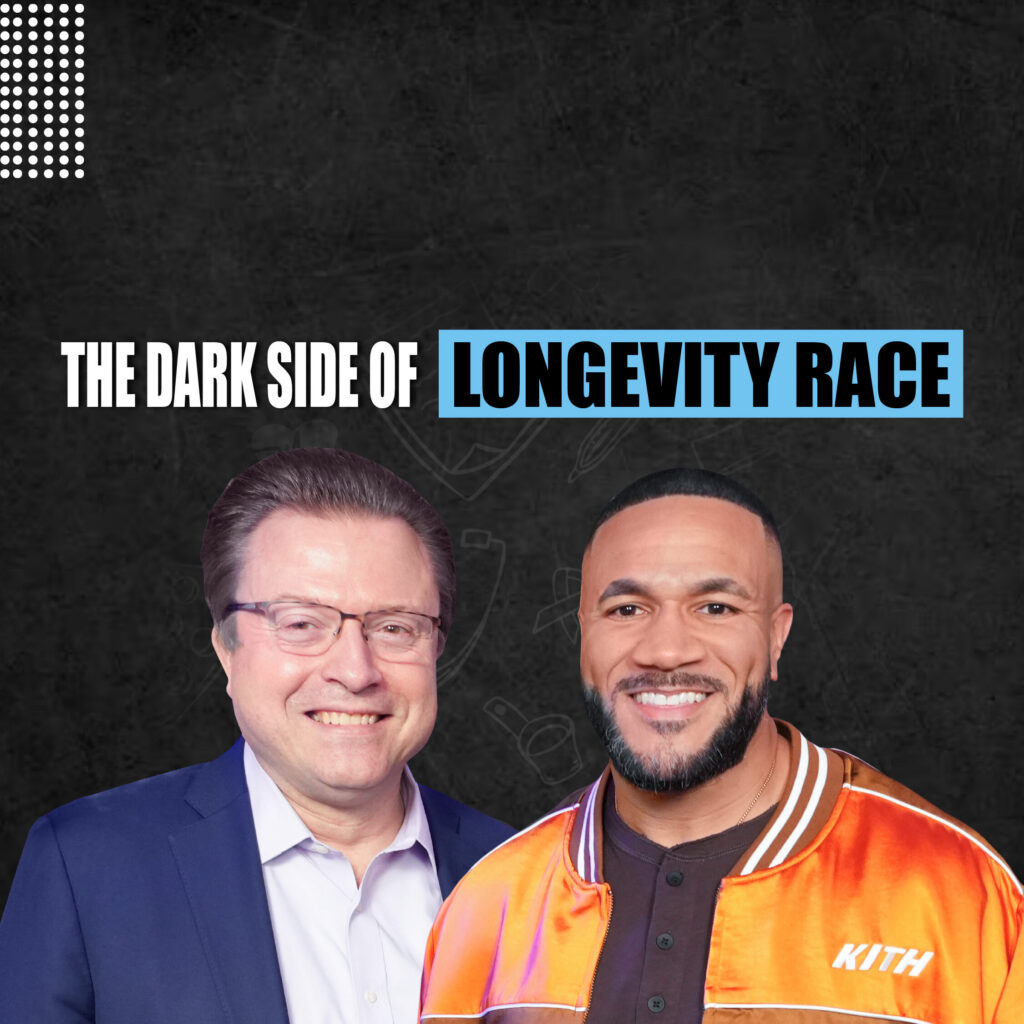
That was the difficult question at the center of a conversation between Sam Tejada, CEO and Founder of Liquivida®, and Jan Jekielek, Senior Editor at The Epoch Times and author of Killed to Order, on “A Healthy Point of View” podcast.
Their discussion moved into a subject that is rarely part of mainstream longevity conversations: allegations of forced organ harvesting in China and the people who may be paying the price for it.
Sam opened the episode by admitting that this wasn’t a subject he had expected to discuss on a longevity podcast. But after meeting Jekielek at a health event in Washington, D.C., he realised there was a side of the industry he needed to understand.
The Dark Side of Longevity Race! Forced Organ Harvesting Explained | Jan Jekielek | Ep. 185
Why the Organ Transplant Numbers Matter
Jekielek makes an important distinction at the beginning of the conversation. Organ donation, when carried out with proper consent and ethical safeguards, saves lives. Forced organ harvesting is something entirely different. It involves taking organs without the donor’s consent.
His investigation focuses on China, where he says the transplant industry expanded rapidly in the early 2000s. The concern, he explains, is that this growth was not supported by a known ethical supply of donated organs.
To understand why that matters, Sam shares something personal. His sister has received two kidney transplants. He remembers how the process worked: several potential recipients could be called in, tests were carried out, and the medical team had to establish whether the organ was a suitable match. It was not a matter of simply finding an organ and handing it over.
Jekielek uses that example to explain the problem with reports of extremely short transplant waiting times in China. He recalls the case of a patient who was told he could receive a heart in approximately two weeks. The patient travelled to China and returned with a new heart.
For Jekielek, the scheduled nature of that operation raised a serious question. A heart becomes available through circumstances that cannot ordinarily be planned in advance. How, then, could a transplant be arranged for a particular date?
It is this kind of account, alongside research and testimony from other investigators, that forms part of the case examined in Killed to Order.
The People at the Centre of the Investigation
One of the groups discussed at length is Falun Gong, a spiritual discipline involving meditation, exercises, and the principles of truthfulness, compassion, and tolerance.
Jekielek’s connection to the subject began personally. He had suffered from Guillain–Barré syndrome, a condition that affected his ability to move and ultimately disrupted his career as an evolutionary biologist. After learning about Falun Gong from someone who had experienced improvements in their own health, he decided to try the practice.
A few months later, he visited his neurologist. He recalls being told that he was in complete remission and that whatever he was doing, he should continue doing it.
He later learned that Falun Gong practitioners in China were being persecuted. That discovery pushed him towards human rights reporting and, eventually, his work with The Epoch Times.
According to Jekielek, the persecution began in 1999, when Falun Gong had an estimated 70 to 100 million practitioners in China. He describes a campaign that involved imprisonment, torture, and the systematic dehumanisation of the group.
He also discusses reports of detained practitioners being subjected to blood tests and medical examinations. These accounts have become an important part of concerns that prisoners were being assessed for organ compatibility.
Jekielek argues that the treatment of these prisoners and the growth of China’s transplant industry cannot be examined as entirely separate issues. His investigation explores the possibility that the two are connected.
When Longevity Takes a Different Turn
The conversation takes another turn when Jekielek discusses China’s elite longevity programme, known as Project 981.
He says the programme was promoted as a way for selected individuals to live significantly longer. Chinese publicity around the project claimed participants lived 18 years longer than the average person. Jekielek is careful to question the reliability of those figures, noting that official Chinese statistics should be treated with considerable caution.
Then Sam brings up the widely discussed exchange between Xi Jinping and Vladimir Putin during a military parade in Beijing. Their conversation touched on organ transplants and the possibility of reaching 150 years of age.
For Jekielek, the exchange brought two subjects he had been investigating into sharper focus: the country’s interest in elite longevity and the allegations of forced organ harvesting. He says he had not initially connected the two, but the remarks made him reconsider their relationship.
He does not present every detail as established fact. In fact, he repeatedly distinguishes what he has evidence for from what he suspects. That distinction matters when discussing allegations this serious.
Medical Technology Has Two Sides
Another part of the interview concerns ECMO machines, which can temporarily support the heart and lungs when a patient is critically ill.
Jekielek points to the large number of portable ECMO machines purchased by transplant hospitals in China. He raises questions about whether this technology could also make it possible to preserve organs for longer and extract more organs from a body.
The concern is not that ECMO technology itself is harmful. It is a life-saving medical tool. The question Jekielek raises is how equipment designed to save lives might be used in a system accused of serious abuses.
He also discusses newer organ-preservation technology that could allow organs to remain viable for longer periods outside the body. Such developments could help patients who need transplants, but he worries about the possibility of this technology being misused. He argues that export controls deserve serious consideration.
It is a reminder that a medical breakthrough cannot be judged only by what it can do. The circumstances in which it is used matter too.
Who Is Responsible Beyond China?
Sam and Jekielek also discuss whether other countries have a role to play in addressing forced organ harvesting.
Jekielek points to connections between American institutions and China’s transplant sector. These include medical training, research relationships, equipment, and drugs used to prevent organ rejection. He believes the United States needs to examine whether its own institutions have helped support practices that should never be tolerated.
They discuss Senate Bill S.4009, which, at the time of the recording, had passed the Senate unanimously and was awaiting action in the House. The proposed legislation included targeted sanctions against people involved in forced organ harvesting and called for cooperation among government agencies to investigate the issue.
For Jekielek, public awareness is only one part of the work. Institutions must also be willing to look at their own involvement and take action.
What Are We Actually Trying to Achieve by Living Longer?
Towards the end, the discussion returns to longevity itself.
Sam asks where the pursuit of a longer life might lead, particularly as wealthy individuals invest heavily in technologies intended to extend human lifespan. Jekielek does not dismiss the value of medical progress. He acknowledges that new treatments and technologies can improve lives. But he questions what happens when living longer becomes the central purpose of life.
He connects this obsession to a wider question about how people understand human existence. If life is viewed only in material terms, he suggests, the desire to preserve and extend the body may become overwhelming.
The conversation also touches on preventive healthcare, education, and the importance of giving people the information they need to make decisions about their health. Sam points out that knowing what is healthy is not always enough; people also need to put that knowledge into practice.
For both men, the discussion comes back to responsibility. Medicine should help people, not turn them into commodities. Longevity research deserves attention, but so do the ethical questions that come with it.
Jekielek hopes that more people will examine the evidence surrounding forced organ harvesting, that legislation will move forward, and that those with credible information will be able to speak safely.
The episode is uncomfortable in places, and that is precisely why the subject deserves attention. There is plenty of discussion about how to add years to human life. Far less attention is given to the conditions under which those years might be gained. That is a conversation the longevity industry cannot afford to ignore.