

For many veterans and first responders, the hardest part of the job doesn’t necessarily end when the uniform comes off.
The physical injuries may heal. The deployment may be over. The emergency calls may stop. But the effects can continue in ways that aren’t always easy to see: chronic health problems, changes in mood, sleep issues, metabolic concerns, hormonal changes, toxic exposures, and the psychological weight of years spent in high-stress environments.
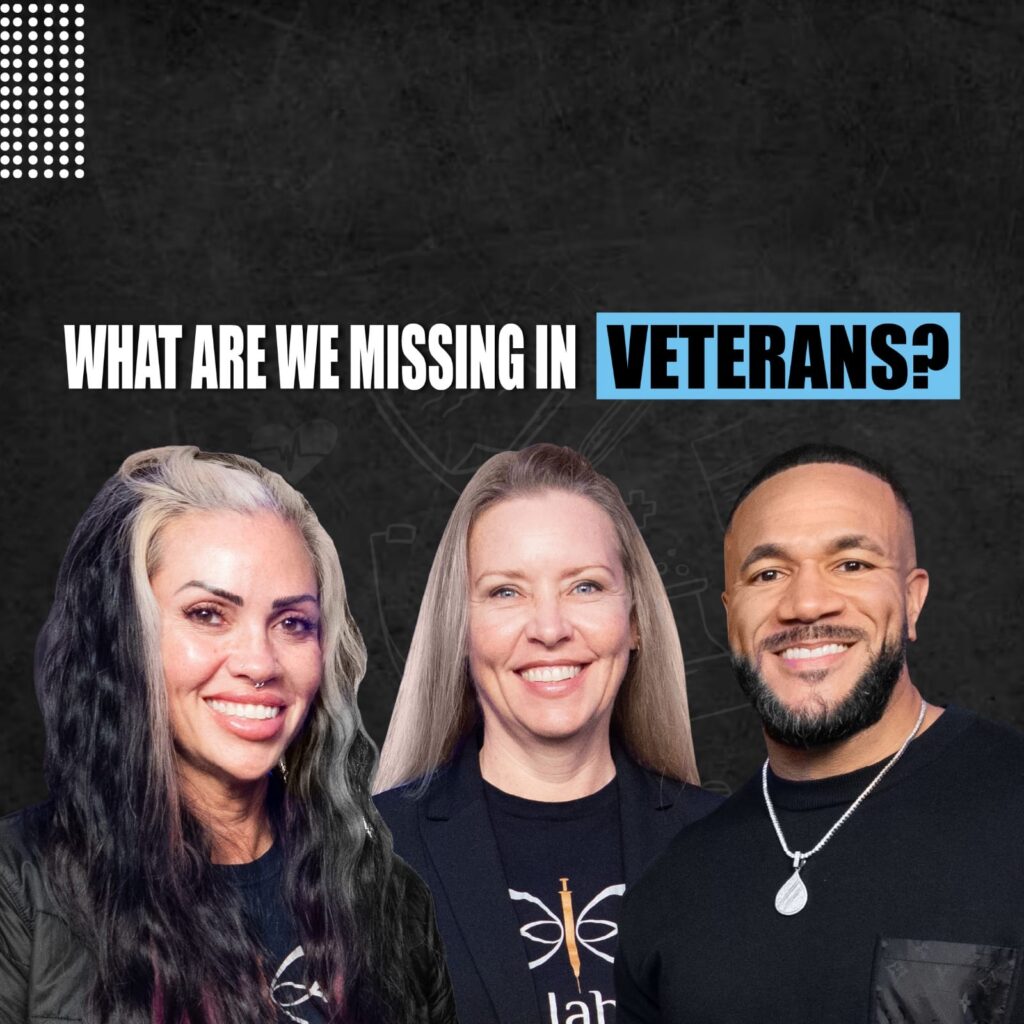
On an episode of “A Healthy Point of View” podcast, Sam Tejada, CEO and Founder of Liquivida®, sat down with Dr. Erin and Nikki, two Navy veterans, medical professionals, and Co-Founders of Lab Jab Aesthetic Wellness, for a candid conversation about what they have witnessed throughout their careers, and why they believe veterans and first responders may need a more complete approach to healthcare.
Their message wasn’t that conventional medicine has failed entirely. Both women built their careers within that system. Instead, they questioned what happens when complicated health problems are reduced to a diagnosis, a prescription, and a brief appointment.
For them, the starting point is simple: look at the whole person.
From Military Service to Medicine
Dr. Erin’s connection to the military began long before she put on a uniform. Her father was a Vietnam veteran, her grandfather served in World War II, and military service had been part of her family’s history for generations.
At 19, after struggling to find direction in college, she enlisted in the Navy as a corpsman.
Her career eventually took her through emergency medicine, nursing, and mental health. One of the experiences that shaped her most was working at Naval Medical Center Balboa in California, where she was involved with the Wounded Warrior Comprehensive Combat Casualty Care program.
There, she encountered young service members dealing with devastating physical injuries and the enormous challenge of rebuilding their lives afterward.
The experience pushed her toward psychiatric nursing and eventually a Doctor of Nursing Practice, where she focused on PTSD, traumatic brain injuries, and the relationship between physical trauma and mental health.
Nikki’s path was equally unconventional.
Originally focused on tennis and unsure of what she wanted to do after high school, she visited a Navy recruiter after seeing her brother’s military career. She eventually became a search-and-rescue corpsman, working aboard helicopters and taking part in demanding rescue operations.
She later became a rescue swimmer instructor, became a nurse, and completed multiple deployments, including three consecutive deployments overseas.
But her experiences also exposed her to a problem she felt strongly about: medical personnel were sometimes expected to handle extremely complex trauma situations without enough preparation.
Rather than simply accepting that, Nikki spent the later part of her military career helping develop training programs designed to better prepare nurses for those situations.
The Trauma Doesn’t Always Stay on the Battlefield
One of the most powerful parts of the conversation came when Sam asked the women about the most difficult things they had witnessed.
Nikki recalled working in a trauma operating room during her deployment to Afghanistan, when severely wounded service members arrived in large numbers. The injuries were difficult to comprehend, and the experience stayed with her.
Erin recalled being a young EMT when she encountered a patient with a devastating facial gunshot wound. She also described treating a sailor who suffered a severe chest injury from a grinder.
These were not simply difficult moments at work. They were experiences that could remain with someone long after the shift ended.
That became even more apparent when Erin moved into mental health and began working with service members who were struggling after years of military service.
She began asking whether every problem labeled as psychiatric was necessarily psychiatric.
Could hormones play a role? Could a physical condition contribute? Could medications themselves be creating additional problems?
Those questions eventually changed how she approached patients.
When Mental Health May Not Tell the Whole Story
For both women, this became a recurring concern.
Nikki described seeing people enter the healthcare system with complex problems and leave with medications without necessarily having the underlying issues investigated.
Erin saw something similar while working with Marines.
Some older service members were presenting with symptoms that appeared to be mental health problems. But rather than immediately assuming that was the complete explanation, she began looking at other factors, including laboratory results, hormones, physical health, and medication use.
She recalled one service member who arrived carrying a brown shopping bag filled with medications. When the medications were emptied onto a gurney, there were so many that they covered it.
For Erin, it raised an uncomfortable question: if someone is taking numerous medications and still feels terrible, should the conversation stop there?
Her experience led her toward a more integrative way of thinking about care, one that considers physical and mental health together rather than treating them as completely separate.
The Hidden Health Burden of Service
The discussion also went beyond physical trauma.
Veterans and first responders can spend years working around environments where exposure is part of the job. The women discussed concerns surrounding fuels, heavy metals, contaminated environments, burn pits, firefighting, and other occupational exposures.
Burn pits were a particularly important part of the conversation.
Nikki discussed work involving veterans who had developed serious illnesses and the questions that emerged around their exposure to burn pits, where military waste could include plastics, batteries, fuel, human waste, and other materials.
They also discussed how exposure concerns can extend beyond deployments. Military bases, ships, aviation environments, firefighting, and weapons training can all present different occupational challenges.
The larger point was that a person’s medical history doesn’t necessarily begin with the symptom that brought them into the doctor’s office.
Sometimes, understanding the environment they have spent years working in is part of understanding their health.
The Transition Home Can Be Its Own Challenge
Leaving the military can bring another kind of difficulty.
After years of structure, purpose, routine, and a clearly defined mission, transitioning into civilian life can leave some veterans wondering what comes next.
Erin explained that she has seen people begin struggling as retirement approaches. For someone who has spent decades identifying themselves through their service, suddenly losing that structure can be deeply difficult.
And when problems arise, they can be interpreted entirely through a mental health lens without necessarily considering the physical changes that may be occurring at the same time.
Nikki shared the story of a Special Forces veteran who returned from Afghanistan struggling severely and seeking help. Instead of finding the kind of support he was looking for, he ended up on multiple psychiatric medications, including medication intended to address sleep problems.
For Nikki, stories like this reinforced the need to ask more questions before assuming there is only one solution.
Metabolic Health Is Part of the Conversation Too
The discussion eventually expanded beyond veterans’ mental health and toxic exposures into another issue affecting Americans broadly: metabolic health.
Both women emphasized the importance of nutrition and lifestyle, while also acknowledging that medications such as GLP-1s can be useful tools for appropriate patients.
Their concern was what happens when medication becomes the entire strategy.
Nikki spoke openly about her own history, including once weighing 250 pounds and struggling with what she described as an addiction to sugar.
For her, changing her relationship with food was as important as losing weight.
The goal, she explained, isn’t necessarily perfection. It’s learning how to make healthier choices consistently and building habits that can continue even when a medication or treatment is no longer part of the picture.
That philosophy reflects the broader approach Erin and Nikki advocate: don’t just manage the number on the scale. Understand the habits, environment, nutrition, and metabolic factors behind it.
Healthcare Doesn’t Have to Be Either Conventional or Integrative
Despite their criticism of certain gaps in healthcare, neither woman suggested abandoning conventional medicine.
When someone suffers a major trauma, experiences a heart attack, or needs emergency surgery, conventional medicine can be lifesaving.
Their argument is about what happens outside those acute situations.
For chronic conditions, they believe there is room for conventional medicine and integrative approaches to work together.
That can mean looking more closely at nutrition, lifestyle, hormones, metabolic health, environmental exposures, and other factors alongside conventional treatment.
The women also discussed their experiences using high-dose intravenous vitamin C alongside other cancer care. They shared observations from patients who reported feeling better during treatment, while acknowledging that these experiences should not be interpreted as proof that the therapy cures cancer.
For them, the broader philosophy remains the same: patients deserve care that looks beyond one diagnosis or one symptom.
A Different Vision for Veteran Care
Ultimately, Erin and Nikki want to create more than another place where veterans can receive treatment.
They envision a community where veterans and first responders can access more comprehensive health services, learn about nutrition and wellness, connect with other people who understand their experiences, and receive support before they reach a crisis point.
That sense of community may be just as important as the medical care itself.
Veterans and first responders spend their careers taking care of everyone else. Their health often becomes the priority only after something goes wrong.
The conversation between Sam, Erin, and Nikki challenges that approach.
Maybe the better question isn’t simply, “What is wrong?”
Maybe it’s, “What happened to this person, what have they been exposed to, how have they been living, and what else could be contributing to the way they feel?”
For these two Navy veterans and medical professionals, better healthcare begins with being willing to ask those questions.
And sometimes, looking deeper is where the real conversation about health begins.