

For Sat Randhawa, the path into health optimization began with an experience that completely changed the way he looked at his own health.
Before becoming the Founder and CEO of One Hype Wellness, Sat was working as a trader at Goldman Sachs in New York. Long hours, little sleep, and a fast-paced lifestyle were normal. Health technology was not yet part of his world.
Then a football injury changed everything.
A serious compound fracture led to compartment syndrome and the possibility of losing his leg. During his recovery, a physiotherapist suggested hyperbaric oxygen therapy. Sat began spending time inside a hyperbaric chamber, and the experience became a turning point. What started as a search for recovery eventually became a much deeper interest in the technologies that could influence human performance, recovery, and longevity.
That journey eventually took him from hyperbaric oxygen and red light therapy to something even more complex: the brain.
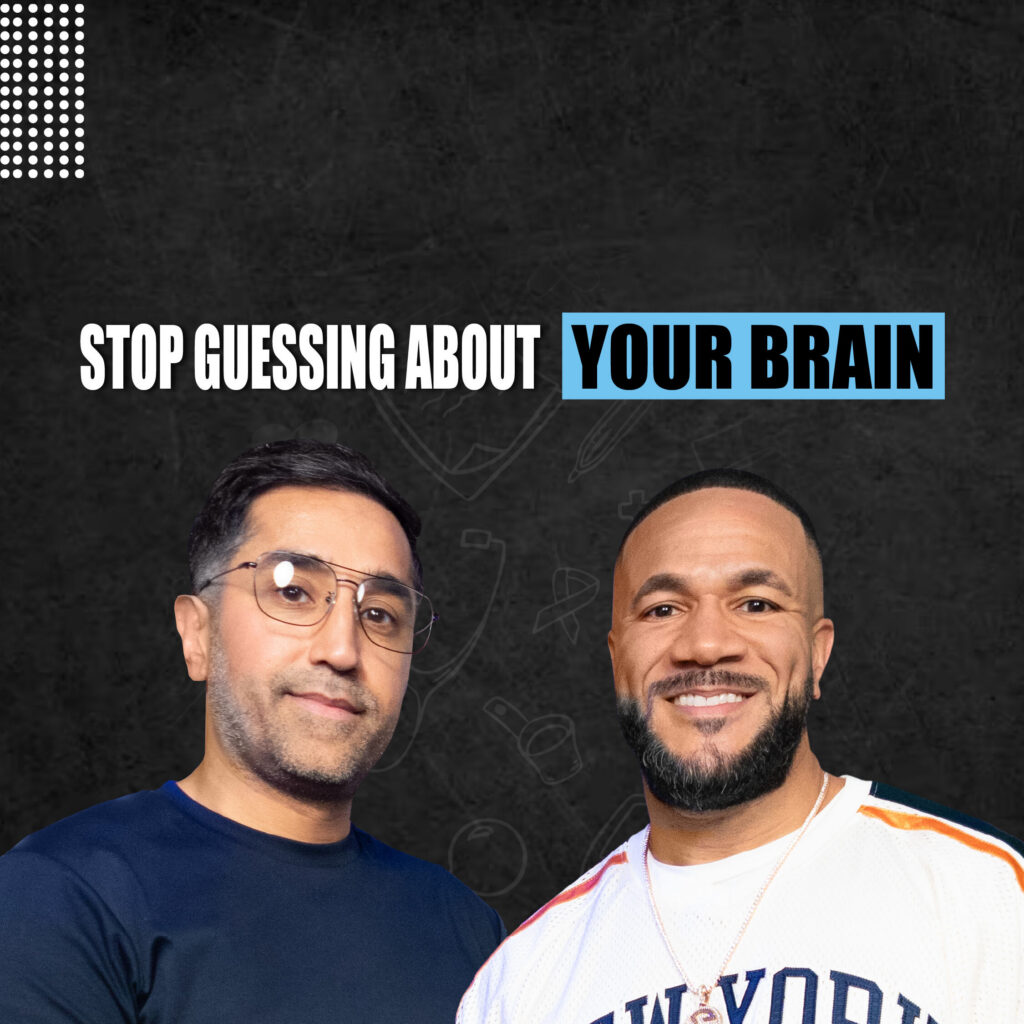
Speaking with Sam Tejada, CEO and Founder of Liquivida®, on “A Healthy Point of View” podcast, Sat explained why he believes understanding the brain should become a much bigger part of modern health care.
The Brain Test That Could Change How We Treat ADHD, Anxiety & Brain Fog | Sat Randhawa | Ep. 168
From Performance to Brain Mapping
Sat’s interest in brain health grew through his work with high performers, particularly professional athletes.
One conversation with a professional boxer made him realize just how much remained unknown about the brain. The boxer mentioned occasionally waking up unsure where he had left his keys and wondered whether it could be connected to his years in the ring.
That led to brain mapping.
The results gave Sat a new perspective on what could be learned by looking at the brain’s activity rather than simply asking someone how they felt.
But there was a problem: the process was difficult and time-consuming.
That question- how can this information become more accessible? eventually contributed to the development of One BrainX.
Sat describes the concept simply: a way of looking at the brain much like an EKG looks at the heart. Rather than relying entirely on broad labels, brain mapping can provide information about an individual’s brain activity and connectivity.
And according to Sat, that individual picture matters.
There Is No “One-Size-Fits-All” Brain
One of the biggest points Sat returns to throughout the conversation is that two people can experience similar problems while having very different brain patterns.
Someone struggling with focus may have a slower, foggier brain state. Another person may struggle with focus because their brain is operating at the opposite end of the spectrum, with excessive activity and difficulty settling down.
The outward symptom may look similar. The underlying picture may not be.
That is why Sat emphasizes the idea of being an “N of one”, understanding the individual rather than assuming everyone should be treated according to the same template.
He believes the goal should not simply be to make every brain look the same. Instead, it is about understanding someone’s baseline and helping them move toward a more functional state for their specific needs.
This becomes particularly important when discussing performance.
Training the Brain Under Pressure
For athletes, military personnel, and first responders, being relaxed is not necessarily enough.
The ability to remain calm and alert at the same time can be critical.
Sat explained that One BrainX can be used to help train someone’s ability to shift between different brain states. The objective is to develop greater control over those transitions rather than becoming stuck in an unproductive state.
He shared examples from professional sports in which athletes were mapped in different environments, including while performing aspects of their actual sport. The goal was to observe what happened in the brain when they attempted a particular movement or performance task and then use that information to help train the relevant pathways.
The same principle applies outside sports.
A person operating in a high-pressure environment needs to be able to respond without automatically moving into fight-or-flight or shutting down. Sat’s argument is that this ability can be trained, but first, you need to understand what is happening.
PTSD, Addiction and the Individual Brain
The conversation also explored how brain mapping and neurofeedback may relate to PTSD.
Sat emphasized that PTSD does not necessarily look identical in every brain. Because of that, understanding the individual’s patterns can be important when considering how to train those pathways.
He also discussed addiction through a similar lens.
Instead of simply asking why someone wants a particular substance or behavior, Sat believes it is valuable to understand what the brain may be seeking from it.
What is happening before the behavior? What changes afterward? What is the brain receiving from that experience?
According to Sat, looking at these patterns can provide another way of understanding impulse control and the pathways associated with addictive behaviors. He also discussed ongoing work in the ketamine space aimed at better understanding how the brain changes around different interventions.
For him, the larger idea is consistent: measure first, then make informed decisions about what to do next.
Why Brain Health Should Become Part of Routine Health Care
When Sam asked Sat what excites him about the next few years of brain health, his answer was telling.
He wants people to walk into a health clinic and stop asking, “Do you map my brain?”
Instead, he wants them to ask: “Why don’t you?”
Sat believes brain health should eventually become as familiar to people as tracking sleep, HRV, blood work, or other health metrics.
During the conversation, he discussed the ability of One BrainX to provide measures such as brain age and a brain score, using a large neuro database that he described as containing nearly half a million unique reads.
The purpose, however, is not simply to give people another number to obsess over.
It is to give them information.
If you know where your brain is today, you have a starting point. From there, you can make changes and eventually measure again.
That approach is particularly relevant in a world where people are increasingly interested in longevity but may not have a clear picture of their cognitive health.
Sat’s Approach to His Own Health
Despite spending his career around sophisticated health technologies, Sat’s personal health habits are relatively simple.
His three non-negotiables are sleep, weight training, and regulating the first and last 30 minutes of his day.
He also shared a simple strategy for reducing mindless phone use at night: when he uses his phone in bed, he places two pillows behind him. When he puts the phone away, one pillow goes away too. If he wants the phone again, he has to recreate the setup.
It is not an elaborate biohack.
It is simply a physical reminder to stop and think before reaching for the phone.
Sat describes these as lifestyle habits rather than biohacks, reinforcing a broader point that came through throughout the conversation: sophisticated technology does not replace the basics.
“Know What’s Going On in Your Brain”
As the podcast came to a close, Sat left listeners with one message:
Know what is going on in your brain.
His reasoning is personal. He spoke about difficult experiences in his family and the importance of not waiting until something becomes obvious before paying attention.
“Just don’t leave it too late,” he told Sam.
That message captures much of what Sat has spent his career trying to accomplish.
His journey began with an injury that forced him to reconsider his own health. It led him into hyperbaric oxygen, then into performance technologies, and eventually toward brain mapping and One BrainX.
But underneath all of the technology is a simple philosophy: you cannot make an informed decision about something you do not understand.
Whether the goal is better athletic performance, cognitive health, recovery, or simply maintaining quality of life as you age, Sat believes the first step is to understand your starting point.
Because the future of health may not be about guessing what your body or brain needs.
It may be about finally having the information to know.