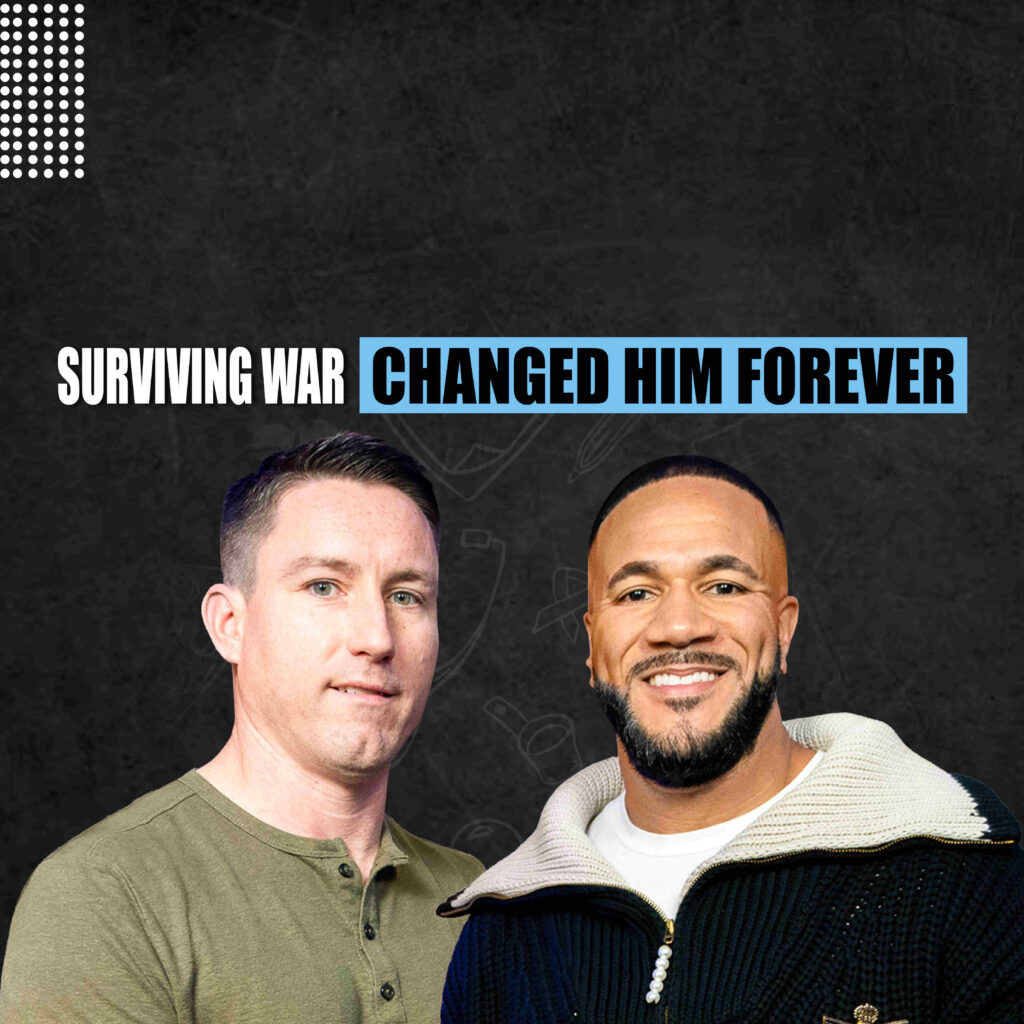
On a powerful episode of “A Healthy Point of View,” podcast, Sam Tejada, CEO and Founder of Liquivida®, sat down with Purple Heart Marine Sergeant and former military K9 handler Alferd Brenner for a conversation that went far beyond war stories.
It was a raw and emotional discussion about brotherhood, trauma, resilience, grief, mental health, and the unbreakable bond between a military handler and his dog.
The timing of the episode carried even more meaning. Recorded on National Canine Veterans Day, the conversation opened with Sam reflecting on the recent loss of his own German Shepherd, Milo, a dog he trained with during his years in urban search and rescue. That personal loss created an immediate connection between the two men and set the tone for one of the most emotional episodes of the podcast to date.
The PTSD Nobody Talks About: Marine Sergeant Shares His Darkest Battle | Alfred Brenner | Ep. 138
A Normal Childhood That Led to an Extraordinary Path
Before becoming a Marine Sergeant and K9 handler, Alfred described himself as an ordinary kid growing up in a structured Catholic household. He was creative, artistic, athletic, and always willing to challenge himself, even if he didn’t know exactly where life was leading him.
College never felt like the right fit.
Instead, he chose the Marines, believing it would give him discipline, purpose, and transferable skills for the future. He signed up to become a military policeman, unaware that one decision would eventually place him in the middle of one of the most dangerous periods of the war in Afghanistan.
Ironically, Alfred originally didn’t even like dogs.
Growing up, his family never owned one, and when the opportunity came to become a K9 handler, his first instinct was to avoid it completely. But after learning the position was highly respected and extremely competitive, he pushed himself toward it anyway.
That decision changed his life forever.
Meeting Grief
Alfred was eventually paired with a German Shepherd named Grief, a military working dog imported from Germany. The name sounded strange at first, almost too unusual to make sense.
Years later, it would carry a heartbreaking meaning.
Grief was trained as a dual-purpose military dog, capable of explosive detection and patrol work. Alfred explained how intense the training process was, especially for someone who had never worked with dogs before. The loud kennels, aggressive energy, constant barking, and pressure of handling such highly trained animals pushed him far outside his comfort zone.
But over time, the handler and dog began developing trust.
And in combat environments, trust becomes survival.
Afghanistan: Walking Into Danger Every Day
By 2009 and 2010, the war in Afghanistan had escalated dramatically. Alfred and dozens of other handlers deployed together with military working dogs, creating the largest canine deployment since Vietnam.
Their job was simple in theory and terrifying in reality.
They searched roads, homes, compounds, vehicles, and villages for explosives while walking point for military units operating in hostile territory. Every patrol carried uncertainty. Every building could contain hidden weapons or IEDs. Every step could be fatal.
Alfred described Afghanistan as a place filled with tension and unpredictability, dusty villages, busy roads, children running through patrol areas, chickens wandering through compounds, and the constant awareness that danger could appear without warning.
One moment in particular deeply affected him before his own life-changing injury.
A fellow handler, Corporal Max Donahue, was killed after locating multiple IEDs during a mission. Alfred recalled how the loss shook the entire unit, but instead of backing away from the mission, every handler wanted to continue the work.
They wanted to honor him by going back out there.
The Explosion That Changed Everything
Then came the day Alfred would never forget. It started like any other mission.
He and Grief were attached to a large military operation moving through Afghanistan. Earlier in the day, other units had already located explosives, and tension was growing as patrols continued.
At one point, Alfred sat against a wall while Grief played beside another soldier who was petting him and talking about his own dog back home.
Moments later, everything exploded. A hidden IED detonated nearby.
Dust, rocks, smoke, and chaos filled the air instantly. Alfred pulled on Grief’s leash, trying to locate him inside the cloud of debris. Nearby, another soldier had been critically wounded.
The patrol scrambled to regain control of the situation, but the mission wasn’t over.
As they continued clearing the area later that day, another devastating explosion ripped through the patrol.
This time, Alfred was thrown through the air. He remembers everything turning white. No sound. No pain. Just a blinding light and the terrifying realization that he thought he had died.
When he regained awareness, medics were already working on him.
Tourniquets were being applied. His body had suffered severe blast injuries. Part of his arm had been destroyed, his legs and hands were heavily wounded, and his face carried extensive trauma.
But one realization hurt more than the physical injuries.
Nobody was calling for Grief. In that moment, Alfred knew his partner was gone.
Losing More Than a Dog
For military handlers, working dogs are not simply animals.
They are partners, protectors, family members, and emotional lifelines in places most people could never imagine surviving.
Alfred explained that the true weight of losing Grief did not hit immediately. At first, survival took over. Surgeries, hospitals, rehabilitation, medications, and learning how to walk again became the focus.
But weeks later, while recovering in the hospital, he opened Facebook on an iPad his wife had brought him. A photo of him and Grief appeared on the screen.
That was the moment the grief became real.
He broke down emotionally, realizing his dog was truly gone.
As he reflected on that loss, Alfred shared something many dog owners, especially working dog handlers, deeply understand:
There are dogs you love, and then there are dogs that become part of your identity.
Grief had been beside him during fear, danger, exhaustion, frustration, and survival. That kind of bond cannot be replaced.
Healing Wasn’t Just Physical
Alfred’s recovery at Walter Reed Medical Center involved far more than surgeries and physical therapy.
The emotional aftermath was equally brutal.
He spoke openly about PTSD, emotional numbness, addiction struggles, survivor’s guilt, and the mental valleys that often follow traumatic experiences. He admitted there were periods where medications became part of his life simply because that was the routine handed to him after leaving the hospital.
But healing slowly began through support, therapy, faith, and community.
One of the most important breakthroughs came during therapy when a counselor encouraged him to write about his experiences. Alfred had already kept a journal during deployment, documenting everything from frustration and fear to anger and grief in real time.
Writing became therapy. And eventually, therapy became a book.
“Surviving With Grief”
Alfred’s book, Surviving With Grief, became more than a memoir.
It became a way to process trauma while helping others feel less alone.
He explained that repeatedly telling the story, through journaling, speaking, and writing, helped desensitize some of the emotional pain and allowed him to slowly move forward.
The title itself carried multiple meanings.
He survived combat with a dog named Grief. Then he had to learn how to survive actual grief after losing him. That realization transformed the entire purpose behind the project.
Finding Strength Through Hope
One of the most powerful parts of the conversation centered around perspective.
Alfred repeatedly emphasized the importance of hope, faith, community, and human connection during periods of emotional darkness. He explained how even small moments, a stranger offering gratitude, a meaningful conversation, or hearing the right message at the right time, can pull someone back from despair.
He also stressed that trauma is not limited to veterans or first responders.
Everyone experiences grief, emotional pain, mental struggle, and moments where life feels overwhelming.
The difference is learning how to move through it instead of staying trapped inside it.
Alfred shared a message that perfectly captured the heart of his story: Live with hope.
No matter how dark life becomes, there is still light ahead if you keep moving toward it.