

When Nicole Aucoin worked as a dietitian in a hospital, she saw the same people come back again and again.
They would leave the hospital, return to their usual routines, and eventually end up back in the same place. As the only dietitian at a roughly 300-bed hospital, Nicole could see patients from the NICU and ICU to pediatric units and step-down care. But there was rarely enough time to have the kind of conversation that could help someone actually change their habits.
That experience changed the way she thought about healthcare.
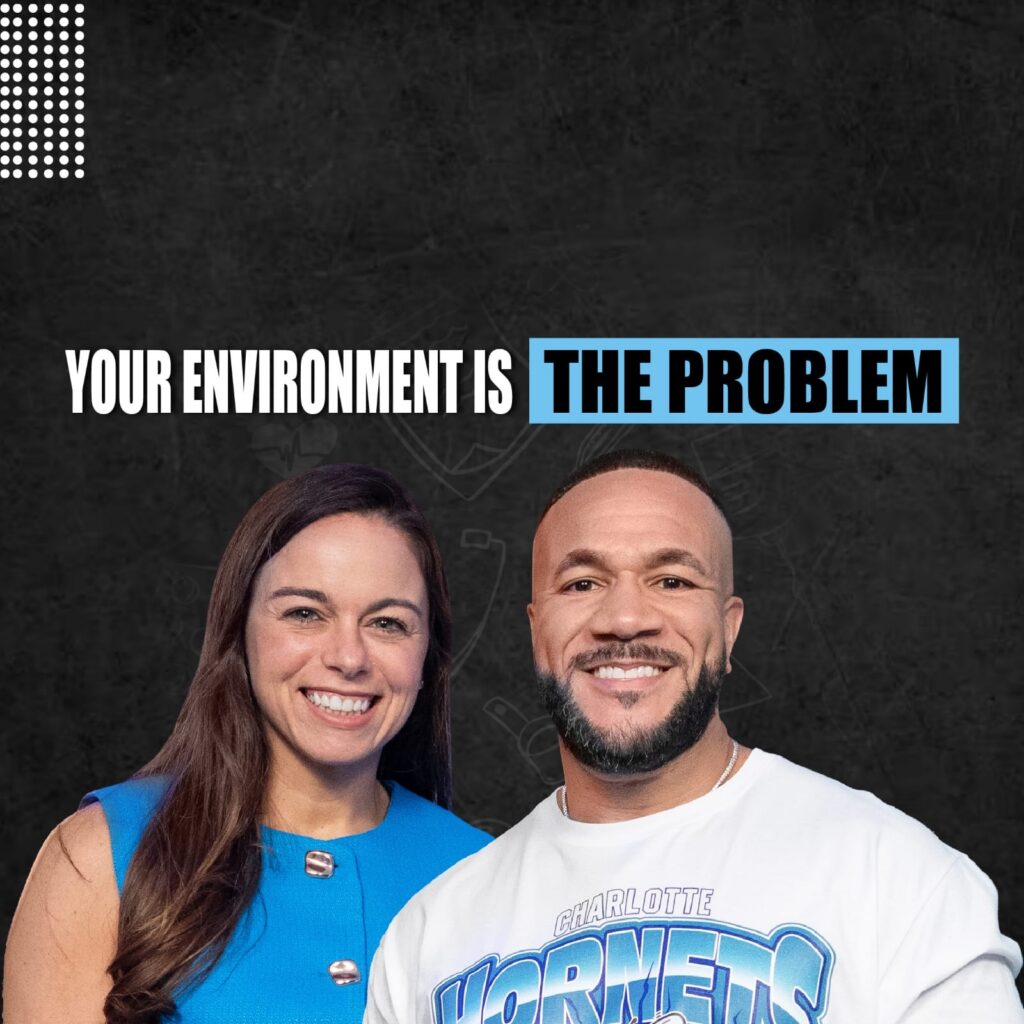
Today, Nicole is a registered dietitian, founder of Healthy Steps Nutrition, and an advocate for making nutrition and behavior change much simpler. In a recent episode of “A Healthy Point of View” podcast, she joined Sam Tejada, CEO and Founder of Liquivida®, to talk about processed food, children’s health, blood sugar, accountability, and why taking ownership of your health does not mean trying to change your entire life overnight.
Why Most People Struggle to Get Healthy — Nicole Aucoin Explains What’s Missing | Ep. 178
The Food Environment Is Part of the Problem
One of the first topics Nicole and Sam discussed was the amount of ultra-processed food children are eating.
Nicole doesn’t see that simply as a willpower issue.
Children aren’t doing the grocery shopping. They’re eating what is available to them. If cookies are sitting on the kitchen counter, they’re easy to grab. If the pantry is full of highly processed snacks, those are the foods that are going to be within reach.
Nicole believes the better approach is to make the healthy choice the easy choice.
That means keeping whole, minimally processed foods available at home rather than expecting children to repeatedly resist foods that have been deliberately made highly appealing.
She shared a story about a young gymnast who had developed fatty liver disease despite being extremely active. When Nicole looked at the girl’s lunch, she found that her mother was sending three juice boxes along with a processed sandwich, believing the juice was essentially equivalent to eating fruit.
It wasn’t.
The juice didn’t provide the same fiber that comes with whole fruit. And that distinction matters.
It’s Not Just About Carbohydrates
Nicole explained that when looking at a carbohydrate, the question shouldn’t simply be whether it contains sugar. You also have to look at what comes with it.
Is there fiber? Are there vitamins and minerals? How processed is the food?
A whole piece of fruit, for example, contains fiber that slows digestion and helps with fullness. Pairing carbohydrates with protein can also change how the meal affects you.
Nicole has used continuous glucose monitors with adults to help them see this for themselves. She explained that seeing what happens to your blood sugar after different meals can make the connection between food and energy much more obvious.
She also discussed a simple change that can affect the way a meal is handled: eating vegetables and protein before carbohydrates rather than starting with the carbohydrates.
The larger point is that people often don’t realize how closely their food choices are connected to how they feel throughout the day.
That can include energy crashes, difficulty concentrating, and constantly feeling like you’re trying to recover from the last meal.
What Happened to the Other 23 Hours?
Nicole has spent years around fitness as well as nutrition, and one idea came up repeatedly during the conversation: health doesn’t happen during the one hour you spend at the gym.
It happens during the other 23 hours, too.
Sleep matters. Food matters. Movement matters. Screen time matters. Stress matters.
Nicole pointed out that when someone isn’t sleeping enough, they’re naturally going to have a harder time focusing and functioning well. The same person may also be eating highly processed food, barely moving throughout the day, and spending hours on screens.
Those things don’t exist separately.
This is particularly important when talking about children and attention. Nicole wasn’t suggesting that nutrition is the sole explanation for ADHD. Her point was that food, sleep, exercise, and screen time can all affect how a child feels and functions, and they shouldn’t be ignored when looking at the bigger picture.
Her Hospital Experience Changed Her Perspective
Nicole’s time in the hospital gave her an uncomfortable look at the limits of the healthcare system.
She would sometimes see patients with blood sugar problems, pancreatitis, and other conditions in which lifestyle factors could play an important role. Some would eventually leave the hospital and return later, and Nicole would have the same conversation with them again.
But she didn’t have much time.
She could have around 30 patients to see in a day, and charting alone took significant time. There wasn’t much opportunity to sit down with someone and work through why their habits weren’t changing or what they were actually going to do once they got home.
She eventually realized that handing someone information wasn’t enough.
People need a plan they can realistically follow.
And they need someone or something to help them stick with it.
Don’t Try to Change Everything at Once
This became one of the clearest messages of the conversation.
When Sam asked Nicole what “owning your health” actually requires, her answer wasn’t a complicated diet or an extreme routine.
It’s about simplifying things.
Nicole believes many people aren’t unwilling to take care of themselves. They’ve simply made the process too complicated, or they’re trying to change too many things at once.
Her approach is to pick one thing.
Get consistent with it. Then add the next thing.
That could mean eating more whole foods. Prioritizing protein and vegetables. Getting enough sleep. Walking more. Drinking more water.
The goal isn’t to create a perfect lifestyle overnight. It’s to build habits that eventually become part of your normal routine.
You Need a Backup Plan
Life is going to get in the way.
You’re going to get home late. You might burn dinner. You might be traveling. You might have no desire to cook.
Nicole’s answer is to plan for those moments instead of pretending they won’t happen.
She sees prepared meals or healthy freezer options as useful tools for people who need them. Someone who travels frequently, for example, may benefit from having healthy meals available rather than relying on fast food every time they’re on the road.
The important part is having a backup that still fits your goals.
You don’t have to be perfect. You just need to have another option when the first plan falls apart.
Accountability Can Change Everything
Nicole also emphasized something that can be easy to overlook: the people around you matter.
She has worked with people who lost more than 100 pounds, and one thing she noticed was that they often had people in their lives who played an important role in their success.
If everyone around you is constantly going out for wings and drinks, sticking to your own goals becomes harder.
Nicole experienced the opposite through CrossFit. She found herself surrounded by people who were also prioritizing exercise and their health.
That community mattered. So does accountability.
Nicole talked about having an accountability partner at the gym. When she used to work out at 5 a.m., knowing someone else was expecting her to show up gave her another reason to get out of bed.
She also believes in measuring what you’re trying to change.
Her philosophy is simple: if you don’t measure it, you don’t really know what’s happening.
That doesn’t mean everyone needs to weigh every gram of food for the rest of their lives. It means developing enough awareness to recognize whether your daily actions actually line up with what you say you want.
Making Health Easier to Follow
That idea is part of why Nicole created the Healthy Steps Nutrition app.
The app includes educational lessons, meal planning, recipes, nutrition tracking, reminders for things such as movement and water intake, and access to healthcare providers and dietitians.
One feature allows users to take a photo of their meal. The technology can identify the foods and provide feedback, including whether a meal may need more protein or fiber.
Nicole is clear that the technology isn’t perfect.
A complicated casserole isn’t necessarily going to be identified perfectly from a photograph.
But the goal isn’t perfection. It’s making nutrition easier to understand and act on.
Because if something is simple, people are more likely to keep doing it.
Health Is Bigger Than Food
Toward the end of the conversation, the discussion moved beyond nutrition.
Nicole talked about sleep, exercise, mindset, stress management, spirituality, and community.
For her, faith is part of that picture. She talked about starting her mornings with the Bible, Christian music, coffee, and ideally some exercise. She believes the people around you can also influence your mindset, which is one reason she values community.
Her own path into nutrition was personal.
Her mother was diagnosed with breast cancer and passed away when Nicole was young. Later, while attending the University of Florida, Nicole was sent to a dietitian along with other cheerleaders because of disordered eating.
She walked out of that appointment knowing what she wanted to do.
She changed her major and became a dietitian.
More than two decades later, she says she feels like she is still doing the work she was meant to do: helping people take control of their health.
It’s Not Too Late
Nicole’s final message was perhaps the simplest.
It’s not too late.
As long as you’re still here, you can start paying more attention to your health.
That doesn’t mean every disease can be reversed. It doesn’t mean lifestyle changes replace medical care. And it doesn’t mean someone needs to completely overhaul their life tomorrow.
It means starting somewhere.
Nicole believes healthcare providers, dietitians, coaches, gyms, and other professionals shouldn’t be working against one another. They should be working together to give people the support they need to make meaningful changes.
Her hope is that people won’t leave a hospital with only a prescription and no real plan for what happens afterward.
Instead, they should have guidance, support, and practical steps they can actually follow at home.
Taking ownership of your health doesn’t have to be complicated.
Start with one thing. Do it consistently. Then take the next step.