Health has become noisy.
Every week there’s another supplement everyone swears by, another wearable promising to unlock the secret to longevity, or another social media trend claiming to fix everything from fatigue to inflammation. It’s easy to feel as though staying healthy requires keeping up with an endless stream of new ideas.
That was one of the reasons Julia Smila’s conversation with Sam Tejada felt different.
Instead of chasing the next trend, the two spent much of the episode talking about something far less exciting, but probably far more important. What if better health has less to do with finding the perfect biohack and more to do with the things most people already know they should be doing?
For Smila, that realization didn’t come overnight. Before founding the Ultimate Wellness Conference, she spent years working with entrepreneurs and innovators in the biotech world, watching remarkable ideas move from research labs into real life. It was exciting work, but somewhere along the way she noticed a gap. Scientific breakthroughs were moving faster than ever, yet many people still struggled with the basics: sleep, nutrition, stress, and movement.
She never saw those two worlds as competitors. If anything, they needed each other.
That’s the thinking behind the conference she eventually created. Scientists, physicians, nutrition experts, wellness practitioners, and innovators all share the same space, not to argue over whose approach is better, but to ask a more useful question: how do we help people stay healthier for longer?
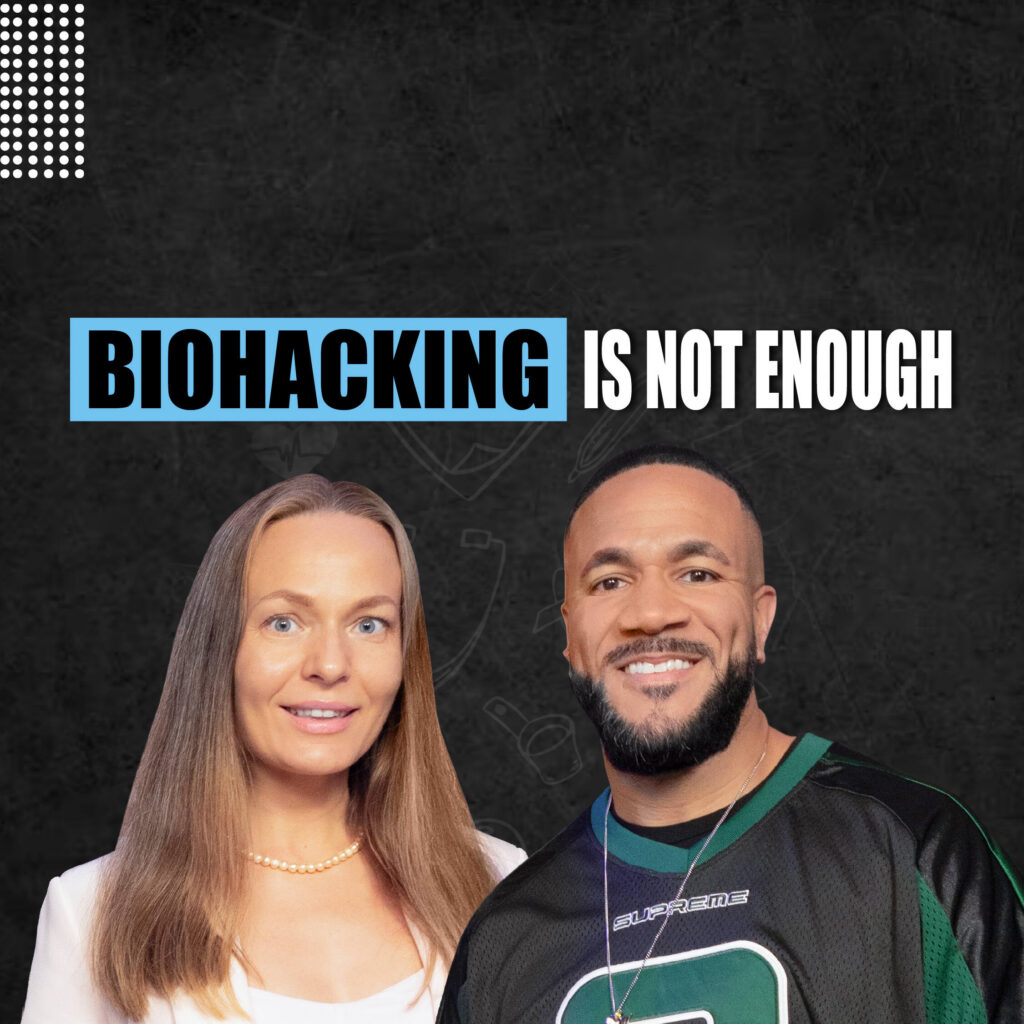
The Biohacking Mistake That Could Be Making You Less Healthy | Julia Smila Ep. 157
The Lessons That Started at Home
Some of Smila’s earliest ideas about health had nothing to do with conferences or functional medicine.
Growing up in Ukraine, fresh meals weren’t considered special; they were simply dinner. Soup simmered on the stove, vegetables came with almost every meal, and antibiotics weren’t the first answer whenever someone got sick.
Only after moving to the United States did she realize how different food culture could be. Convenience often replaced quality, and highly processed foods had quietly become normal. She wasn’t criticizing people for living busy lives; she was pointing out how easy it is to drift away from habits that once seemed obvious.
No one can avoid every environmental toxin or make every perfect choice. She acknowledged that more than once during the conversation. But perfection isn’t the goal. Progress is.
Why Waiting for Symptoms Is Already Too Late
One question kept resurfacing throughout the podcast.
Why do so many people wait until something feels wrong before paying attention to their health?
For Smila, prevention isn’t a marketing slogan. It’s a different way of thinking altogether.
Traditional healthcare often enters the picture after a problem develops. Functional medicine asks different questions. Instead of asking which medication matches a symptom, it asks what might have been happening months—or even years—before those symptoms appeared.
That shift changes the conversation. Rather than reacting to illness, people have the opportunity to understand what their bodies have been trying to communicate all along.
Chasing Perfect Health Can Become Unhealthy
The discussion took an interesting turn when Sam brought up wearable technology.
Sleep trackers, recovery scores, heart-rate monitors, and smart rings have become everyday accessories for people interested in optimizing their health. Smila isn’t against any of them. She uses some herself.
But she laughed at how easily people hand over their emotions to a number on a screen.
Imagine sleeping well, waking up refreshed, and then immediately feeling disappointed because your app tells you last night’s sleep score wasn’t ideal.
Nothing about your body changed in those few seconds. Only your perception did.
Sam couldn’t help but laugh because he’d seen the same thing happen countless times.
Technology can teach us a lot, Smila said, but it shouldn’t become something that dictates whether we think we’re healthy before we’ve even stepped out of bed.
The Routine She Actually Follows
Listeners expecting a complicated biohacking routine were probably surprised.
There wasn’t an endless list of gadgets or impossible morning rituals.
Instead, Smila described a routine that sounded realistic enough to repeat. She likes getting outside early, drinking water before reaching for coffee, spending a few quiet minutes meditating, and moving her body throughout the day instead of sitting in one place for hours.
She even admitted that sleep remains something she’s working on herself. Creative ideas tend to arrive late at night, making it harder than she’d like to switch off.
It was one of those moments that made the conversation feel genuine. The person talking about wellness wasn’t pretending to have mastered every habit. She was still learning, adjusting, and improving, just like everyone else.