
The longevity industry has no shortage of bold promises. Reverse aging. Live to 150. Buy the right supplements, track enough biomarkers, and perhaps death itself starts looking negotiable.
But what does the science actually say?
For Chris Mirabile, founder of NOVOS, the honest answer starts with admitting what researchers have yet to figure out. There is no scientifically proven way to reverse human aging or guarantee a longer lifespan. That does not mean we are powerless. It means we need to pay closer attention to what we can influence instead of getting carried away by what we hope technology will eventually make possible.
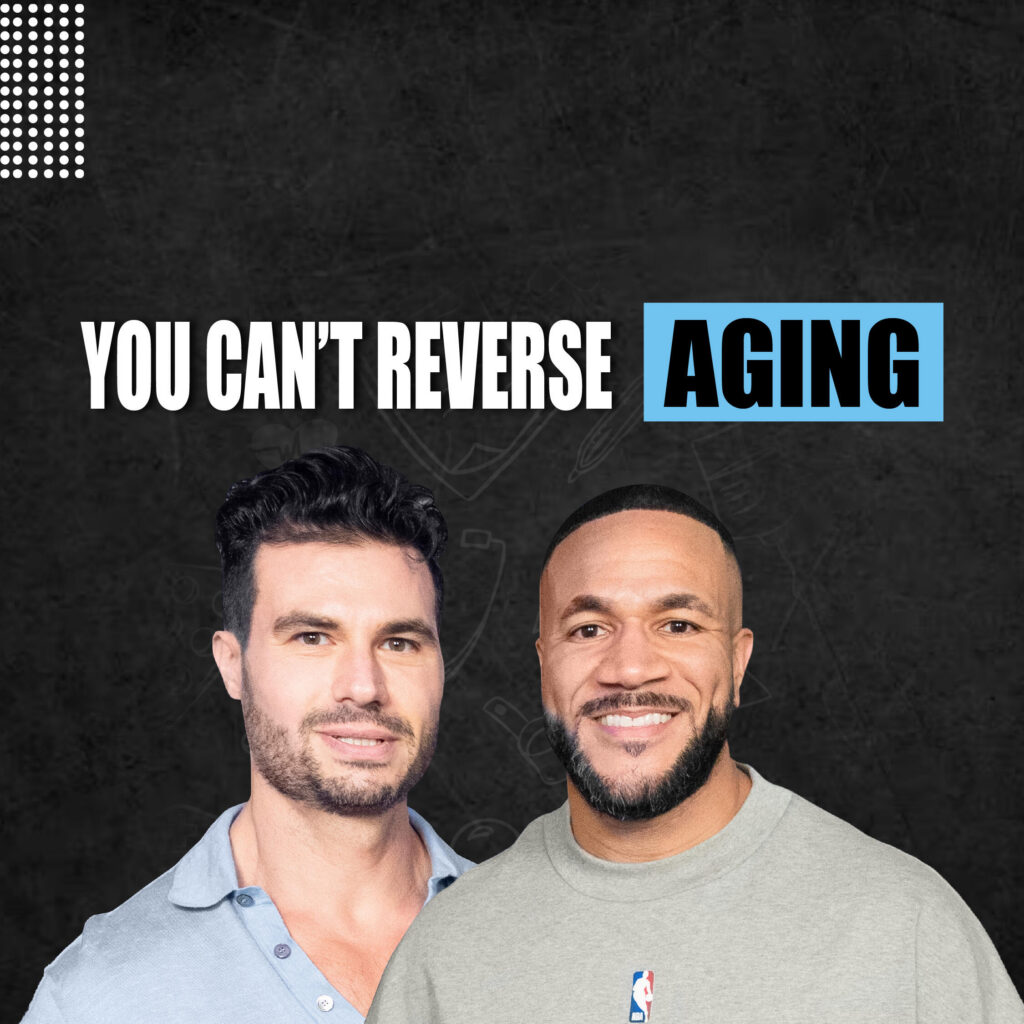
On “A Healthy Point of View” podcast, Sam Tejada, CEO and Founder of Liquivida®, welcomed Mirabile back for a conversation about healthspan, longevity research, supplements, personal health data, and the habits that often get overlooked in the pursuit of living longer.
Can We Really Reverse Aging? Chris Mirabile Separates Science From Longevity Hype | Ep. 181
Living Longer Is Only Part of the Goal
Mirabile draws an important distinction between lifespan and healthspan. Lifespan measures how long someone lives. Healthspan concerns the years spent in good health, with the ability to remain active and independent.
The difference matters. Living to 100 means something very different if those final decades are spent struggling with everyday tasks. Being able to walk comfortably, maintain strength, and enjoy time with family can be just as important as adding years to life.
Despite the excitement surrounding longevity science, Mirabile cautions against taking claims about dramatically extended human lifespans at face value. Scientists are studying the biological processes involved in aging, but claims that people will soon live to 130, 150, or even 180 remain unsupported by convincing human evidence.
There is still meaningful work to do. Understanding individual health risks and addressing them before they develop into larger problems may help people preserve their health as they age. That is a more grounded goal than promising to stop the clock.
The Basics Still Matter More Than the Gadgets
One of the most interesting parts of the discussion concerns the expensive devices and treatments now associated with biohacking.
Sam points out that some of the most useful health habits cost nothing: getting enough sleep, exercising regularly, eating well, and learning which behaviors are worth cutting back on. Mirabile agrees that these fundamentals demand more effort than buying a device and pressing a button.
A wearable or recovery tool can be appealing precisely because it seems easier. Building a consistent sleep schedule, changing eating habits, and making time for exercise require repeated decisions. There is no checkout button for discipline.
That does not make every new technology useless. Mirabile sees a place for additional tools, particularly for people who have already established healthy routines and want to investigate specific aspects of their health. The problem comes when those tools become substitutes for the basics.
He also challenges the idea that longevity requires an extreme lifestyle. The oldest people in the world are not necessarily following elaborate protocols or measuring every aspect of their biology. Social connection, psychological well-being, and the ability to manage stress deserve attention, too.
His point is not that people should ignore their health. It is that living longer should not come at the expense of enjoying life. Someone who gives up every meal, social occasion, or small pleasure in pursuit of perfect health may need to reconsider what they are trying to achieve.
When Tracking Your Health Becomes Too Much
Mirabile has collected health data for roughly two decades, including blood test results and information from wearable devices. For much of that time, he stored the information without constantly analyzing every number.
He now uses AI tools to examine different datasets, including sleep, movement, and laboratory results, and look for patterns that might help him understand his own health. He has discussed using this approach to explore his cholesterol levels and how they relate to his diet.
The distinction is important: collecting information is not the same as knowing what to do with it.
A smartwatch can provide estimates of sleep, activity, and cardiovascular fitness. Blood tests can reveal details that are not obvious from how someone feels. But the numbers need context, and not every measurement deserves equal attention.
Mirabile’s approach is to keep an eye on useful indicators without allowing tracking to take over his life. Health data should help inform decisions, not become another source of anxiety.
AI may make large amounts of personal health information easier to interpret. Still, patterns and correlations do not automatically establish cause and effect, and AI-generated observations are not a substitute for appropriate medical advice.
How NOVOS Approaches Longevity Supplements
As founder of a longevity supplement company, Mirabile also discussed how NOVOS developed its Core formula. He described a process that considered research across multiple species, human studies, potential adverse effects, and scientific input from researchers and medical professionals.
The underlying idea is to consider several biological processes associated with aging rather than assume that one ingredient can address everything. Mirabile explained that the formula contains 12 ingredients, with individual ingredients potentially affecting more than one of the biological processes the company targets.
He also made a point that is easy to lose in a crowded supplement market: adding more ingredients does not necessarily make a product better. The rationale behind a combination, the amounts used, and the available evidence all matter.
That is a useful standard for consumers to apply to any supplement, including products from NOVOS. A company’s research criteria can explain why it selected particular ingredients, but the company’s claims still need to be assessed against the quality of the evidence.
Animal research can help scientists identify promising directions, but results in animals do not guarantee the same effects in humans. And although supplements can help address some nutritional gaps, they cannot replace a balanced diet or make up for every unhealthy habit.
Mirabile favors a diet built around minimally processed foods, with plenty of vegetables and fruit, alongside appropriate sources of protein. He also discussed evidence suggesting that nutritional inadequacies are common, even among people who make an effort to eat well. Whether an individual needs a supplement, however, depends on their diet, health circumstances, and the specific product.
What the Research on NOVOS Core Shows
Sam asked Mirabile about research conducted on NOVOS Core, including a human study examining measures related to cardiovascular health.
Mirabile described reported findings involving flow-mediated dilation, pulse wave velocity, and systolic blood pressure. These measurements can provide information about blood vessel function and cardiovascular health, but they are not direct proof that a supplement extends human lifespan.
That distinction deserves attention. A change in a health marker can be interesting and potentially useful without demonstrating that people will live longer or avoid age-related diseases. Study size, design, comparison groups, independent review, and replication all influence how confidently results can be interpreted.
The discussion reflects a wider challenge in longevity research: scientists cannot simply run a short human trial and wait to see whether participants live longer. Researchers therefore examine other outcomes, but those measures have limitations.
For consumers, the practical lesson is to look beyond a headline or a company’s interpretation of its own results. Ask what was measured, how the study was conducted, and whether independent research supports the conclusion.
A More Realistic Way to Think About Aging
The conversation returns repeatedly to personal responsibility, but not in the sense that every health outcome is under an individual’s control. Genetics, circumstances, and medical conditions all matter. Still, everyday choices can influence health over time.
Mirabile encourages people to pay attention to decisions about food, alcohol, sleep, and other habits, rather than treating health as something that simply happens to them. He does not frame those choices as a rigid list of rules. The aim is to understand their likely consequences and make informed decisions.
That approach leaves room for balance. It also places the most expensive treatments and newest technologies in perspective: potentially useful additions, not shortcuts around the work of caring for yourself.
Longevity science is advancing, and future discoveries may change what is possible. For now, the more useful question is not how to live for centuries. It is how to protect the years we have, stay as healthy as we reasonably can, and avoid confusing exciting claims with established evidence.
As Mirabile’s conversation with Sam makes clear, the science is worth following. So is a healthy dose of skepticism.