

Most people do not think much about their hair until something changes. A hairline starts to recede. The part looks wider than it used to. More strands appear on the pillow or in the shower. Suddenly, something that once felt routine becomes a concern.
But hair loss is not always as simple as it looks. Genetics can play a role, but so can hormones, stress, nutrition, illness, inflammation, and aging. Understanding why hair is changing is often just as important as figuring out what to do about it.
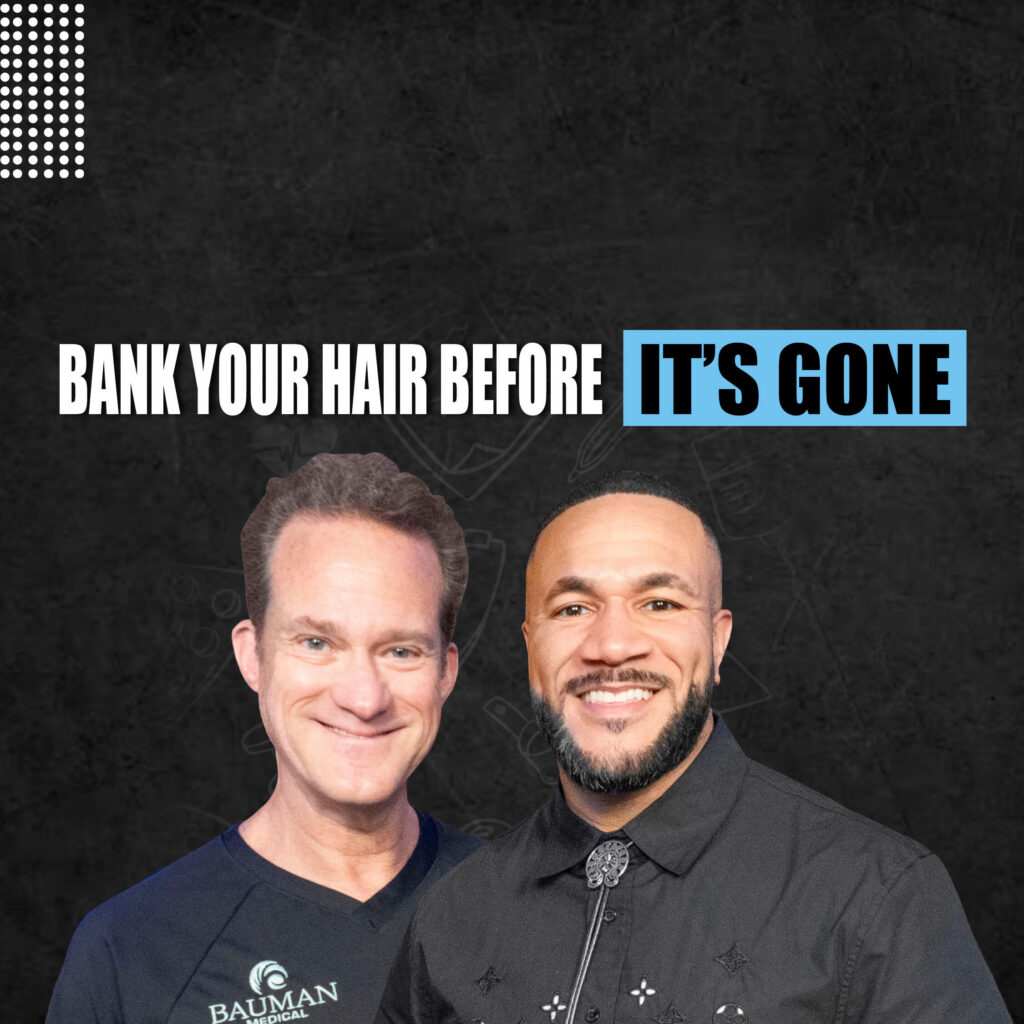
That is the focus of a recent episode of “A Healthy Point of View” podcast, where Sam Tejada, CEO and founder of Liquivida®, sits down with hair restoration expert Dr. Alan Bauman. Their discussion covers the biology of hair loss, the importance of early intervention, and the treatments being explored as regenerative medicine continues to develop.
One idea runs through the conversation: time equals follicles. Once a hair follicle is permanently lost, today’s treatments cannot simply bring that same follicle back.
Can We Bank, Regrow & Eventually Clone Hair? Dr. Alan Bauman Explains | Ep. 182
Hair Loss Is About More Than Appearance
Hair follicles are among the body’s metabolically active structures. They require the right conditions to grow and maintain healthy hair, and several things can interfere with that process.
Hormonal changes, poor nutrition, physical stress, illness, and inflammation can all affect hair growth. Age matters, too. Yet people experiencing hair loss do not necessarily share the same underlying cause, even when the changes look similar.
That distinction is worth paying attention to. Someone experiencing gradual, hereditary thinning may need a different approach from someone whose hair starts shedding after an illness or during a period of significant physical stress.
Hair changes can provide a reason to look more closely at what is happening, but they do not automatically indicate a broader health problem. The important first step is to understand the pattern of loss and what might be contributing to it.
This is one reason hair restoration is becoming part of a wider discussion about preventive health. Rather than waiting until thinning becomes pronounced, people are increasingly interested in understanding their hair earlier.
Why Waiting Can Cost You Hair
Bauman uses the term hairspan to describe the amount of time someone gets to live with their own healthy, growing hair.
It is a useful way to think about hair loss because the focus shifts from replacing what has disappeared to preserving what remains. Hair follicles can deteriorate over time, and once a follicle is permanently gone, restoring that exact follicle is beyond the capabilities of current treatments.
This is what makes early assessment important. Hair loss can develop gradually, making it easy to overlook until the difference becomes obvious. By that point, some options that might have been available earlier may no longer be suitable.
Younger people are increasingly seeking hair restoration treatments before substantial thinning occurs. The interest reflects a change in how people approach hair health: they are not necessarily waiting for a receding hairline or visible scalp before asking questions.
Early intervention does not mean everyone needs treatment at the first sign of shedding. Hair goes through natural growth cycles, and temporary shedding can have different causes from progressive hair loss. What matters is identifying what is happening and determining whether it needs attention.
The earlier someone understands the cause, the better positioned they may be to make informed decisions about their options.
Stress, Illness, and Medication Can Affect Hair Growth
The conversation also looks at hair loss associated with chemotherapy and the possible effects of GLP-1 medications on hair health.
These are important distinctions because hair changes do not always follow the same course. Illness, physical stress, medication use, and inherited hair loss can involve different processes. Treating them as one problem risks overlooking the reason the hair is falling out in the first place.
GLP-1 medications have become a subject of interest in discussions about hair shedding. However, a person experiencing hair loss while taking one of these medications needs an individual assessment rather than an assumption about the cause. Nutrition, weight changes, other health factors, and the timing of symptoms may all be relevant.
The same principle applies to other forms of hair loss. Identifying contributing factors helps guide decisions about treatment and sets more realistic expectations about what can be achieved.
The Treatments Already Available and Those Still Being Explored
Hair restoration has developed well beyond the idea of simply waiting for hair to grow back. Several approaches are used to address hair loss, while others are being investigated for their potential role in future treatment.
Bauman and Sam discuss minoxidil, low-level laser therapy, and platelet-rich plasma, commonly known as PRP. They also examine newer areas of interest, including exosomes and secretome therapy.
These approaches should not be treated as equivalent. Their evidence, proposed mechanisms, and clinical applications differ. A treatment that is appropriate for one person may not be the right choice for another, which makes an accurate assessment important.
Technology is also changing how clinicians examine the scalp. AI-powered analysis can help measure hair density and identify changes that might be difficult to judge by looking in a mirror alone. Tracking those measurements over time may help patients and clinicians evaluate changes and monitor treatment.
Technology cannot answer every question about hair loss, but more detailed assessments can contribute to a clearer picture of what is happening.
For patients, the important question is not simply which treatment is newest. It is which options have credible evidence behind them and whether they suit the specific cause of their hair loss.
Could Hair Follicle Stem Cells Be Preserved for the Future?
Some of the most intriguing possibilities discussed in the episode involve regenerative medicine.
Hair follicle stem cell banking raises the prospect of preserving cells that might eventually be useful in future treatments. The idea is particularly interesting because regenerative medicine continues to investigate ways of using cells and biological materials to repair or restore tissue.
But banking cells today does not guarantee that they can be used to regrow hair tomorrow. The practical value of this approach depends on further research and the development of safe, effective clinical applications.
The episode also explores mesenchymal stem cells, exosomes, and secretome therapy. These areas have attracted interest in regenerative medicine, although their potential should not be confused with proof that a particular treatment works for hair loss. Evidence and safety need to be assessed for each application.
Hair cloning is another possibility. Conventional hair transplantation depends on moving existing follicles from one area of the scalp to another. If researchers can develop reliable ways to produce additional hair follicles, the limitations associated with the available donor supply could change.
For now, hair cloning remains a future prospect rather than a routine treatment. It is an example of where research may lead, not a solution patients can assume will be available to them.
A Different Way to Think About Hair Restoration
Hair transplantation remains an important option for suitable patients, and the discussion also covers minimally invasive techniques. However, a transplant does not eliminate the underlying tendency toward hair loss. Planning matters, as do the patient’s existing hair, expectations, and longer-term needs.
As diagnostic technology and regenerative research progress, hair restoration may become increasingly personalized. Instead of approaching every case in the same way, clinicians can consider the pattern of loss, the individual’s circumstances, and the options supported by available evidence.
That approach also connects hair restoration with longevity medicine. Both fields are interested in what happens over time and how early decisions can affect future options.
There is still a difference between what medicine can do today and what researchers hope to achieve. New technologies may expand treatment possibilities, but they do not remove the need for careful assessment or guarantee a particular result.
Protecting the Hair You Still Have
Hair loss can be frustrating, especially when it seems to happen gradually and without an obvious explanation. The conversation between Sam Tejada and Dr. Alan Bauman offers a useful reminder that understanding the cause matters more than chasing every new treatment.
Some people may benefit from established therapies. Others may need to address contributing factors or explore different options with a qualified clinician. Treatments involving emerging regenerative technologies require particular care because their potential does not necessarily establish their effectiveness.
The idea of hairspan brings the discussion back to what can be done now. Pay attention to persistent changes, seek an assessment when needed, and understand the options before deciding on a course of treatment.
No approach can guarantee a lifetime of healthy hair. But understanding what is happening and addressing it when appropriate may help preserve your options.
Time equals follicles. The sooner you understand your hair loss, the better informed your next decision can be.