Some of the most important conversations about mental health don’t start in a therapist’s office. They start when someone asks a simple question: Why do people keep doing things that don’t serve them?
That question has followed Elisabeth McKay, behavioral researcher, entrepreneur, and creator of Predictive Mind and the Break Method, for most of her life.
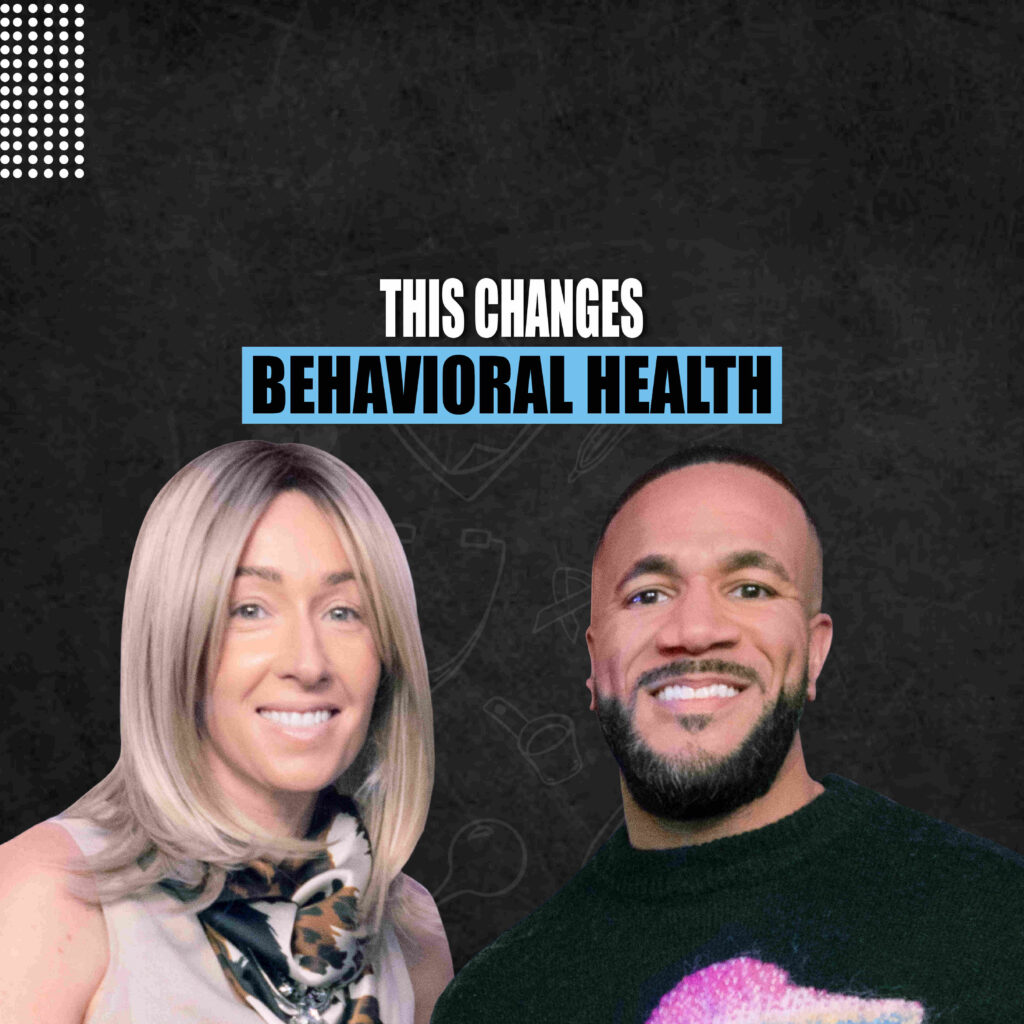
When she joined Sam Tejada, CEO and Founder of Liquivida®, on “A Healthy Point of View” podcast, the discussion quickly moved beyond traditional ideas about mental health and into something much deeper. What began as a conversation about behavior and emotional regulation became a story about childhood, survival, faith, self-awareness, and the invisible patterns that quietly shape the course of a person’s life.
For McKay, this work isn’t simply professional. It’s personal.
Long before she developed brain-pattern mapping systems and behavioral frameworks, she was a child trying to make sense of a world that rarely felt predictable.
How To Break Free From Self-Deception | Elisabeth McKay | Ep. 146
A Childhood That Looked Fine From the Outside
McKay grew up in a wealthy family on the East Coast. To most people, it would have looked like a life filled with opportunity and privilege. But appearances can be deceiving.
She described a home environment that felt unstable and emotionally exhausting. Her parents’ relationship swung between affection and conflict. One day, things felt normal. The next day, everything could change.
One of her earliest memories involved coming home to find FBI agents surrounding her house. Soon afterward, her family was forced to leave and spend months living under unusual circumstances.
Experiences like that leave an impression on a child.
When uncertainty becomes normal, children adapt. Some become withdrawn. Some become rebellious.
McKay became observant.
She learned to pay attention to details. She learned to read people. She learned to notice inconsistencies between what people said and what they actually did.
Looking back, she can see how those early experiences shaped her future.
“I was always trying to stay ahead of what might happen next,” she explained.
That mindset became second nature.
Learning to Read the Room
Many children grow up assuming the adults around them are reliable sources of information.
McKay didn’t have that luxury.
She often felt that important information was being withheld from her. Promises changed. Plans shifted. Situations unfolded without explanation.
Over time, she stopped relying on what people told her and started relying on what she could observe for herself.
She became highly skilled at recognizing patterns.
Instead of simply reacting to emotional situations, she tried to understand them. Why was someone upset? What triggered the reaction? What would happen next?
Those questions became part of the way she navigated the world.
What she didn’t realize at the time was that she was developing skills that would later become central to her life’s work.
The Moment Everything Changed
One of the most memorable stories from the episode took listeners back to McKay’s early teenage years.
After spending much of her childhood in unpredictable environments, she finally experienced some stability when she went away to boarding school.
For the first time, she wasn’t constantly managing chaos.
She wasn’t caught in the middle of a family conflict. She wasn’t trying to anticipate emotional explosions. She could finally focus on herself.
Around that same period, she had an experience that she still considers a turning point.
After experimenting with mushrooms as a teenager and later watching the film Fight Club, she found herself reflecting on her mother’s behavior in a completely different way.
For years, she believed her mother knowingly created confusion and dysfunction.
Then a different thought entered her mind.
What if her mother genuinely believed her own version of reality? What if she wasn’t intentionally manipulating people? What if she couldn’t see what others could see?
The realization hit her hard. It wasn’t just about her mother anymore. It raised a much larger question. How does self-deception work?
How can intelligent people become convinced of ideas that are disconnected from reality?
That question became an obsession. Years later, it remains at the center of everything she studies.
Why Success Isn’t Just About Talent
Throughout the conversation, McKay shared observations gathered from years of working with people from dramatically different backgrounds.
Some were struggling with serious behavioral issues. Others were high performers at the top of their industries.
What fascinated her was that certain traits kept appearing among exceptionally successful people.
The highest achievers weren’t necessarily the smartest people in the room. They weren’t always the most educated.
What separated them was their ability to act. When they saw an opportunity, they moved.
When something wasn’t working, they adjusted. When they made mistakes, they learned from them instead of pretending those mistakes didn’t exist.
McKay referred to this tendency as a form of commitment.
Successful people don’t spend years waiting for perfect conditions. They engage with reality, gather feedback, and keep moving forward.
Just as important, they remain honest with themselves about what is and isn’t working. Without that self-awareness, progress eventually stalls.
The Parenting Conversation That Hit Home
One of the strongest parts of the discussion centered on parenting.
McKay believes many modern parents underestimate what children are capable of.
In an effort to protect children from disappointment, adults sometimes remove the very experiences that help build resilience.
She shared the story of her son trying out for a competitive baseball team.
Although he was offered a position, she believed the opportunity had more to do with relationships than performance.
Rather than allowing him to believe he had earned the spot entirely through talent, she told him the truth. The conversation wasn’t easy. But it was honest.
Her son chose to stay on the team anyway.
The season was difficult. He struggled. He spent much of the year competing against players who were ahead of him.
There were moments when he wanted to quit. He didn’t.
By the end of the season, the experience had given him something more valuable than comfort.
It gave him confidence that he could handle challenges.
For McKay, that’s one of the most important lessons a child can learn.
Life doesn’t always reward effort immediately. Sometimes growth comes from staying in situations that are uncomfortable and pushing through them anyway.
The Stories We Tell Ourselves
As the conversation continued, McKay returned repeatedly to a theme that has become central to her work.
People don’t simply react to reality. They react to their perception of reality. The difference matters.
A child who grows up around instability may develop beliefs about safety. A child who experiences rejection may develop beliefs about relationships. A child who is constantly criticized may develop beliefs about worth.
Those beliefs often become automatic. Years later, adults continue making decisions through those same mental filters without realizing it.
What makes the situation challenging is that those filters can feel completely true.
People rarely stop to question them. They simply accept them as facts.
McKay argues that meaningful change often begins when individuals learn to identify those hidden assumptions and challenge them. Only then can new possibilities emerge.
Rethinking Mental Health
The discussion eventually turned toward the current state of mental health treatment.
McKay did not hide her concerns.
She questioned systems that rely heavily on self-reporting and symptom management while failing to address deeper causes.
Her argument was straightforward. If people do not fully understand their own motivations, fears, and behavioral patterns, then simply describing their experiences may not provide an accurate picture of what is happening beneath the surface.
Likewise, managing symptoms without understanding root causes may provide temporary relief without producing lasting change.
Her goal is different. Rather than focusing solely on behaviors, she wants to understand the patterns driving those behaviors.
She believes those patterns can be identified, mapped, and ultimately changed.
Faith, Meaning, and Direction
Faith also played an important role in the conversation.
McKay spoke openly about her journey to Christianity and the impact it had on her life.
The decision wasn’t always easy, particularly within her family.
Still, she credits her faith with helping shape her outlook and guiding many of the choices she has made throughout adulthood.
The conversation wasn’t focused on doctrine or debate.
Instead, it highlighted something simpler.
Both McKay and Sam emphasized the importance of living according to beliefs that are genuine rather than performative.
Whether discussing parenting, relationships, or personal growth, authenticity remained a recurring theme.
Today, McKay is focused on expanding tools designed to help people understand themselves more clearly.
Her work continues to explore how behavior develops, how perception influences decision-making, and how individuals can break free from patterns that no longer serve them.
But perhaps the most powerful takeaway from the episode had nothing to do with technology.
It was the reminder that self-awareness is a skill.
People often assume they know themselves. In reality, there are usually blind spots, assumptions, and old stories operating beneath the surface.
Those hidden influences affect careers, relationships, parenting decisions, and countless everyday choices.
The good news is that they are not permanent. They can be examined. They can be challenged.
And sometimes, simply recognizing them is enough to begin changing the direction of a life.
That belief sits at the heart of Elisabeth McKay’s work.
Not that people are broken. Not that they need fixing.
But many of us are living according to patterns we never consciously chose. The moment we begin to see those patterns clearly, new possibilities begin to appear.