The word “peptide” has become impossible to avoid.
It’s on social media. It’s discussed in wellness clinics. It’s promoted by fitness influencers and debated by healthcare professionals. Depending on who you ask, peptides are either one of the most exciting developments in modern health optimization or something people should be skeptical of.
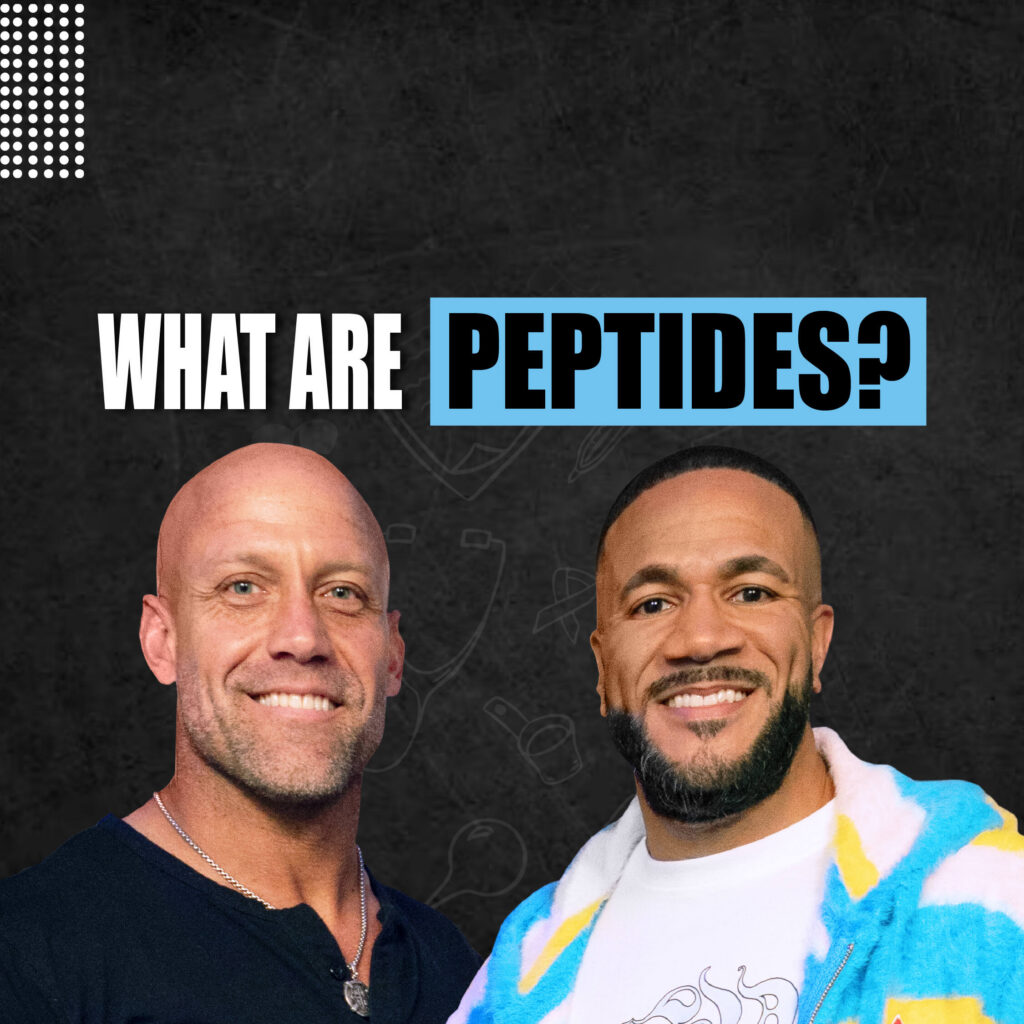
When Dr. Adam Boender, a leading educator in regenerative medicine and peptide therapy, sat down with Sam Tejada, CEO and Founder of Liquivida®, on “A Healthy Point of View” podcast, he wasn’t interested in adding to the noise. Instead, he wanted to answer a much simpler question:
What are peptides really, and why are so many people talking about them now?
The answer starts long before peptides entered the conversation.
Dr. Adam Boender on Peptides, GLP-1s & Health Optimization | Ep. 145
A Broken Leg Changed Everything
Dr. Boender was still a child when he suffered a serious football injury that left him with a broken leg.
Most kids remember the pain. He remembers the doctor.
Watching an orthopedic surgeon repair what was broken left a lasting impression. There was something powerful about seeing someone step into a difficult situation and restore hope. For a young boy trying to make sense of what had happened, it sparked an idea that never really left.
He wanted to help people the same way.
That decision followed him through school and eventually into healthcare.
Over the years, he built a successful chiropractic practice and treated hundreds of patients every week. Yet something kept pulling his attention beyond adjustments and treatment plans.
He noticed that people often knew very little about what was happening inside their own bodies.
Many weren’t making bad decisions because they didn’t care.
They were making bad decisions because nobody had ever explained things in a way that made sense.
That’s where education became his passion.
The Problem With Guessing
Health advice has never been more accessible.
Open your phone, and you’ll find thousands of opinions about what to eat, which supplements to take, how to exercise, and which health trends deserve your attention.
The problem is that much of it is guesswork.
One person swears by a supplement. Another says it did nothing. Someone else claims it changed their life. Without data, nobody really knows.
That was one of the strongest points discussed during the podcast.
Before someone starts chasing a solution, they should understand the problem.
Tests like DEXA scans, metabolic assessments, blood work, and VO2 max testing provide information that can reveal what is actually happening beneath the surface. They create a starting point.
More importantly, they provide a way to measure progress.
A person can lose weight and still lose muscle. Someone can feel healthy while underlying issues continue to develop unnoticed.
Without testing, many people are simply hoping they’re moving in the right direction.
Hope isn’t a strategy. Information is.
The Conversation Nobody Is Having About Peptides
One of the biggest misconceptions surrounding peptides is that they’re something new.
Dr. Boender sees it differently. According to him, peptides have been part of the body’s communication system all along.
The body produces countless signaling molecules that tell cells what to do, when to do it, and how to respond to changing circumstances. Those messages influence everything from healing and recovery to metabolism and immune function.
The challenge is that communication doesn’t always remain efficient forever.
Aging, stress, poor nutrition, environmental toxins, illness, and years of wear and tear can all affect how effectively those messages are delivered.
Think about a conversation in a crowded room. The message is still being spoken, but eventually it becomes harder to hear.
Dr. Boender believes many peptides simply help amplify those signals so the body can respond more effectively.
That’s a very different picture than the one often painted online.
More Than Weight Loss
The public’s interest in peptides exploded with the popularity of GLP-1 medications.
For many people, the conversation begins and ends with weight loss.
But during the discussion, Dr. Boender repeatedly emphasized that health optimization is about much more than a number on a scale.
He shared a story that made that point impossible to ignore.
His sister came to him, struggling with her health.
She wanted to lose weight, but the scale wasn’t the entire story.
She was exhausted. She was discouraged. She felt trapped in a cycle that seemed impossible to break.
Together, they developed a comprehensive plan.
Nutrition changed. Protein intake increased. Lifestyle habits improved. Various wellness strategies were introduced.
Over time, the transformation was dramatic.
The weight came off, but what mattered most wasn’t the physical change.
It was the return of confidence.
The return of energy. The return of motivation. The return of a life that felt manageable again.
Those are the outcomes that rarely make headlines.
Why So Much Controversy?
If peptides are generating so much excitement, why are they also creating so much debate?
Part of the answer lies in how quickly information spreads.
Social media has created an environment where complicated health topics are often reduced to thirty-second videos and catchy marketing claims.
That creates confusion.
People hear success stories without understanding context.
Others encounter exaggerated warnings without understanding the science.
Meanwhile, questionable products continue to circulate through unregulated channels, creating additional concerns about quality and safety.
Dr. Boender expressed frustration with that reality.
He believes patients deserve better than anonymous products purchased from questionable sources and advice delivered by individuals with little understanding of human physiology.
Healthcare should never be based on blind experimentation.
Whether someone is considering peptides, supplements, hormones, or any other intervention, professional guidance matters.
For decades, much of healthcare has focused on treating disease after it appears.
The conversation between Sam and Dr. Boender pointed toward something different.
What if people paid attention earlier? What if they monitored their health before serious problems developed? What if they understood how their bodies worked instead of waiting for symptoms to force action?
Those questions sit at the center of modern health optimization.
Peptides may play a role in that future. Advanced testing may play a role. Lifestyle changes certainly play a role.
But none of those tools matter if people remain disconnected from their own health.
The real goal isn’t to find a miracle solution.
The goal is to create an environment where the body can function the way it was designed to function.
For Dr. Boender, that’s what this conversation has always been about.
Not chasing the latest trend. Not selling the newest product.
Helping people understand that sometimes the body isn’t broken.
Sometimes it just needs the right signals, the right support, and the opportunity to do what it was built to do all along.