

Most people walk into a doctor’s office expecting answers.
A diagnosis. A prescription. Maybe a quick explanation before being sent on their way.
But what if the real problem isn’t what’s being diagnosed, it’s what’s being missed?
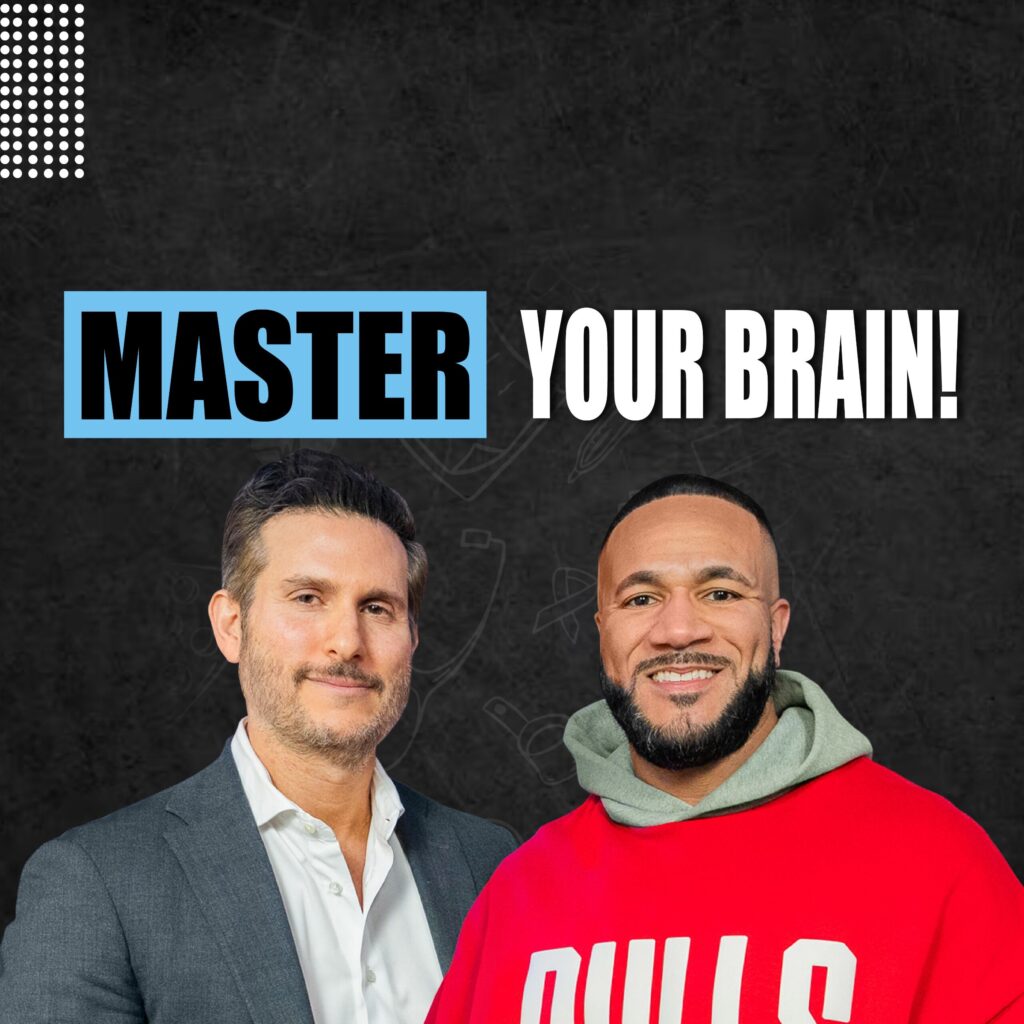
That’s where the conversation between Sam Tejada, CEO and Founder of Liquivida®, and Dr. Steven Resnick, neurologist and host of the Healthy Mind podcast, takes a different turn.
Dr. Resnick isn’t your typical neurologist. Yes, he’s treated stroke patients, worked with Alzheimer’s cases, and built a career inside traditional medicine. But over time, something started to feel off. Patients weren’t getting better in the way they should. Some kept coming back. Others left still searching for answers.
And that forced a shift.
How Your Brain Works And How To Use It For Better Health | Dr. Steven Resnick | Ep. 132
When Medicine Becomes Too Mechanical
Early in his career, Dr. Resnick followed the same structure most physicians are trained in: listen briefly, identify symptoms, match them to a condition, and treat it.
Efficient? Yes. Complete? Not really.
At some point, he started noticing a pattern. Patients weren’t just dealing with physical issues; they were dealing with fear, stress, and confusion. And none of that showed up clearly on a scan or lab result.
So he changed one thing. Instead of asking what was wrong, he started asking: “What are you feeling?”
That question opened the door to something deeper, something most clinical models don’t fully account for.
The Brain Isn’t Designed to Make You Happy
One of the more uncomfortable truths Dr. Resnick shares is this:
The brain isn’t wired for happiness. It’s wired for survival.
That means it’s constantly scanning for threats, predicting outcomes, and trying to keep you safe even when there’s no real danger.
To do that efficiently, it relies on habits. Not just physical habits, but mental ones too.
- The way you think every day
- The way you respond to stress
- The way you anticipate problems
All of that becomes automatic over time.
And here’s where it gets tricky: most of those patterns lean negative. Not because something is wrong with you, but because your brain is trying to protect you.
Why Symptoms Don’t Always Tell the Full Story
A big part of Dr. Resnick’s work now focuses on patients who don’t have a clear diagnosis, but still don’t feel well.
They might experience:
- constant fatigue
- dizziness
- headaches
- anxiety
- unexplained pain
They go from doctor to doctor, running tests that come back normal. And that’s where frustration builds.
What he’s found is that many of these symptoms are tied to a nervous system that’s stuck in overdrive. Not broken, just overwhelmed.
When the body stays in a prolonged state of stress, it starts to react. Heart rate shifts, breathing changes, and digestion slow down. Over time, those responses turn into real, physical symptoms.
The problem is, most people only focus on the symptoms themselves, not what’s driving them.
What COVID Changed (That We’re Still Dealing With)
According to Dr. Resnick, the pandemic didn’t just introduce a virus; it introduced uncertainty on a massive scale.
People didn’t know what to believe, what would happen next, or how long things would last.
That level of unpredictability triggered something deeper in the brain. Fear.
And not just momentary fear, but ongoing, unresolved fear.
He started seeing more patients with neurological symptoms that didn’t fit neatly into any diagnosis. Anxiety levels spiked. Sleep patterns broke down. Stress became constant instead of occasional.
Even now, some of those patterns haven’t fully reset.
Habits Are Running More of Your Life Than You Think
If there’s one thing Dr. Resnick emphasizes, it’s this:
You don’t just have habits, you are your habits.
And that includes the way you think.
Most people assume habits are things like going to the gym or eating better. But the more powerful ones are internal:
- worrying automatically
- expecting the worst
- replaying the same thoughts
Those patterns follow a loop:
something triggers you → you react → you feel temporary relief → and your brain locks it in.
The more it repeats, the more automatic it becomes.
Breaking that cycle isn’t about forcing change overnight. It starts with noticing it in the first place.
The Gap Between Treating and Understanding
There’s nothing wrong with medication. Dr. Resnick is clear about that. It can help, and in many cases, it’s necessary.
But relying on it alone misses the bigger picture.
If someone isn’t sleeping, constantly stressed, disconnected from others, and running on unhealthy patterns, no prescription is going to fully fix that.
That’s where root cause thinking comes in.
Not just: “What is this condition?”
But: “Why is this happening in the first place?”
Why Connection Still Matters More Than We Admit
One of the more overlooked pieces of health is something that sounds simple: connection.
Community, relationships, even just feeling understood.
People who feel isolated tend to struggle more, both mentally and physically. On the other hand, those with strong support systems tend to recover better and stay healthier longer.
It’s not just emotional, it’s biological.
The nervous system responds to safety, and connection creates that sense of safety.
A Different Way to Look at Health
What makes this conversation stand out isn’t just the science, it’s the perspective.
Dr. Resnick isn’t rejecting medicine. He’s expanding it.
He’s looking at the patient as a whole: their habits, their thoughts, their environment, their stress, their beliefs.
Because at the end of the day, health isn’t just about what’s happening inside your body.
It’s about how your body, brain, and life are all interacting at once.